AI toys are selling well, and intelligent hardware is scrambling to accompany the new track emotionally.
Interactive chat, storytelling, guided questioning … As a rookie of intelligent hardware, AI toys are intensively landing, igniting the consumption enthusiasm of ordinary users. Experts in the industry believe that the scale of users of AI applications at home and abroad continues to grow, and AI emotional companionship has become the main application scenario. As a new direction of emotional companionship combined with hardware, AI toys are expected to open a new track. At the same time, how to effectively supervise the topic that AI interaction brings new challenges to children needs to be put on the agenda.
AI toy personalized chat and story telling
After kindergarten school, the children came home in winter and winter, picked up the plush rabbit on the sofa and said, "Bonnie, kindergarten is fun today." The white bubbles on the plush rabbit’s chest began to glow, and a lovely voice came: "Oh, dear Dongdong, what’s interesting?" Dongdong replied, "I played with Linlin for a long time." The plush rabbit replied quickly: "The building blocks are really good. What shapes did you build?" …….
This plush rabbit, which interacts patiently and responds quickly with children, has been with Dongdong for 5 years. But when I first bought it home, it was just an ordinary plush toy. In August of this year, Dongdong’s mother put a new AI conversation toy on the doll, which looks like a latex bubble. Since then, this plush rabbit can speak.
"Compared with smart speakers, the biggest feature of AI toys is personalized customization." Dongdong’s mother told reporters that AI toys and children have different people’s designs in interaction. Children can be super inventors, logical geniuses or debate stars. AI can be teddy bears, Bonnie rabbits or Archie Wang Wang. "Everyone’s tone and words are not the same, and they caught the attention of children at once."
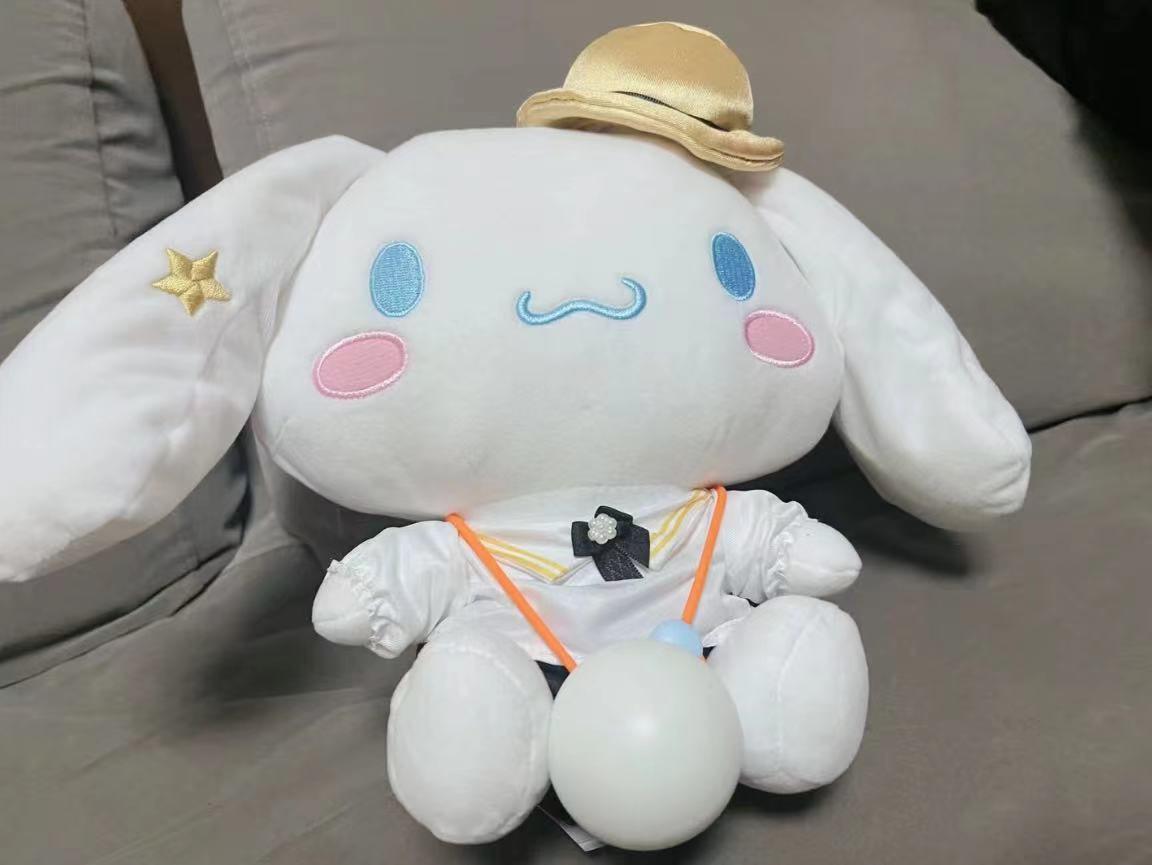
Dongdong’s mother said that what is more attractive to parents is that compared with the "text-reciting" answer of smart speakers, AI toys can customize and generate stories according to children’s personality preferences and questioning habits, and also use large model technology and emotion recognition algorithms to perceive children’s emotions and generate an "emotional barometer" for parents.
The reporter noticed that in the past six months, AI toys on the market are rising rapidly from 0 to 1. In foreign markets, Curio, a start-up toy company in Silicon Valley, USA, launched three AI plush toys using the OpenAI model, targeting children aged 3 to 7. In the domestic market, AI toys have also landed intensively. ByteDance has launched the AI plush toy "conspicuous bag", and has launched the AI toy pendant Bubble Pal. The first generation of AI robot toys of Tom Cat is also planned to be listed before the Spring Festival.
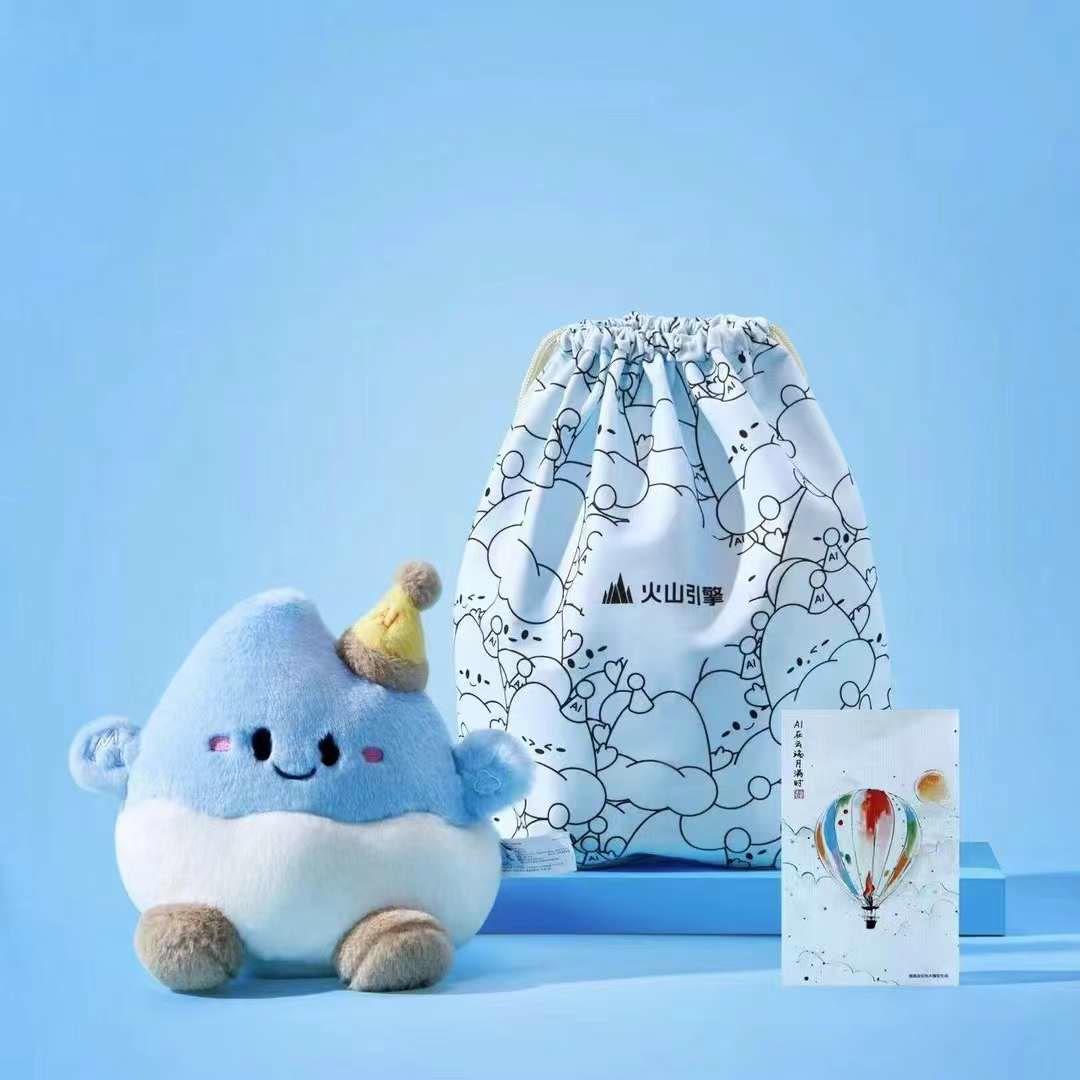
"AI Octopus" Behind Plush Toys
No matter which company makes AI toys, the reporter noticed that its actual form is still a direct combination of ordinary plush toys and generative artificial intelligence (AIGG) hardware.
"Plush toys are just skins, and the core is the’ AI movement’ in the doll liner." A merchant told reporters that the AI toys sold at home can provide seven different doll shapes, such as Mickey, Princess Aisha, Doraemon, etc. "Just choose outside, and the’ AI movement’ inside is the same."
At present, domestic companies have targeted the vertical new scene of AI child companionship. The FoloToy project was launched in Zhongguancun, Beijing in July, 2023. The team developed AI hardware and algorithms. In addition to directly selling finished toys such as AI fire rabbits and AI cactus, it also sells "AI movement". Just put the kit into any ordinary toy, and the toy will be able to "speak".
"Parents can configure various parameters such as large models and guiding words in the background system, so that toys can become specific roles to talk with children." Guo Xinghua, co-founder of FoloToy, said that in addition, Octopus can clone parents’ voices to tell stories, and do oral sparring in English and French. For professional users, it can also directly deploy its own large model Agent into toys.
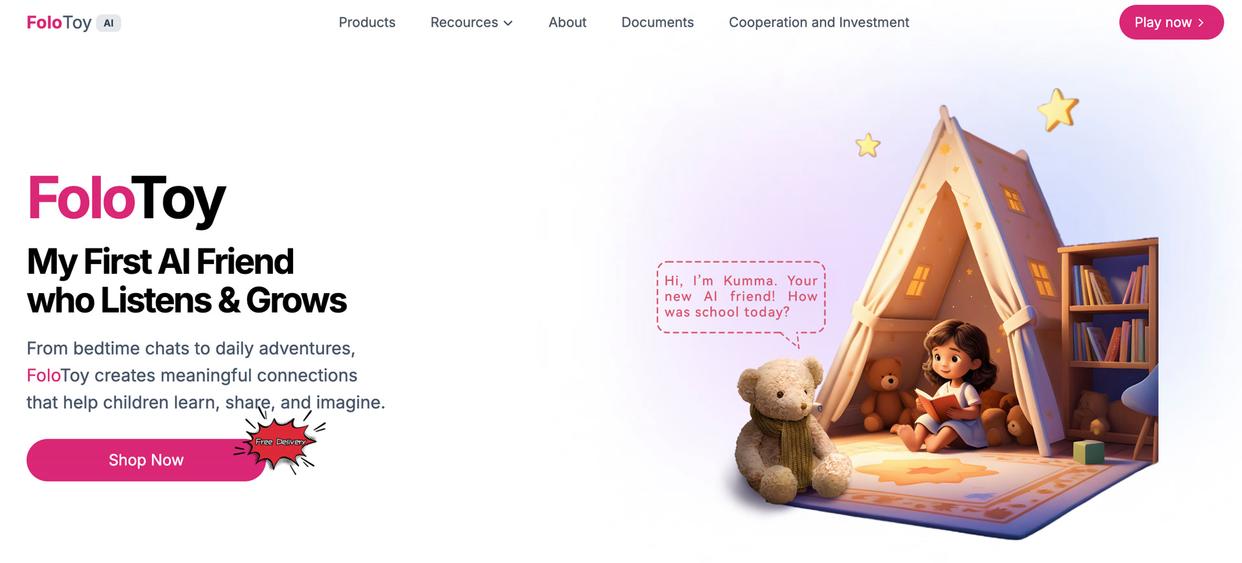
Today, the AI development kit and finished toys launched by this team are not only listed in China, but also sold to nearly 20 countries including North America, Europe, United Arab Emirates, Southeast Asia and Australia. According to Guo Xinghua, ordinary consumers have bought about 30,000 AI toys. At the same time, they also provide customized products for enterprises, such as ByteDance’s "conspicuous bag", which is their "AI Magic Box".
There are multiple challenges hidden under the interaction.
"Emotional companionship has become the biggest landing scene for AI in consumer entertainment." Zhang Liangwei, co-director of soochow securities Research Institute, said that AI toys, as a new direction of AI emotional companionship combined with hardware, are expected to be integrated with IP and open a new track.
AI toys can provide personalized dialogue and emotional interaction, but they are not "perfect playmates". In the process of children interacting with AI toys, a large amount of personal information is mastered by the platform, and privacy protection needs to be considered. "The APP doesn’t have location authority, but the AI toys accurately tell us where we are." "Children’s voices, preferences, daily life and other information are all online." "I’m a little worried about whether the platform will be used for other purposes" … The reporter saw that many parents said on social platforms that after using AI toys, their privacy was suspected to be leaked, and they were afraid.
"The content generated by the AI big model is open and creative, but in children’s education, the problem of model illusion may lead to inaccurate information." Industry experts said that how to provide high-quality content while ensuring accurate interaction also requires in-depth exploration by relevant enterprises. At the same time, many parents also appealed to reporters, hoping that the regulatory authorities can pay attention to the trend of AI interaction and the new challenges brought to children in a timely manner.
Image source: provided by respondents
Source: Beijing Daily client
Reporter: Yuan Lu.
Reporting/feedback