Dynamic observation of "MWC Shanghai 2023" strategy: innovation, integration and transcendence
The 2023 World Mobile Communications Conference in Shanghai (hereinafter referred to as MWC Shanghai 2023) takes "Time waits for no one" as the theme, focusing on the three major themes of "5G revolution", "digital everything" and "beyond reality+",covering key topics such as the future network, the frontier of the next generation of artificial intelligence, digital transformation, smart cities, and technological innovation, demonstrating the leading position of China and Asia in technological innovation and the empowerment of economic and social development by the new generation of information technology.
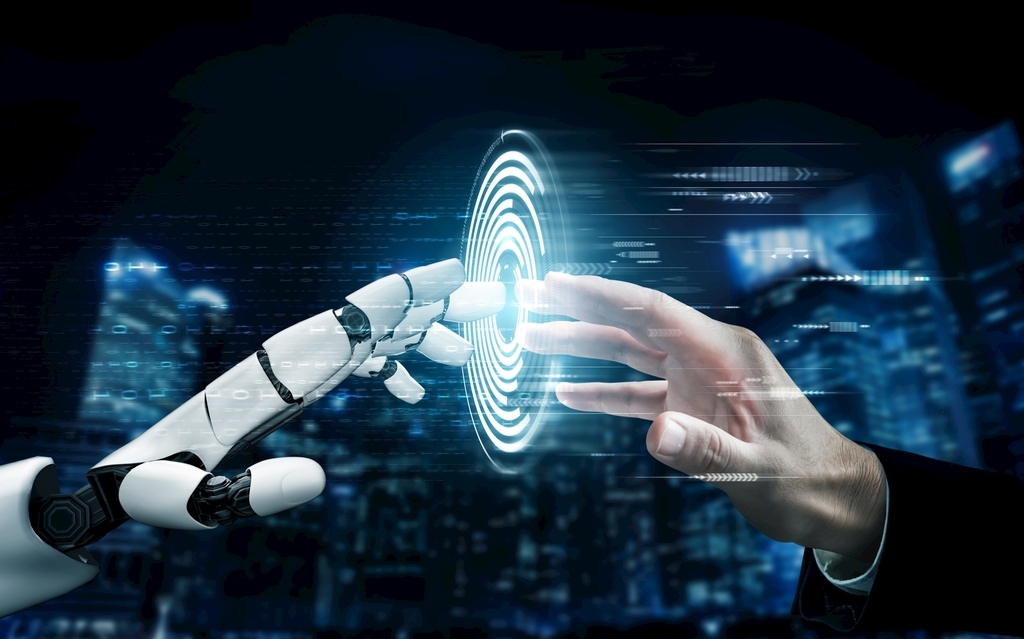
5G reform: 5G innovation is not limited, leading a new era of digital intelligence and everything.
New breakthroughs in the evolution of 5G technology, creating a new world of Internet of Everything
MWC Shanghai 2023 believes that 5G millimeter wave and 5G-Advanced technology suitable for intelligent networks are expected to set off a new round of technological innovation in the future of 5G. Various industries can seamlessly integrate networks and entities with the help of 5G millimeter wave and 5G-Advanced. GSMA (Global System for Mobile Communications) believes that in the past year, millimeter-wave technology has made amazing progress all over the world, which can greatly improve bandwidth, network speed and responsiveness, especially in crowded places and areas with large traffic, and promote 5G millimeter-wave to go global. With the evolution of technology and the gradual widening of application boundaries, 5G has entered a new stage of 5G-A. The 5G-Advanced network can support various beneficial new service functions, including immersive customer solutions, enhanced private networks and comprehensive expansion of large-scale Internet of Things. In the future, with the release of 3GPP specifications, there will be more networked sensors, tags, meters, lighting lamps, alarms, door locks and other devices, which will better match the scenes of people’s association, things’ association, perception and high-end manufacturing, and incubate more new business opportunities.
5G penetrates into the enterprise and accelerates commercial realization.
This year’s MWC focuses on vertical industries and realization, and TOB has become an important means to realize the commercialization of 5G, including innovations such as key use cases. GSMA predicts that in 2025, China will take the lead in becoming a market with more than 1 billion 5G connections; By 2030, the number of 5G connections in China will reach 1.6 billion, accounting for nearly one third of the global total. By then, manufacturing and service industries will be the biggest beneficiaries of 5G. Huawei Meng Wanzhou believes that in the future, the digital infrastructure of the smart world will be deeply integrated with society, life and industry, and the chain reaction triggered by 5G, cloud and AI is constantly creating new formats. 5G has accelerated the explosion of new applications such as cloud mobile phones, new car links, naked-eye 3D and XR immersive experience.
6G is gradually approaching, and the technical development picture is gradually clear.
6G will bring more subversive changes, and in the future, it can create a "unity" between the virtual world and the real world, and create a real "digital twin world". Ericsson executives said, "The journey to 6G has begun, but it still needs to meet the new requirements of the future network to create more digital opportunities, such as immersive communication and fusion perception. The key areas that 6G focuses on include communication beyond 5G, new services beyond communication networks, and sustainable and reliable networks. In the long run, based on the experience of 5G development and deployment, 6G-oriented network evolution will be based on the experience of real-time network evolution and ecosystem expansion of 5G and 5G Advanced. 6G will start with open research and breakthrough technologies, move towards standardization and verification, and then conduct preliminary commercial deployment around 2030.
Digital Everything: Accelerating the Integration of CT and IT to Create a New Digital Dividend
Informatization reshapes urban form and helps solve urban development problems.
At present, the sustainable development of cities is facing many challenges such as carbon emissions, transportation and urban governance, and digital technology has become an important innovative force to deal with urban development problems. Vice President Xinhua San pointed out that "digital transformation accelerates the sustainable development of cities. For example, digital twin technology can map people, institutions and social behaviors in cities to virtual worlds, realize the holographic perception of cities with the integration of reality and reality, and improve urban governance and emergency response capabilities". In the future, smart cities will enter the stage of digital intelligence development, and the development focus will shift from building smart cities to operating smart cities. Based on the accumulation of sensing terminals, networks, data integration and data services, ZTE has established the network special question bank of the city lifeline with the help of the network optimization ability and deployment experience of the IOT sensor network, and built the infrastructure for the safe and efficient operation of the city.
From Intelligentization to Augmented Reality, Realizing the Technological Change of Manufacturing Industry
The adoption of 5G, combined with other technologies, such as AI, cloud and edge computing, has demonstrated its potential to improve productivity, reduce downtime, optimize production operations and supply chain management. In addition, the digital twin and meta-universe in the early stage will also provide manufacturers with new opportunities and possibilities for product design, simulation testing, personnel training and cooperation. ZTE cooperated with industry partners to build a construction scheme of "industrial field network+digital nebula enabling fully connected factory", optimizing the production value chain of process manufacturing, improving the production agility of discrete manufacturing, and building ubiquitous industrial intelligence in an all-round way. Nokia Bell believes that the industrial metauniverse comprehensively maps the physical industrial environment in the virtual world, focusing on the empowerment of the virtual world to reality, and realizing the realistic business goals of optimizing and improving the whole industrial process, reducing costs and increasing efficiency. At the same time, the industrial metauniverse is also an advanced form of the industrial Internet. Through a thorough and all-round digital twinning and metauniverse value system, it breaks the boundaries and constraints of traditional industries, industries and enterprises and realizes a new industrial economic system.
Attach importance to technological development and promote science and technology to be good.
The development of emerging technologies will change our lives. Financial technology, XR, metauniverse, artificial intelligence and other technologies are creating unprecedented new possibilities and solutions, giving birth to a digital future. At present, the world we live in is constantly facing more and more complex social, economic and environmental challenges, and technologies such as mobile communication and artificial intelligence play a key role. This year’s MWC held forums such as science and technology for good, emphasizing the use of technology to meet social and environmental challenges, promoting the deep integration of emerging technologies with cultural, social and climate change fields, and constantly contributing to industrial and social values; We must look ahead and judge the relevant risks, keep the legal and ethical bottom line, and create a more inclusive, sustainable and fair development environment through regulatory measures. Industries, enterprises and other relevant parties should strengthen risk judgment, jointly formulate standards and institutional rules, effectively prevent and control the ethical risks of artificial intelligence in science and technology, and constantly promote science and technology to be good and benefit mankind.
Beyond Reality+:AI, Cloud Computing and Meta-Universe to Meet the New Changes in Digital Industry
XR ushered in a new breakthrough and boosted the development of the meta-universe.
From virtual to reality, the development of XR is breaking the boundary between digital and real world. With the release of Apple’s first MR device, China Mobile, ZTE, Lenovo and Morningstar also brought brand-new AR/VR devices at this MWC, and the technical maturity has made a significant breakthrough. At the meeting, CTO of Ericsson China pointed out, "At present, more and more industrial partners have reached a consensus that XR will be the next paradigm shift and a new communication interface, leading us into a world where virtual and reality are integrated. As a supporting technology and infrastructure for the realization of the meta-universe, its breakthrough will further promote the development of the meta-universe. " Frost&Sullivan predicts that by 2025, the global market scale of virtual and augmented reality technology will climb to 661.40 billion US dollars, with a compound annual growth rate of 86.3% from 2019 to 2025.
With the advent of AIGC era, generative AI expands application scenarios.
With the release of ChatGPT and GPT-4, the artificial intelligence model has become the focus of people’s attention. Generative AI will create a deeper human-computer relationship. With the continuous expansion of related application scenarios, it will release content productivity in multi-application scenarios and provide new opportunities and vitality for various industries. The McKinsey report predicts that the fields of health care, manufacturing, transportation, enterprises and software will become the next frontier of China’s AI in the future, with an annual contribution of 600 billion US dollars. In addition to application scenarios, the big model has gradually changed the terminal market. Deloitte partner Huang Chunfa pointed out, "At present, AI technology has entered the GAI (Generative AI) era, achieving a breakthrough from following procedures to self-training. Compared with traditional AI, GAI can output richer and more original content. Although GAI has just started in the application field, its creativity will play a huge commercial potential in the industries of science and technology, media and telecommunications, as well as finance, automobiles, government and public affairs, and medicine. "
AI rewrites the development direction of communication, and computing power becomes the new "hydropower"
The development of artificial intelligence will reshape the ICT infrastructure, and the opening of more and more digital economic scenes, such as metauniverse and intelligent manufacturing, will bring massive data computing and transmission needs, and the iterative upgrade of computing power and network. AMDCEO lisa su recently predicted that by 2027, the market space of China’s high-end computing power (A100) will exceed 150 billion US dollars, and the compound annual growth rate will exceed 50% from 2023 to 2027, so the development of computing power network will usher in a critical period. Operators put forward strategic objectives and action plans for computing networks, which are regarded as an important direction to promote information infrastructure innovation. The Galaxy AI empowerment platform brought by China Telecom has overcome technical problems such as computing power scheduling, video access, model mass production, etc. China Mobile released four innovative achievements, namely "Top Ten Industrial Development Directions and Industrial Chain Development Plan of Computing Network", "Core Integration Plan of Computing Network", "CFITI 1.0" and "End-to-end Network Resilience Capability".
Author: China Institute of Telecommunications (Beijing)