This water town actually belongs to a moderately water-deficient area? Winter drought is rare in Zhejiang, and the drought is serious in many places.
CCTV News:Recently, the range of warm colors in the country has been expanding, and at the same time, the drought in some areas has continued to develop. Since the winter of last year, severe droughts have occurred in Ningbo, Wenzhou, Taizhou, Zhoushan and other places in Zhejiang. The water storage capacity of reservoirs in many places has been greatly reduced compared with previous years, and limited water supply has been implemented in residential areas. The emergency support and water diversion and water saving capabilities of many places have been tested.
Lin ‘an, Hangzhou: The main water source is low water level residential area with limited water supply.
In a residential area in Lin ‘an District, Hangzhou, residents are storing water in buckets. Affected by the drought, the community will carry out depressurized water supply every four days.

Lifan Reservoir is the main water supply source in Lin ‘an City. The reporter saw that the water level here dropped obviously, a large area of soil was exposed, and the river course in the upstream direction was close to drying up.
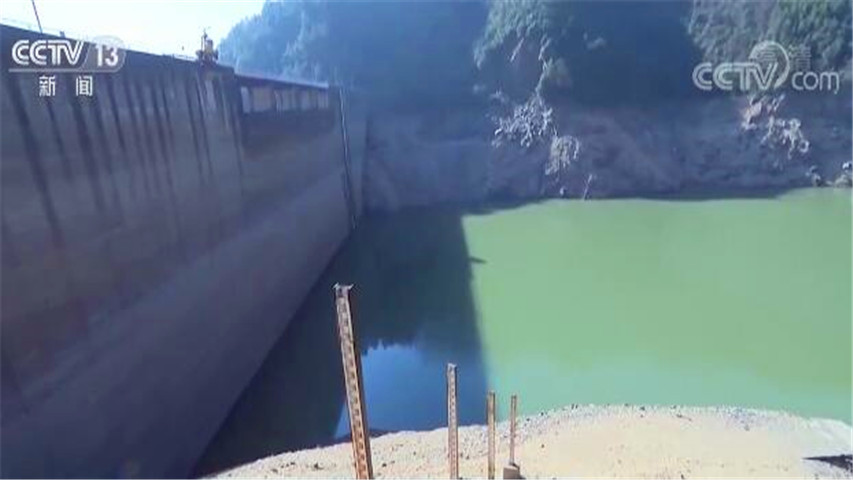
Li Yonghua, director of Lifan Reservoir Management Office in Lin ‘an District, Hangzhou: "Since August 2020, the water level has been declining. So far, it has dropped by more than 30 meters. This morning, it was 203 meters, which is the lowest water level since the water supply of Chuanglifan Reservoir."
Wenzhou, Zhejiang Province: Agricultural production in Shanxi Reservoir is affected by large-scale drying up.
Shanxi Reservoir in Taishun County, Wenzhou also experienced a large area of drying up, and the cracked soil was exposed, leaving only a small amount of water in some areas. At present, about 8,000 people in eight local villages have been affected by water use. Drought and water shortage have also affected agricultural production. In this Dendrobium candidum planting cooperative in Yueqing City, Zhejiang Province, a large number of Dendrobium candidum have yellow leaves and rotten roots. In addition, bayberry, loquat, citrus and other crops are also affected by drought and die.

Taizhou, Zhejiang: The storage capacity of Changtan Reservoir, the main water source, is only 56% of the normal state.
The water storage situation of large and medium-sized reservoirs is also not optimistic. Changtan Reservoir, located in huangyan district, Taizhou, is the main water source in Taizhou, which guarantees the water use of more than 3 million citizens and tens of thousands of enterprises. As of January 30th, the water level of Changtan Reservoir was 29.64m, which was 6.36m lower than the normal level. At present, the storage capacity of Changtan Reservoir is 256 million cubic meters, which is 56% of the normal state.
Chen Yexing, director of the Flood and Drought Disaster Prevention Department of Zhejiang Provincial Water Resources Department, said: "We have made a statistic. Compared with the same period of the previous year, the storage capacity of large and medium-sized reservoirs in the province is now 1.067 billion cubic meters less. What is this concept? The daily water supply of urban and rural water supply in our province is about 1800— 20 million cubic meters, then if we calculate according to such a data, we are now 1.067 billion cubic meters less than normal, which is equivalent to reducing the water supply capacity by 53 days. "
[Emergency Response] Winter drought in Zhejiang is relatively rare, and it appeared last time in 2004.
The reporter learned from the meteorological department that winter drought in Zhejiang is relatively rare, and the last winter drought was in 2004. Judging from the current meteorological forecast, the precipitation in Zhejiang is still less in February, and it is likely that there will be winter drought and spring drought. In response to the drought, emergency response has also been launched in various parts of Zhejiang.
According to the meteorological department, the direct cause of this drought is the meteorological anomaly since the autumn of last year. From September 21 last year to January 29 this year, the weather in Zhejiang Province continued to be sunny and rainy, and the average precipitation in the province was only 107.5 mm, 61% less than normal.
Typhoon crossing the border will bring a lot of precipitation, but in 2020, the number of typhoons crossing the border in Zhejiang is also less than in previous years. After entering the autumn, I have never been affected by a typhoon.
In order to ensure water supply, 73 artificial precipitation enhancement operations have been carried out in 8 cities in Zhejiang, with a total precipitation of 73.157 million tons.
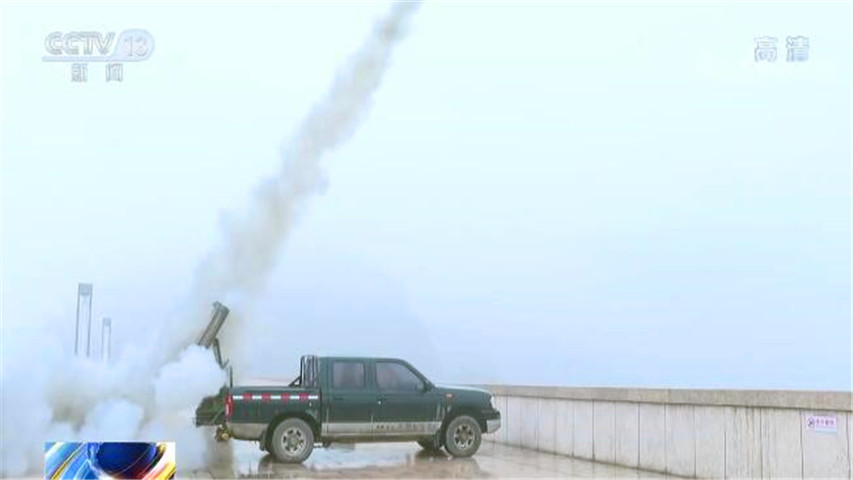
However, artificial rainfall alone cannot fundamentally alleviate the drought. Since the end of December, 30 seawater desalination projects built in Zhoushan, Zhejiang Province have been running at full capacity, and the current daily output of fresh water has reached 326,000 tons. However, due to the long transportation pipeline, it is still difficult to supply water in some areas with high terrain and long distance.
Xiaozixi Reservoir in Yongjia, Wenzhou, has suspended power generation since the end of October last year. Now the reservoir transports 10,000 cubic meters of water downstream through water pipelines every day to ensure the domestic and production water of seven local villages and two industrial zones.
At present, all the 44 reservoirs with power generation function in Yongjia have suspended power generation, and all the water is reserved for drought control.
Some places have also introduced measures to restrict water supply. Yueqing City, Wenzhou, restricted hotel services, electroplating, road sprinkling, water supply for enterprises and institutions from January 4th, and stopped water supply for high-water consuming industries such as swimming pools, baths and car washes.
Sanmen County, Taizhou City has suspended water supply to the county’s high-water consumption service industry since January 25, and it is forbidden to use tap water for municipal water such as landscaping and road washing.
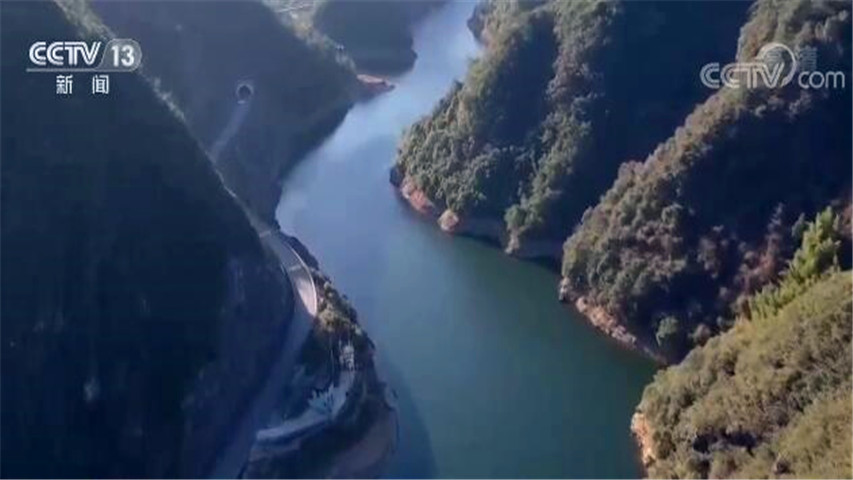
At present, Zhejiang has started the blue warning of water conservancy drought, and has done a good job in diverting water and dispatching water projects. According to statistics, Xiaoshan Hub of East Zhejiang Water Diversion Project has supplied 630 million cubic meters of water to Hangzhou, Shaoxing, Ningbo and Zhoushan. The Wuxijiang Water Diversion Project has carried out five rounds of centralized water supply to Quzhou and Jinhua, and now it has supplied 144 million cubic meters of water.
[News link] Zhejiang, a water town, actually belongs to a moderately water-deficient area.
Many viewers may think, how can Zhejiang, which is located in the south of the Yangtze River, lack water? In fact, Zhejiang is indeed a moderately water-deficient area. In addition to the climatic reasons, this drought has a certain relationship with Zhejiang’s original water shortage.

According to international standards, the annual per capita water resources are 1000— 2000 cubic meters is a moderate water shortage area. The annual per capita water resources in Zhejiang is 1702 cubic meters, which is about 20% lower than the national per capita level and one quarter of the international year’s per capita level. The main crux of water shortage in Zhejiang lies in the uneven distribution of water resources in time and space.

During the rainy season and the typhoon flood season, 70% of the precipitation was discharged into the sea as flood, which was not effectively used.
From the spatial distribution of water resources, although the economic aggregate in densely populated areas such as Hangjiahu and Ningshao accounts for 2/3 of Zhejiang Province, the water resources only account for 1/5 of the whole province, and the contradiction between supply and demand is increasingly apparent.
In addition, it is an indisputable fact that the utilization efficiency of water resources is low. Compared with developed countries, in 2018, the water consumption per 10,000 US dollars of GDP in Zhejiang Province was 254 cubic meters, while that in Japan was 136 cubic meters and that in Singapore was only 23 cubic meters.

To this end, in June 2020, Zhejiang Province issued the "Zhejiang Water Saving Action Implementation Plan", which mentioned that by 2022, the water consumption per 10,000 yuan of GDP will be reduced by 42% compared with 2015, and the reuse rate of industrial water above designated size will reach more than 91%, and the total water consumption in the province will be controlled within 18.6 billion cubic meters.