Yang Cai commented that "halftime" decoded China’s economy! Looking at prices, continue the "moderate" mode in the second half of the year?
Statistics from the National Bureau of Statistics show that since the beginning of this year, while the national economy has continued to improve steadily, consumer prices have risen moderately. In the first half of the year, the national CPI rose by 2.0%, an increase of 0.6 percentage points over the same period last year.
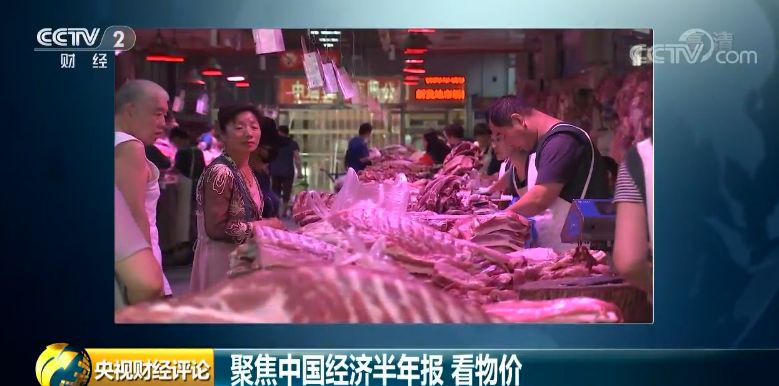
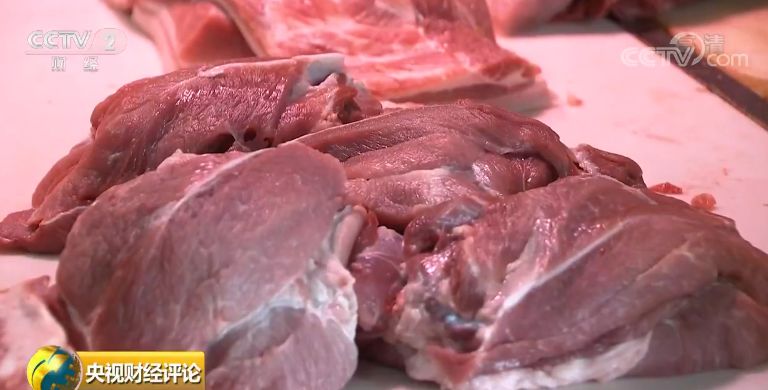
Among the main factors affecting CPI, pork price decreased by 12.5% year-on-year, which affected CPI by about 0.33 percentage points, and also lowered the whole food price; Non-food prices, on the other hand, are rising steadily, which has become the main driving force for CPI.
On the evening of 18th, CCTV Financial Review’s series of comments "Focus on China’s Economic Semi-annual Report" launched the second comment: Look at prices: Can prices continue to be "moderate" in the second half of the year? Guo Liyan, a researcher at the Institute of Market and Price of the Macroeconomic Research Institute of the National Development and Reform Commission, and Wang Guan, a commentator of Yangguang Finance and Economics, were invited to be guests in the studio to deeply analyze the logic behind the moderate price increase.
Who is responsible for the moderate price increase in the first half of the year?
Guo Liyan: The reshaping of the "pig cycle" reflects the improvement of the concentration of aquaculture.
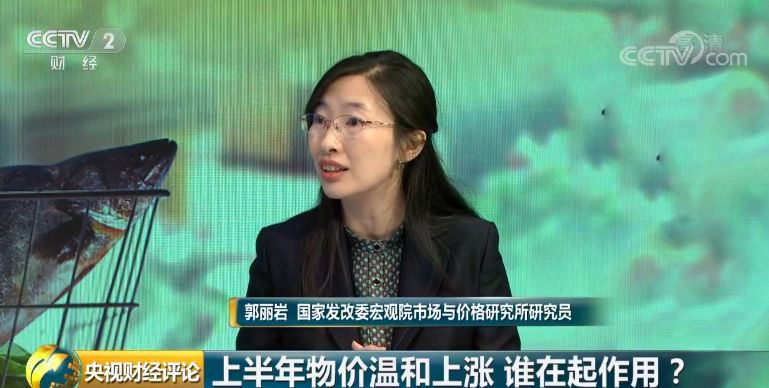
Guo Liyan, a researcher at the Institute of Market and Price of the Macroeconomic Research Institute of the National Development and Reform Commission: Because the pig cycle has been reshaped. In the past, when we studied the pig cycle, we found that some pig farmers would quit in the process of continuous price decline, because the supply decreased and the price would gradually pick up. But now, the logic of the traditional pig cycle has been gradually broken, which means that the number of large-scale farmers has gradually increased, making the main farmers in the pork industry more and more able to bear the gradual decline in prices. Therefore, although the price is low, especially in the consecutive months that exceeded expectations this year, it feels as if there is no obvious contraction in pork supply in the market. In fact, it has a lot to do with the reshaping of the pig cycle and the improvement of industrial concentration. Moreover, the weight of pork in CPI is high, and the price of pork is at a low level for a long period, which also plays an obvious role in stabilizing prices.
Crown: The rapid growth of beef consumption reflects consumption upgrading.
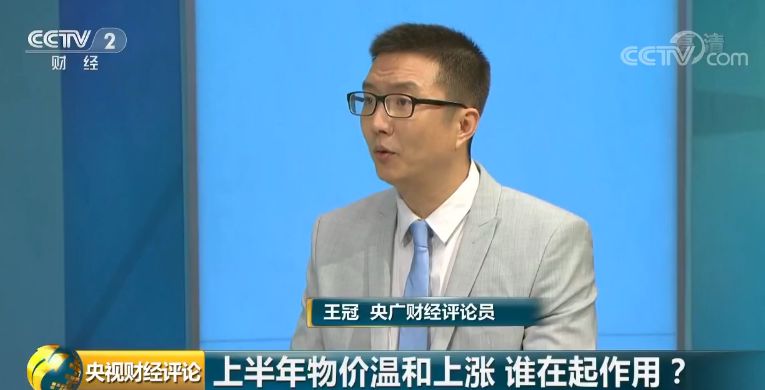
Wang Guan, financial commentator of Yangguang Finance and Economics: Actually, according to the meat consumption in China, pork accounts for 60% or more, while poultry accounts for about 20% and beef accounts for less than 10%, but this increase is very fast. In the past five years, the growth rate of domestic beef production is less than half that of sales, that is, consumption is much faster than production capacity. Today, China has become the most valued market for beef suppliers, such as Qingdao, Beijing, Guangzhou, etc. The whole beef price is 1.5 times or even 2 times that of pork. People are willing to spend more money to eat beef with higher protein, which shows that consumers are not so sensitive to price and pay more attention to consumption experience.
Background data:
Non-food prices are the main driving force for CPI. In the first half of the year, non-food prices rose by 2.2%, which affected CPI by about 1.74 percentage points. The service price rose by 2.7%, which affected the CPI by about 1.01 percentage points.
Guo Liyan: In recent two or three years, the price of service industry has been in a moderate upward space.
Guo Liyan, a researcher at the Institute of Market and Price of the Macroeconomic Research Institute of the National Development and Reform Commission: In the past two or three years, the price of the service industry has been in a moderate upward space, basically at 2%— In this range of 3.5%, the CPI of the service industry, the most important cost for the price increase of the service industry is the labor cost.
Two factors, one is the decline of demographic dividend and the change of structural factors, which will definitely increase the price of services; On the other hand, increasing the labor cost is not only the decline of the demographic dividend and the decline of the supply, but also the gradual increase of the cost of labor life in first-and second-tier cities, which is reflected in the price of labor and will be transmitted to the end consumption.
In recent years, in fact, the country has basically liberalized the competitive service industry, and the market has formed the price. Therefore, as you can see, the service price has been in a space of moderate increase in the past two or three years.
Can prices continue to be "moderate" in the second half of the year?
Guo Liyan: Sino-US trade friction has little direct impact on prices.
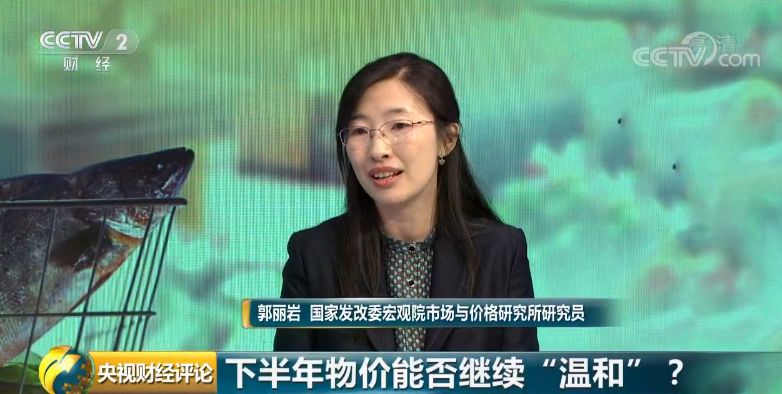
Guo Liyan, a researcher at the Institute of Market and Price, Macroeconomic Research Institute, National Development and Reform Commission: You don’t need to be particularly worried about the impact of the escalation of Sino-US trade friction on prices. Although it is said that an important target of our trade friction countermeasures against the United States this time is soybeans exported by the United States to China, everyone’s judgment at this moment is that the transmission of our food prices is limited, whether soybean oil or soybean meal is used for feed, etc. At present, it will not play an obvious role in the transmission of CPI because the scale is limited.
Guo Liyan: CPI will still run in a moderate range in the second half of the year.
Guo Liyan, a researcher at the Market and Price Research Institute of the Macroeconomic Research Institute of the National Development and Reform Commission: In the second half of the year, we think that the CPI as a whole is in a moderate rising space, and it is stable and slightly declining. For some non-food prices, I don’t think there is any need to worry about a sudden impact price increase in the second half of the year, which is rare for service prices. For some goods involved in the Sino-US trade friction, the market has gradually digested the price increase expectation, like some typical consumer goods, which may not have an impact on prices in the second half of the year.
What does the moderate operation of CPI mean to the overall situation of economic development?
Guo Liyan: The moderate operation of CPI provides a relaxed environment for high-quality and sustained growth.
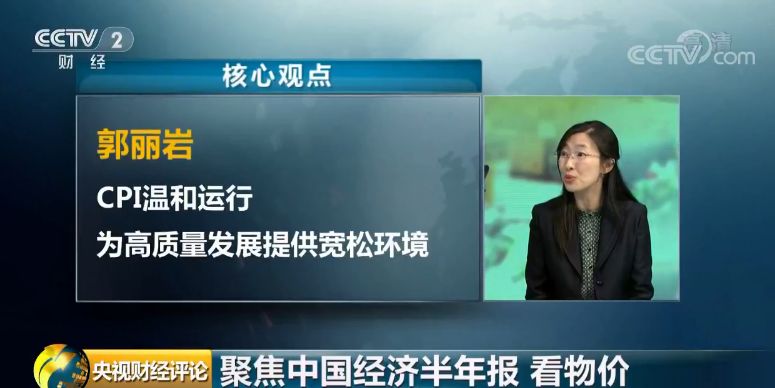
Guo Liyan, a researcher at the Institute of Market and Price of the Macroeconomic Research Institute of the National Development and Reform Commission: Looking forward to the second half of the year, I think that the moderate operation of CPI can provide a relaxed price environment for high-quality development, which can be completely controlled within the 3% control target proposed by the government at the beginning of the year. In recent years, the inflation in our country has been stable and slightly lower in the moderate operating range, and gradually moved towards an inflation range such as mature economies.
Crown: The moderate price trend can provide a stable space for monetary policy.
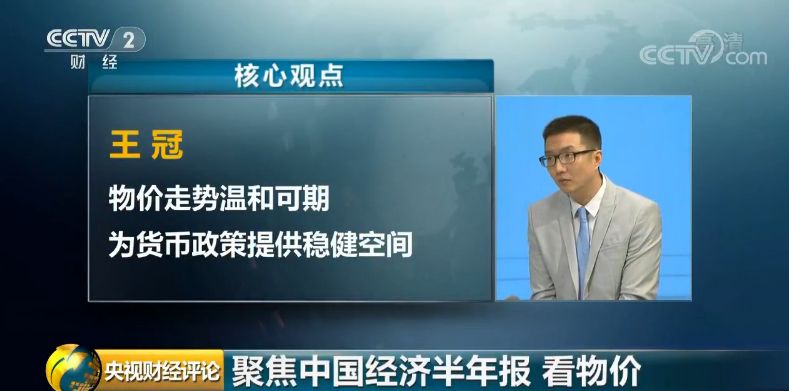
Wang Guan, commentator of Yangguang Finance and Economics: The price trend is obviously moderate and predictable now, which provides a stable space for monetary policy. Let’s look at China Banking and Insurance Regulatory Commission’s latest statement that big banks should take the lead in giving money transfusion to the real economy. Obviously, enterprises have to bear the interest rate. Therefore, at present, it is basically expected that the trend of CPI in the second half of the year will give the whole monetary policy more room to move, which is more favorable for the interest rate of the real economy in lending.