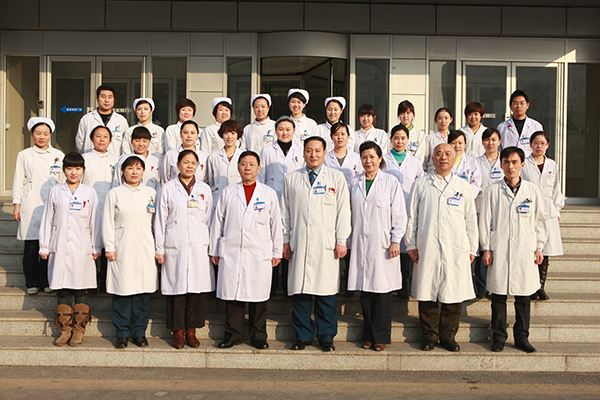
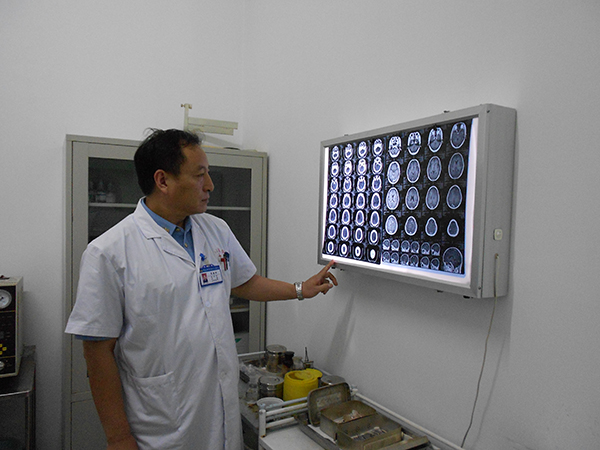
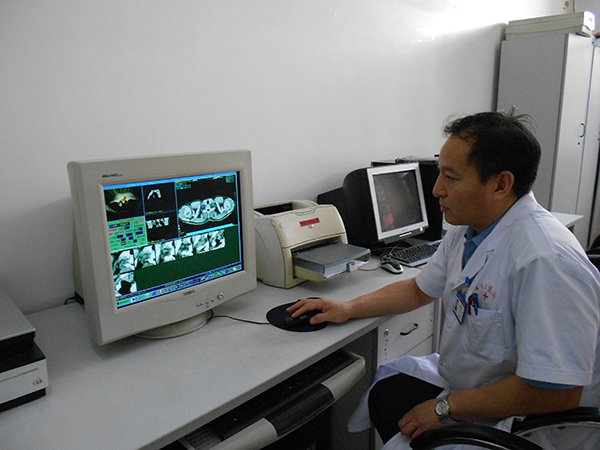
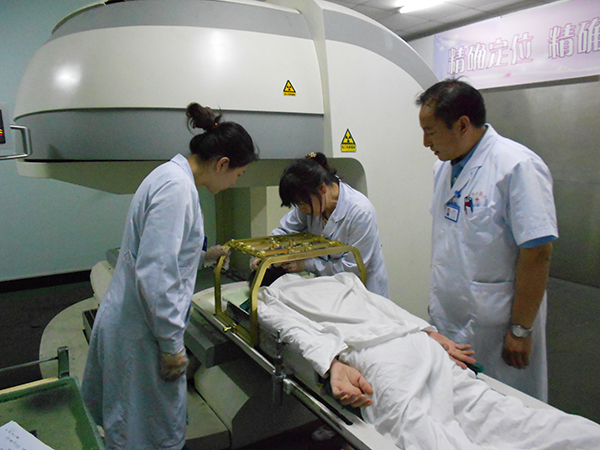
The 463rd Hospital: Gamma Knife Center

I. Basic information

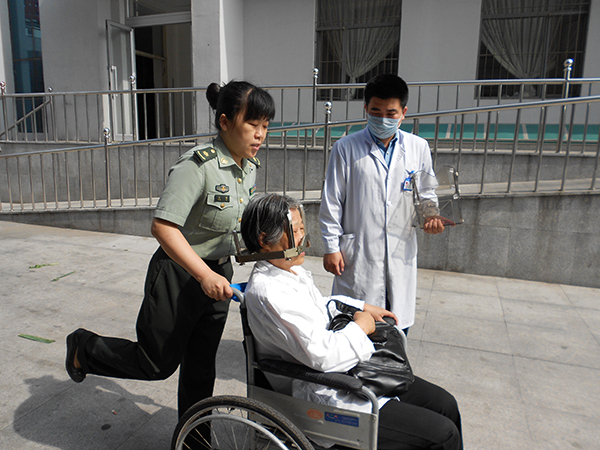
In 2003, No.463 Hospital of China People’s Liberation Army introduced the latest international body (whole body) OPEN gamma knife and MASEP-SRRS head gamma knife. The hospital is equipped with advanced 64-slice spiral CT, 1.5T nuclear magnetic resonance positioning system, dedicated network transmission, TPS treatment planning system and GMP standard cell biological detection and treatment laboratory. A research center for non-invasive treatment of tumors has been established, which is also the largest gamma knife treatment center in Northeast China so far. There are 50 beds in the ward, and more than 150 cases are treated every month. With advanced equipment, excellent technology and rich experience, the center can treat a variety of intracranial and systemic benign and malignant tumors, as well as cerebral arteriovenous malformation (AVM), trigeminal neuralgia, epilepsy and other diseases without surgery, bleeding, trauma and changing the basic shape of the human body. Especially for brain stem tumors, brain metastases, glioma, germ cell tumors, pituitary tumors, meningiomas, AVM, nasopharyngeal tumors, lung tumors, liver tumors, esophageal tumors, pancreatic tumors, lymph node metastases, etc., it has a good analgesic effect on cancer pain. And it is not limited by diabetes, hypertension, heart disease and other coexisting diseases. More than 10,000 cases have been treated, and the total effective rate is over 90%. Liaoning TV Station, Shenyang TV Station, shenyang evening news, Shenyang People’s Broadcasting and Television Station and other media have repeatedly reported that gamma knife, an "invisible knife", has achieved the purpose of alleviating pain, prolonging life, and "patients suffer less and their families suffer less". It has brought happiness to thousands of families, and with the increase of treatment times, it will certainly bring joy to more families!

The purpose of the center: to relieve pain, prolong life and enjoy a healthy life for patients with high-quality services, technologies and equipment.

Second, talent construction

(1) Staffing

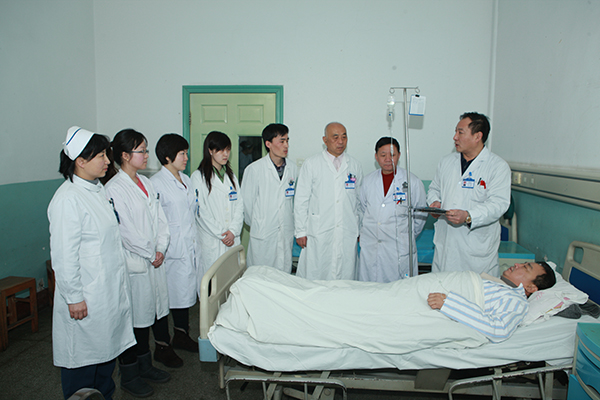
There are 30 medical staff in the center, including 10 doctors, 6 technicians, 2 physicists and 12 nurses. There are 4 senior titles, 5 intermediate titles and 3 graduate students.

(2) Academic leaders

Li Chuntian, male, born in 1964, graduated from the Fourth Military Medical University with a master’s degree in medicine, chief physician and professor of Liaoning Medical College. He began to engage in radiotherapy in 2004 and is currently the director of the center. Academic posts: He is currently a member of the Precision Radiotherapy Technical Committee of China Biomedical Engineering Society, a special expert of China Anti-Cancer Association, a member of the Tumor Radiotherapy Professional Committee of the whole army, a deputy director of the Radiotherapy Committee of shenyang military area command, a standing director of the Radiotherapy Professional Committee of Liaoning Cell Society, a standing director of the Stem Cell and Regeneration Professional Committee of Liaoning Cell Society, a member of the Radiotherapy Professional Committee of Liaoning Medical Association, a member of Liaoning Anti-Cancer Association and a member of the expert database of Liaoning and Shenyang Medical Accident Appraisal Committees.

He has been a doctor for 30 years and has rich clinical experience. He is especially good at gamma-ray stereotactic radiotherapy for head and neck tumors (lesions), lung cancer, esophageal cancer, liver cancer, pancreatic cancer, mediastinal tumors and head and neck tumors. He also has in-depth research on molecular targeted therapy, biotherapy and individualized precision medicine for malignant tumors, and has treated more than 10,000 cases of systemic tumors. He has won the third-class merit twice, won four awards for scientific and technological progress and medical achievements of the whole army, edited/edited 15 medical monographs and published more than 50 academic papers.

(three) the main technical backbone

Yin Zeng, male, born in 1961, deputy chief physician. Graduated from the Fourth Military Medical University with a master’s degree. After graduation, he has been engaged in neurosurgery, and began to engage in radiotherapy in 2004, mainly responsible for gamma knife treatment of the head, such as the diagnosis and treatment of intracranial benign and malignant tumors, cerebral arteriovenous malformation (AVM), trigeminal neuralgia, epilepsy and other diseases. He is especially good at stereotactic radiosurgery for brain stem tumors, brain metastases, gliomas, germ cell tumors, pituitary tumors, meningiomas and AVM. He is currently a member of the Standing Committee of the Stem Cell and Regeneration Committee of Liaoning Cytology Society and a member of the expert database of Liaoning and Shenyang Medical Accident Appraisal Committees.

Third, medical care work

(1) Medical work

The center pays attention to the implementation of various rules and regulations, strengthens business study, insists on collective consultation of cases, organizes discussion on difficult cases irregularly, and regularly solicits opinions from patients and their families. The satisfaction of patients and their families is the gold standard to measure the quality of medical care, and the satisfaction rate of hospital spot checks is high. Insist on giving publicity lectures on cancer prevention and treatment for patients and their families every Thursday, and achieve good results. In order to meet the treatment needs of patients, the medical staff in the center always work overtime and often work late into the night. The number of patients treated has steadily increased. In the past 10 years, the center has treated more than 15,000 patients, and no medical errors and accidents have occurred. In Northeast China, the number of monthly treatment in our center is still in the lead. Actively participate in health knowledge lectures of Liaoning and Shenyang TV stations, and publicize and report typical cases in newspapers and periodicals for many times to improve the visibility of the center.

(2) Nursing work

Pay attention to smiling, warm and humanized service, and insist on providing two lunches for each patient treated with gamma knife for the head. The names of the department director, head nurse, attending doctor and responsible nurse are publicized by cards at the bedside of the hospital, and a warm reminder board is set up to make the patients feel as warm and feel as if they are at home as soon as they are admitted to the hospital.

(3) Serving the soldiers

The center strictly abides by the hospital’s "Ten Commitments" to serve the army, and is personally treated by personnel with the title of deputy chief physician or above. Since its establishment, it has treated 103 military patients and their families, and achieved satisfactory results, which has been well received by military leaders and patients.

Fourth, technical characteristics

(A) expertise

1. 63 cases of early laryngeal carcinoma were treated by gamma knife. Gamma knife therapy for early laryngeal cancer was first carried out in No.463 Hospital of PLA. Compared with surgery, it can preserve the pronunciation function and greatly improve the quality of life of patients.

2. 280 cases of brain stem tumors were treated with gamma knife. Brain stem tumor is a "forbidden area" in neurosurgery, and gamma knife therapy is an ideal treatment method. Through continuous exploration, the individualized treatment effect is satisfactory, which not only cures the disease, but also ensures safety.

3. 99 cases of massive hepatocellular carcinoma were treated by gamma knife in different target areas. In view of massive liver cancer, the dose distribution is more uniform and patients are more tolerant according to the gamma knife treatment method of dividing the target area by general radiation strip.

4. Multi-target gamma knife therapy for lung metastatic carcinoma was performed in 195 cases. After optimization and integration and simultaneous treatment of multiple target areas, the radiation damage of normal lung tissue was not significantly increased by observation.

5. Multidisciplinary cooperation in tumor.

(1) In collaboration with the Cell Therapy Center of Hematology Department, targeted immune technology (ACTL technology) based on dendritic cells infected by recombinant adeno-associated virus was carried out to treat malignant tumors. Biological therapy (CIK, DC-CIK, ACTL) formed a certain scale and had certain influence in this area;

(2) Make full use of the platform of multidisciplinary cancer consultation center;

(3) Keep close contact with experts from PLA, Air Force and Navy General Hospital and Fudan University Cancer Hospital for remote consultation;

(4) Individual gene detection of tumor and selection of the best treatment plan.

(2) New technologies and new businesses

1. Tumor biotherapy (CIK, DC-CIK, ACTL);

2. Molecular targeted therapy for tumor;

3. Individualized gene therapy based on DNA sequencing of tumor cells.

V direction of scientific research

(1) Gamma knife dosimetry study of multiple metastatic lung cancer.

Gamma knife treatment planning system can set up six target areas at most at a time. By optimizing the combination, the adjacent lesions are set as one target area, which can treat more than ten or more lesions at the same time, greatly shortening the course of treatment.

(2) Dosimetric study of brain stem tumors

The brain stem requires a very strict dose, especially the medulla oblongata, so it is necessary to strictly control the dose and formulate an individualized treatment plan.

(3) Dosimetric study of pancreatic cancer

Pancreatic cancer has a high degree of malignancy and requires a high dose, but sensitive tissues and organs such as duodenum should also be taken into account. The dose around the lesion should not be less than 48Gy and should be carefully designed.

(4) ACTL immune targeted therapy for glioma.

Sixth, the discipline orientation

There are more than 180 gamma knife centers in China, and the number of cases treated is in the top 10. Compared with similar disciplines in the military, this discipline has certain advantages in medical treatment, and it is in the lead compared with similar disciplines in the military region, but the gap in academic papers and scientific research is obvious.

Test drive of Fenglanda intelligent electric hybrid twin engine: "evolution" to Zhidian, and carry out the value-added to the end

    Since its listing in 2022, Guangzhou Automobile Toyota Fenglanda has been widely loved by young consumers because of its strength in face value, space, intelligence, power and safety. The market performance is also quite good, with sales exceeding 150,000 vehicles in a year and a half, making it one of the first choices for entry-level SUVs. In April this year, Guangzhou Automobile Toyota Fenglanda "evolved" to the depth of electricity, and launched Guangzhou Automobile Toyota Fenglanda intelligent electric hybrid twin engine. It is understood that Fenglanda intelligent electric hybrid twin-engine broke through again on the basis of the original excellent product strength, and took the Toyota 2.0L fifth-generation intelligent electric hybrid twin-engine system for the first time, equipped with a new generation of T-Pilot intelligent driving assistance system, Toyota Space intelligent cockpit, Toyota Connect intelligent interconnection and a series of high-end intelligent configurations. Let consumers enjoy the latest hybrid technology+advanced intelligent technology at the price of entry-level models. How does the upgraded Fenglanda intelligent electric hybrid twin engine carry out the value-added to the end? We will find the answer through a test drive.

   "evolution" to the electric depth, providing full-speed electric drive sense+full-temperature long battery life.

    In this test drive, from the actual driving experience, the power performance of Fenglanda intelligent electric hybrid twin-engine is satisfactory, and the power response comes more quickly. Abundant power can bring the acceleration ability comparable to pure electricity. During driving, the oil-electricity cooperation is very tacit, and the engine and motor switch or work together smoothly, without any frustration. When overtaking, stepping on the accelerator, strong power output and sustained acceleration ability will be reflected. Because the battery outputs more extra electric energy to the motor when the vehicle accelerates, the engine and the motor drive the vehicle at the same time, so the acceleration performance is better. It is understood that as the first SUV equipped with the fifth-generation intelligent electric hybrid twin-engine, the three-electric system of Fenglanda intelligent electric hybrid twin-engine has been completely innovated. By optimizing the electronic control logic, replacing the lithium battery and improving the efficiency of the motor, it has achieved stronger and more sensitive power output. The maximum output power is 144kW, which is close to 200 horsepower. At the same time, the oil and electricity cooperate tacitly, and the acceleration of 80-120km/h is increased by 15%, which perfectly balances power and efficiency. Whether it is low speed, medium speed or high speed, it has smooth acceleration and easily realizes the extension of acceleration.

    In the corner, the vehicle’s posture is steady, pointing accurately, the suspension supports the body strongly, there is no obvious shaking feeling, and the maneuverability and driving experience are very good. In addition to the road test drive, we also had a performance experience at the venue. Its minimum turning radius is 5.2 meters, and it can be easily controlled in a narrow space. On the bumpy road section made by speed bumps, there is no unnecessary shaking or swaying, and there is no obvious jumping feeling in the back row. With the space brought by the wheelbase of 2640mm, the ride comfort is ensured.

    On the basis of providing users with better driving quality and power experience, Fenglanda intelligent electric hybrid twin engine also provides higher fuel efficiency. During the test drive, during the driving test of more than 100 kilometers, the actual fuel consumption of the vehicle is 4.3L/ 100 kilometers, and the fuel consumption performance is impressive. According to reports, the fully updated three-electric system of the fifth-generation intelligent electric hybrid dual-engine system has made the vehicle more powerful and achieved lower fuel consumption. The energy loss of the high-speed motor equipped with the intelligent electric hybrid twin engine in Flanders is reduced by 19%, the output power of the "strong motor" is increased by 32%, and the fuel consumption of WLTC under comprehensive working conditions is as low as 4.58L/100km. It can travel nearly 1000 kilometers at a time, eliminating endurance anxiety and truly achieving strong power and long endurance.

    Fenglanda intelligent electric hybrid twin engine also uses the newly developed ternary lithium battery. According to reports, the power output has increased by 8%, and the miniaturization of 34% and the lightweight of 44% have been realized, which makes the battery have higher freedom of mounting. The battery of Fenglanda intelligent electric hybrid twin-engine is installed under the rear seat, which does not affect the interior seating space and trunk volume, and also has higher safety.

   Equipped with intelligent driving assistance, it is really smart and safer.

    Using intelligent system to ensure driving safety is another highlight of the intelligent electric hybrid twin-engine in Flanders. The vehicle comes standard with a new generation of T-Pilot intelligent driving assistance. It is understood that it is based on Toyota’s global user big data, based on 12.5 billion kilometers of intelligent driving zero accident data development, with the goal of "zero error", which can avoid 41% of fatal accident driving scenarios. Toyota Safety Sense 3.0 Zhixing Safety Suite is standard, which supports multi-scenario prediction. The newly created PDA predictive active driving assistance system and EDSS emergency driving stop system will greatly "pre-position" risk identification, support OTA remote upgrade, and continuously improve the intelligent travel experience. In terms of passive safety, the whole system comes standard with 7 or more SRS airbags (9 SRS airbags for high-profile models). The new GOA high rigid body based on TNGA architecture is adopted, which has higher safety and more stable driving. During the test drive, it is found that the system can accurately identify the stationary vehicles parked in front, pedestrians crossing the road or slow-moving electric cars and bicycles, and take emergency braking and other measures according to the situation to greatly improve the safety performance.

    The level of intelligence is also reflected in assisted driving. Fenglanda intelligent electric hybrid twin engine is equipped with the same intelligent driving assistance system as the flagship model. Compared with competing products at the same level, Fenglanda’s intelligent driver assistance system has the characteristics of maturity, reliability, comprehensiveness and low threshold. At the same time, adhering to the concept of "equal rights in science and technology", the smart safety technology of luxury car class is poured into compact SUV models, and the overall "smart price ratio" is better.

    It is understood that the Fenglanda intelligent electric hybrid twin engine has realized hardware enhancement, with high-precision cameras and radar sensors all over the car, and a more stable and higher-cost distributed ECU chip sensor, which has stronger perception and prediction ability. Equipped with a 5.4 megapixel forward-looking camera, the monitoring angle reaches 112 degrees, and the sweeping area is increased by 8 times; At the same time, four 1.3-megapixel cameras, four ultrasonic radars and a millimeter-wave radar with a monitoring distance of 340 meters are used. For the first time, the deep neural network DNN technology with AI algorithm is adopted, which can recognize stereoscopic images, and can cope freely in lanes with blurred or unmarked traffic lines, and the cruising duration of lanes is as high as 95%. Further strengthen and upgrade PCS pre-collision system, DRCC dynamic radar cruise control system, LTA lane tracking auxiliary system and LDA lane departure warning system, and add RSA road sign recognition auxiliary system. Two pioneering technologies, PDA predictive active driving assistance system and EDSS emergency driving stop system, are added, which can greatly "pre-position" risk identification and make travel safer. At the same time, it supports OTA remote upgrade to continuously improve the intelligent experience.

    In addition to endurance and intelligent safety, the Fenglanda intelligent electric hybrid twin engine is equipped with Toyota’s latest Toyota Space intelligent cockpit and Toyota Connect intelligent interconnection technology, bringing a number of leapfrog intelligent experiences. Equipped with 12.3-inch brand-new LCD instrument panel, 10.25-inch touch screen, panoramic sunroof, voice recognition control system, "digital key" and other hardware and functions, we are committed to creating a cooler, more fun and more user-friendly third living space for users. Fenglanda Intelligent Electric Hybrid Twin Engine offers 7 bicycle colors and 4 dual car colors, with 11 body color options, and sports models, which can better meet the diversified needs of young consumers. (Text/Li Yiding)

Some trains have been sold out! Chengdu, one of the hottest destinations in Spring Festival travel rush!

The first day of Spring Festival travel rush in 2024

(Departing on January 26th)

Train tickets have been officially put on sale.

The annual Spring Festival travel rush "Drama" kicked off.

The Spring Festival is closed for 8 consecutive days.

Spring Festival travel rush train tickets are officially on sale.

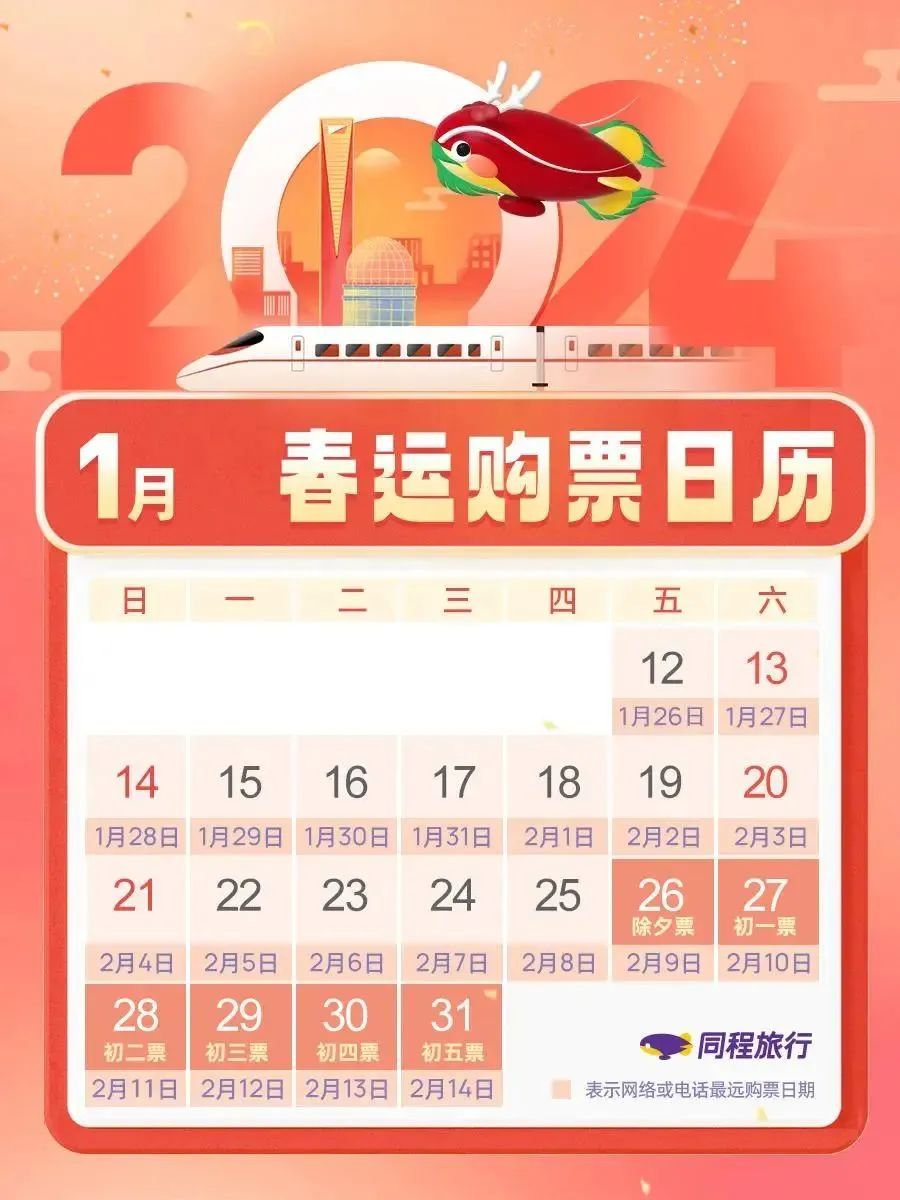
The legal holiday of the Spring Festival in 2024 is from February 10 to February 17, 2024, and the train ticket is pre-sold 15 days in advance. Tickets for the first day of Spring Festival travel rush (January 26th) were sold on January 12th.

2024 Spring Festival travel rush Train Ticket Purchase Guide:

New Year’s Eve train tickets (February 9th)-on sale on January 26th, 2024.

Train tickets for New Year’s Day (February 10th)-on sale on January 27th, 2024.

New Year’s Day train tickets (February 11th)-on sale on January 28th, 2024.

Train tickets on the third day of the New Year’s Day (February 12)-on sale on January 29, 2024.

Train tickets for the fourth day of Lunar New Year’s Day (February 13th)-on sale on January 30th, 2024.

New Year’s Eve train ticket (February 14th)-on sale on January 31st, 2024.

Chengdu became the first day of Spring Festival travel rush.

One of the hottest cities

How about grabbing tickets?

Which lines are hot?

Zheng Shijun discovered from 12306App.

Except for a few popular lines

It is not difficult for Spring Festival travel rush to grab tickets on the first day.

Ten minutes after the ticket is sold.

There are still many tickets left in the popular direction trains.

Chengdu became one of the hottest cities in Spring Festival travel rush on the first day.

Big data confirms this. According to the search data of Tongcheng Travel Platform, the first-day tickets for Spring Festival travel rush from first-tier cities and regional core cities to Chongqing, Harbin, Guiyang, Chengdu, Kunming, Xi ‘an, Changsha and Zhengzhou are the most popular. The data of where to go also shows that the top destinations in Spring Festival travel rush on the first day were Chongqing, Harbin, Chengdu, Beijing, Xi ‘an, Kunming, Guiyang, Guangzhou, Changsha and Zhengzhou.

"According to previous years’ experience, Spring Festival travel rush was in the early winter vacation, and the popular route was the return route." According to the relevant person in charge of the platform, due to the late Spring Festival in 2024, students’ travel time is scattered, and the initial passenger flow in Spring Festival travel rush is diverted to January 10-25, so it is not difficult to buy tickets for most return routes in Spring Festival travel rush on the first day. Destinations such as Harbin, a popular tourist city, and Zhengzhou, where returning home and business trips overlap, are hot. From January 24th to 26th, tickets can be purchased from the 28th of the twelfth lunar month to New Year’s Eve, which will be the peak of travel, so it is difficult to purchase tickets.

Train tickets from Beijing, Shanghai, Guangzhou and other places to Chengdu have always been popular, especially during the period of Spring Festival travel rush, "one ticket is hard to find". Is it still the same this year? The reporter logged into the 12306App search and found that at present, the tickets for some trains from Beijing to Chengdu are more popular, and there are still tickets for high-speed trains, but some tickets for trains from Guangzhou to Chengdu have been sold out.

As primary and secondary school students from all over the country begin to take winter vacation, the booking volume of winter vacation parent-child travel products on the same journey platform is also growing rapidly. In the past week, the search volume of parent-child hotels, theme parks and other products on the platform has increased by more than 60% month-on-month. The travel time of parent-child tour in winter vacation is relatively concentrated on January 20-31, which partially overlaps with the flow of migrant workers and students in Spring Festival travel rush in the first week. The high-speed train tickets from major cities to popular destinations of parent-child tour such as Harbin, Beijing, Shanghai and Guangzhou are highly concerned.

The sale of train tickets in Spring Festival travel rush also means that the pre-sale of civil aviation tickets in Spring Festival travel rush is accelerated. According to the platform data, in the past three days, the number of air ticket bookings increased day by day during Spring Festival travel rush, and the first wave of travel peak appeared on January 20, and the growth of college students was obvious from the age segment; The second peak appeared on January 27th, and the third was on February 7th and 8th, that is, on the eve of New Year’s Eve. From the destination point of view, Harbin and Sanya are more popular. With the opening of train tickets, the booking volume of air tickets for visiting relatives in Chongqing and Guiyang will also increase.

Rongcheng political reporter Li Yanqin

Editor mu xiaolan

Strive to open three new lines this year! These places in Chengdu will be connected by subway →

The first in southwest China, settled in Chengdu! Point sharing

Point collection

Click like

Click to see, keep sliding to see the next one.

Some trains have been sold out! Chengdu, one of the hottest destinations in Spring Festival travel rush! Read the original text by touching the politics of Rongcheng

Rongcheng politics slides up to see the next one.

Original title: "Some trains have been sold out! Chengdu, one of the hottest destinations in Spring Festival travel rush! 》

Read the original text

Regulations on the administration of newspaper publishing

Regulations on the administration of newspaper publishing

(Promulgated by Order No.32 of the General Administration of Press and Publication on September 30, 2005 and effective as of December 1, 2005)


chapter one total rule


the first To promote the development and prosperity of China’s newspaper industry,Standardize newspaper publishing activities,Strengthen the management of newspaper publishing.,According to the State Council’s "Regulations on Publishing Management" and related laws and regulations,,These provisions are formulated.

the second Engaged in newspaper publishing activities in People’s Republic of China (PRC).,These provisions shall apply.

Newspapers are published by legally established newspaper publishing units. Newspaper publishing units publish newspapers.,Must be approved by the General Administration of Press and Publication.,Hold the domestic unified serial publication number.,Obtain a Newspaper Publishing License.

Newspapers as mentioned in these Provisions,Refers to a fixed name, issue, and format.,With news and current affairs comments as the main content.,Publish at least one issue of loose-leaf serial publications every week.

The newspaper publishing unit mentioned in these Provisions.,Refers to the establishment in accordance with relevant state regulations.,A newspaper approved by the General Administration of Press and Publication and registered. A legal person publishes a newspaper without setting up a newspaper office.,Its newspaper editorial department is regarded as a newspaper publishing unit.

Article Newspaper publishing must adhere to Marxism–Leninism, Mao Zedong Thought, Deng Xiaoping Theory and Theory of Three Represents.,Adhere to the correct direction of public opinion and publication.,Adhere to the principle of putting social benefits first, unifying social benefits and economic benefits, and being close to reality, the masses and life.,Create a good atmosphere for building Socialism with Chinese characteristics.,Enrich the spiritual and cultural life of the broad masses of people.

Article 4 The General Administration of Press and Publication is responsible for the supervision and administration of newspaper publishing activities throughout the country.,To formulate and implement the planning of the total amount, structure and layout of newspaper publishing in China.,Establish and improve the supervision and management systems such as the comprehensive evaluation system of newspaper publishing quality, the annual verification system of newspapers and the exit mechanism of newspapers.

Local press and publication administrative departments at all levels shall be responsible for the supervision and administration of newspaper publishing activities within their respective administrative areas.

Article 5 Newspaper publishing units are responsible for newspaper editing, publishing and other newspaper publishing activities.

The lawful publishing activities of newspaper publishing units are protected by law. No organization or individual may illegally interfere with, prevent or destroy the publication of newspapers.

Article 6 The General Administration of Press and Publication awards newspaper publishing units and individuals who have made outstanding contributions to the prosperity and development of China’s newspaper industry.

Article 7 Social organizations in the newspaper publishing industry shall, in accordance with their articles of association,Under the guidance of the administrative department of press and publication,Implement self-discipline management.


chapter two The establishment of newspapers and the establishment of newspaper publishing units


Article 8 Establish a newspaper and a newspaper publishing unit,The following conditions shall be met

(one)Having a definite name that does not duplicate the existing newspaper.;

(two)Having the name and articles of association of the newspaper publishing unit.;

(three)Having a supervisor and organizer who meet the conditions recognized by the General Administration of Press and Publication.;

(four)Having a definite business scope of newspaper publishing.;

(five)It has a registered capital of over 300,000 yuan.;

(six)Having an organization that meets the needs of business scope and news editing professionals that meet the qualifications stipulated by the state.;

(seven)Having a fixed workplace in the same administrative area as the organizer.;

(eight)Having a legal representative or principal responsible person who meets the requirements.,The legal representative or principal responsible person must be a citizen of China who has lived in China for a long time.;

(nine)Other conditions stipulated by laws and administrative regulations.

In addition to the conditions listed in the preceding paragraph,It must also conform to the state’s plan for the total amount, structure and layout of newspapers and newspaper publishing units.

Article 9 The central unit in Beijing established newspapers and set up newspaper publishing units.,With the consent of the competent unit,The organizer shall report it to the General Administration of Press and Publication for approval.

The China People’s Liberation Army and the Chinese People’s Armed Police Force systematically established newspapers and set up newspaper publishing units.,It shall be submitted to the General Administration of Press and Publication for examination and approval by the Press and Publication Bureau of the Propaganda Department of the General Political Department of China People’s Liberation Army.

Other units establish newspapers and set up newspaper publishing units.,With the consent of the competent unit,The organizer shall apply to the administrative department of press and publication of the local province, autonomous region or municipality directly under the Central Government.,After examination and approval by the administrative department of press and publication of the province, autonomous region or municipality directly under the Central Government,Report to the General Administration of Press and Publication for approval.

Article 10 Two or more organizers jointly organize newspapers.,A major organizer must be determined.,And the main organizer will apply.

The main organizer of a newspaper should be a subordinate unit of its competent unit. The newspaper publishing unit and the main organizer must be in the same administrative region.

Article 11 Establish a newspaper and a newspaper publishing unit,The application is made by the organizer of the newspaper publishing unit.,And submit the following materials

(one)Fill in the "newspaper publishing application form" as required;

(two)Relevant qualification certification materials of the organizer and the competent unit;

(three)Resume, identity documents and professional qualification certificates issued by relevant state departments of the legal representative or principal responsible person of the newspaper publishing unit to be proposed.;

(four)Professional qualification certificate of news editors;

(five)Relevant certification documents on the source and amount of funds for newspaper publishing units.;

(six)Articles of association of newspaper publishing unit;

(seven)Workplace use certificate;

(eight)Newspapers publish feasibility report.

Article 12 The General Administration of Press and Publication shall, within 90 days from the date of receiving the application for establishing a newspaper or newspaper publishing unit.,Make a decision on approval or disapproval,And notify the organizer directly or by the administrative department of press and publication of the province, autonomous region or municipality directly under the Central Government in writing.;Unapproved,The reasons should be explained.

Article 13 The newspaper organizer shall go through the registration formalities within 60 days from the date of receiving the approval decision of the General Administration of Press and Publication.

(one)With the approval documents, go to the administrative department of press and publication of the local province, autonomous region or municipality directly under the Central Government to receive and fill in the Registration Form for Newspaper Publication.,After being examined and signed by the competent authority.,Report to the administrative department of press and publication of the local province, autonomous region or municipality directly under the Central Government.;

(two)"Newspaper Publication Registration Form" in quintuplicate.,One copy shall be kept by the newspaper publishing unit, the organizer, the competent unit and the press and publication administrative department of the province, autonomous region and municipality directly under the Central Government.,The other copy shall be submitted by the administrative department of press and publication of the province, autonomous region or municipality directly under the Central Government to the General Administration of Press and Publication for the record within 15 days.;

(three)After the administrative departments of press and publication of provinces, autonomous regions and municipalities directly under the Central Government have verified the "Registration Form for Newspaper Publication",Issue the newspaper publishing license to the organizer within 10 days.,And incorporated into the domestic unified serial publication number.;

(four)The newspaper publishing unit shall go through the registration formalities with the administrative department for industry and commerce with the Newspaper Publishing License.,Obtain a business license according to law.

Article 14 The newspaper organizer has not gone through the registration formalities within 60 days from the date of receiving the approval document from the General Administration of Press and Publication.,The approval document will automatically become invalid.,The registration authority will no longer accept the registration.,The newspaper organizer shall return the relevant approval documents to the General Administration of Press and Publication.

The newspaper publishing unit has not published a newspaper for 90 days from the date of registration.,The newspaper publishing license shall be revoked by the General Administration of Press and Publication.,And the registration shall be cancelled by the original registered administrative department of press and publication.

The circumstances listed in the preceding paragraph occur due to force majeure or other legitimate reasons.,The organizer of a newspaper publishing unit may apply for an extension to the original registered administrative department of press and publication.

Article 15 A newspaper should be qualified as a legal person.,After approval and registration,,Obtain legal person status,Independently bear civil liability with all its legal person property.

The editorial department of a newspaper does not have legal personality.,Its civil liability shall be borne by its organizer.

Article 16 Change of name, merger or division of newspaper publishing units,Change the capital structure,Publish a new newspaper,Go through the formalities of examination and approval and registration in accordance with the provisions of Articles 9 to 13 of these Provisions.

Article 17 The newspaper changes its name, organizer, competent unit, issue and business scope.,Go through the formalities of examination and approval and registration in accordance with the provisions of Articles 9 to 13 of these Provisions.

Change the issue of a newspaper,The General Administration of Press and Publication may entrust the administrative departments of press and publication of provinces, autonomous regions and municipalities directly under the Central Government for examination and approval.

The business scope mentioned in these Provisions includes the purpose and language of running a newspaper.

Article 18 Change of newspaper format,With the approval of the organizer,The newspaper publishing unit shall report to the administrative department of press and publication of the province, autonomous region or municipality directly under the Central Government for approval.

Article 19 The newspaper publishing unit changes its address, legal representative or principal responsible person and newspaper printing unit.,With the approval of the organizer.,The newspaper publishing unit shall, within 15 days, file with the administrative department of press and publication of the local province, autonomous region or municipality directly under the Central Government.

Article 20 The newspaper closed for more than 10 consecutive days.,The newspaper publishing unit shall go through the formalities of closing the publication for the record with the administrative department of press and publication of the local province, autonomous region or municipality directly under the Central Government.,Explain the reasons and time limit for the suspension of publication.

Newspapers shall not be closed for more than 180 days. Newspapers cannot be published normally after more than 180 days of suspension.,The newspaper publishing license shall be revoked by the General Administration of Press and Publication.,And the registration shall be cancelled by the administrative department of press and publication of the local province, autonomous region or municipality directly under the Central Government.

Article 21 The newspaper publishing unit terminates its publishing activities.,With the consent of the competent unit,The organizer shall cancel the registration with the administrative department of press and publication of the local province, autonomous region or municipality directly under the Central Government.,The administrative departments of press and publication of provinces, autonomous regions and municipalities directly under the Central Government shall report to the General Administration of Press and Publication for the record.

Article 22 Cancellation of newspaper registration,A newspaper publishing unit established with the same name shall be cancelled at the same time as the newspaper.,And go through the cancellation of registration at the original administrative department for industry and commerce.

Newspapers and newspaper publishing units whose registration has been cancelled may no longer engage in publishing or business activities under that name.

Article 23 Central newspaper publishing units set up newspaper groups.,Approved by the General Administration of Press and Publication;Local newspaper publishing units set up newspaper groups,Apply to the administrative department of press and publication of the local province, autonomous region or municipality directly under the Central Government.,After examination and approval,Report to the General Administration of Press and Publication for approval.


chapter three The publication of newspapers


Article 24 Editorial responsibility system is implemented in newspaper publishing.,Ensure that the contents published in newspapers comply with the provisions of national laws and regulations.

Article 25 Newspapers shall not publish the Regulations on the Administration of Publishing and other relevant laws, regulations and prohibited contents stipulated by the state.

Article 26 Newspapers must adhere to the principles of truthfulness, comprehensiveness, objectivity and fairness in news reporting.,No false or inaccurate reports shall be published.

Newspapers publish false and inaccurate reports.,Causing the lawful rights and interests of citizens, legal persons or other organizations to be infringed upon,Its publishing unit shall publicly correct it.,Eliminate influence,And bear corresponding civil liabilities according to law.

Newspapers publish false and inaccurate reports.,Causing the lawful rights and interests of citizens, legal persons or other organizations to be infringed upon,The parties have the right to request correction or reply.,The newspaper should publish it.;Refused to publish,The parties may bring a lawsuit to the people’s court.

The newspaper’s correction or reply due to the publication of false or inaccurate reports shall be from the date when the false or inaccurate reports are discovered or requested by the parties concerned.,Published in the same page of its latest newspaper.

Newspapers publish false or inaccurate reports.,Harmful to the public interest,The General Administration of Press and Publication or the administrative department of press and publication of a province, autonomous region or municipality directly under the Central Government may order the newspaper publishing unit to make corrections.

Article 27 Newspaper publication or abstract involves major national policies, ethnic and religious affairs, diplomacy, military affairs, confidentiality and other contents.,The relevant regulations should be strictly observed.

Newspapers reprint and extract the contents on the Internet.,Its contents must be verified in accordance with relevant regulations.,And in the obvious position of the publication, indicate the download file website, download date and so on.

Article 28 Newspapers publish news reports.,The author’s real name must be published.

Article 29 The quality of newspaper publication must meet the national standards and industry standards. The language used in newspapers must comply with the relevant provisions of the state.

Article 30 Newspaper publishing must be consistent with the registered items in the Newspaper Publishing License.,The change of registered items shall go through the formalities of examination and approval or filing according to these regulations.

Article 31 When a newspaper is published, the following version records shall be marked at a fixed position in each issue.

(one)Newspaper name;

(two)Name of newspaper publishing unit, organizer and competent unit;

(three)Domestic unified serial publication number;

(four)editor in chief(president of a press)(full) name;

(five)Publication date, total issue number, edition number and edition order;

(six)Address, telephone number and postal code of newspaper publishing unit;

(seven)Newspaper pricing(The words "free reading" must be marked outside the number.);

(eight)Name and address of printing unit;

(nine)Advertising business license number;

(ten)Other signs related to public interests or industry standards as prescribed by the state.

Article 32 A domestic unified serial publication number can only publish one newspaper.,It is not allowed to publish different versions of newspapers with the same domestic unified serial publication number.

Publish different editions of newspapers, such as local edition, minority language edition and foreign language edition.(Language species)Newspaper,The examination and approval procedures must be handled according to the establishment of a new newspaper.

Article 33 The same newspaper shall not be published in different formats.

All pages of a newspaper must be published as a whole.,Each page shall not be issued separately.

Article 34 The contents of the special edition and issue of a newspaper should be consistent with the purpose and business scope of the newspaper.,The word "masthead" of a special edition or issue shall not be obviously different from the name of the newspaper.

Article 35 Newspapers may publish additional issues outside the normal issue. The extension of publication shall go through the examination and approval procedures according to the change of publication date.

The content of the extended period should be consistent with the business scope of the newspaper.;The edition, language, distribution scope and print run of the extended period should be consistent with the main newspaper.,And published with the main newspaper.

Article 36 Newspaper publishing units can publish extra numbers due to major events.;Outside the publication number, the words "outside the number" shall be marked on the header.,Extra continuous publication shall not exceed 3 days.

The newspaper publishing unit shall, within 15 days after the extra publication, file with the administrative department of press and publication of the local province, autonomous region or municipality directly under the Central Government.,And submit all extra samples.

Article 37 A newspaper publishing unit shall not sell, lease or transfer its name and the serial number, name and layout of the newspaper it publishes.,Shall not lend, transfer, lease or sell the Newspaper Publishing License.

Article 38 When a newspaper publishes an advertisement, the word "advertisement" must be clearly marked in the newspaper.,Advertisements shall not be published in the form of news.

Newspaper publishing units should check the relevant certification documents in accordance with laws and administrative regulations when publishing advertisements.,Verify the content of the advertisement,Do not publish harmful, false and other illegal advertisements.

Advertising agents of newspapers are limited to advertising business and agency business within the scope of legal authorization.,Do not participate in newspaper interviews, editing and other publishing activities.

Article 39 Newspaper publishing units shall not publish any paid news in newspapers.

Newspaper publishing units and their staff shall not use news reports to seek illegitimate interests.,Shall not ask for or accept the property or other interests of the interviewee and his interested parties.

Article 40 The business of newspaper editing and managing must be strictly separated.

News editing business departments and their staff shall not engage in newspaper distribution, advertising and other business activities.;Business departments and their staff shall not be involved in the news editing business.

Article 41 News editors of newspaper publishing units are engaged in news interview activities.,Must hold a press card issued by the General Administration of Press and Publication.,And abide by the relevant provisions of the General Administration of Press and Publication’s Measures for the Administration of Journalists’ Cards.

Article 42 According to the needs of news interview, newspaper publishing units,You can set up a reporter station in accordance with the measures for the administration of newspaper reporter stations of the General Administration of Press and Publication.,Carry out news business activities.

Article 43 A newspaper publishing unit shall not conduct business activities by unfair competition or in any way.,Do not use power to apportion the distribution of newspapers.

Article 44 Newspaper publishing units must abide by national statistical laws and regulations.,Submit statistical data to the administrative department of press and publication according to law.

The newspaper publishing unit shall cooperate with the publication distribution data survey institutions recognized by the state to conduct newspaper circulation data survey.,Provide real newspaper distribution data.

Article 45 Newspaper publishing units shall submit newspaper samples to the National Library, the China Edition Library, the General Administration of Press and Publication and the local press and publication administrative departments of provinces, autonomous regions and municipalities directly under the Central Government in accordance with relevant state regulations.


chapter four management by supervision


Article 46 The supervision and management of newspaper publishing activities shall follow the principle of territoriality.

The administrative departments of press and publication of provinces, autonomous regions and municipalities directly under the Central Government shall be responsible for the registration, annual verification, quality evaluation and administrative punishment of newspapers and newspaper publishing units in their respective administrative areas according to law.,Supervise and manage the newspaper publishing activities in their respective administrative areas.

Other local press and publication administrative departments shall supervise and manage newspaper publishing units and their newspaper publishing activities within their respective administrative areas according to law.

Article 47 The management of newspaper publishing implements the system of post-review, evaluation of newspaper publishing quality, annual verification of newspaper publishing and qualification management of newspaper publishing practitioners.

Newspaper publishing units shall, in accordance with the provisions of the General Administration of Press and Publication.,Submit a written report to the administrative department of press and publication on the newspaper publishing activities.

Article 48 The General Administration of Press and Publication is responsible for the examination and reading of national newspapers. Local press and publication administrative departments at all levels are responsible for examining and reading newspapers published within their respective administrative areas. The administrative department of press and publication at a lower level shall regularly submit a review report to the administrative department of press and publication at a higher level.

The competent unit shall examine and read the newspaper in charge of it.,Submit the examination report to the local administrative department of press and publication regularly.

Newspaper publishing units should establish a newspaper reading and evaluation system.,Write a review report regularly. The administrative department of press and publication shall, according to the needs of management,You can read and check the review report of newspaper publishing units at any time.

Article 49 The General Administration of Press and Publication formulates a comprehensive evaluation standard system for newspaper publishing quality.,Conduct a comprehensive evaluation of the quality of newspaper publishing.

After comprehensive evaluation of newspaper publishing quality,The quality of newspaper publishing does not meet the prescribed standards or can not maintain normal publishing activities.,The newspaper publishing license shall be revoked by the General Administration of Press and Publication.,The administrative department of press and publication of the local province, autonomous region or municipality directly under the Central Government cancels the registration.

Article 50 The administrative departments of press and publication of provinces, autonomous regions and municipalities directly under the Central Government shall be responsible for the annual verification of newspaper publishing units in their respective administrative areas. The contents of the annual verification include the newspaper publishing unit and the registered items of the newspapers it publishes, the publishing quality, the law-abiding situation, the press card and the management of the press station.

Article 51 The annual verification shall be conducted in accordance with the following procedures

(one)The newspaper publishing unit shall submit the annual self-inspection report.,Fill in the "Annual Verification Form for Newspaper Publication" uniformly printed by the General Administration of Press and Publication.,After being examined and sealed by the newspaper organizer and the competent unit,Together with 30 consecutive sample newspapers published before the verification date.,Report to the administrative department of press and publication of the local province, autonomous region or municipality directly under the Central Government within the specified time.;

(two)The administrative departments of press and publication of provinces, autonomous regions and municipalities directly under the Central Government shall review and inspect the self-inspection reports of newspaper publishing units, the Annual Verification Form for Newspaper Publishing and other materials submitted for inspection.;

(three)After verification, it meets the prescribed standards.,The administrative departments of press and publication of provinces, autonomous regions and municipalities directly under the Central Government shall affix the annual verification seal on their Newspaper Publishing License.;"Newspaper Publishing License" is stamped with the annual verification stamp to pass the annual verification.,Newspaper publishing units can continue to engage in newspaper publishing activities.;

(four)The administrative departments of press and publication of provinces, autonomous regions and municipalities directly under the Central Government shall, within 30 days after completing the annual verification of newspaper publication.,Submit the annual newspaper verification report to the General Administration of Press and Publication.

Article 52 Under any of the following circumstances,Suspension of annual verification

(one)Being closed for rectification within a time limit;

(two)After examination, it is found that there are illegal circumstances that should be punished;

(three)The competent unit and the organizer failed to fulfill their management responsibilities.,Causing confusion in the management of newspaper publishing;

(four)There are other illegal suspects that need further verification.

The time limit for suspending the annual verification shall be determined by the administrative departments of press and publication of provinces, autonomous regions and municipalities directly under the Central Government.,Report to the General Administration of Press and Publication for the record. Expiration of probation,Re-apply for annual verification in accordance with Articles 50 and 51 of these Provisions.

Article 53 Under any of the following circumstances,Not pass the annual verification.

(one)Refusing to correct the illegal act after being investigated or having no obvious rectification effect;

(two)The quality of newspaper publication fails to meet the prescribed standards for a long time;

(three)Business deterioration has made it insolvent.;

(four)Does not meet the requirements stipulated in Article 8 of these Provisions.

Failing to pass the annual verification,The newspaper publishing license shall be revoked by the General Administration of Press and Publication.,The administrative department of press and publication of the local province, autonomous region or municipality directly under the Central Government cancels the registration.

Failing to pass the annual verification,The newspaper publishing unit has stopped publishing the newspaper since the second year.

Article 54 "Newspaper Publishing License" can be used only after it is stamped with the annual verification stamp. When the relevant departments handle the procedures of newspaper publishing, printing and distribution, etc.,The newspaper publishing license without the annual verification stamp will not be adopted.

Newspaper publishing units that fail to participate in the annual verification as required.,Failing to participate in the annual verification after being urged.,The newspaper publishing license shall be revoked by the General Administration of Press and Publication.,The administrative department of press and publication of the local province, autonomous region or municipality directly under the Central Government cancels the registration.

Article 55 Annual verification results,The verification organ may announce it to the public.

Article 56 Newspaper publishing practitioners,Should have the professional qualifications for press and publication stipulated by the state.

Article 57 The president and editor-in-chief of a newspaper publishing unit must meet the qualifications and conditions prescribed by the state.

The president and editor-in-chief of a newspaper publishing unit shall participate in the job training organized by the administrative department of press and publication.

The new president and editor-in-chief of a newspaper publishing unit must go through on-the-job training before taking up their posts.


chapter five Legal liability


Article 58 Newspaper publishing units violate these provisions,The administrative department of press and publication depends on the seriousness of the case.,The following administrative measures can be taken

(one)Issue a warning notice;

(two)circulate a notice of criticism;

(three)Order a public review;

(four)Order correction;

(five)Ordered to stop printing and distributing newspapers;

(six)Order the newspaper back;

(seven)Instruct the organizers and competent units to supervise the rectification of newspaper publishing units.

The warning notice shall be formulated by the General Administration of Press and Publication in a unified format.,Issued by the General Administration of Press and Publication or the press and publication administrative departments of provinces, autonomous regions and municipalities directly under the Central Government to illegal newspaper publishing units.,And send a copy to the organizer and the competent unit of the illegal newspaper publishing unit.

The administrative measures listed in this article can be used together.

Article 59 Without approval,Set up a newspaper publishing unit without authorization,Or engage in newspaper publishing business without authorization.,Fake the name of a newspaper publishing unit or forge or fake the name of a newspaper to publish a newspaper,Punished in accordance with Article 55 of the Regulations on the Administration of Publishing.

Article 60 Publishing a newspaper containing the "Regulations on the Administration of Publishing" and other relevant laws, regulations and the contents prohibited by the state.,Punished in accordance with Article 56 of the Regulations on the Administration of Publishing.

Article 61 Newspaper publishing units violate the provisions of Article 37.,Be punished in accordance with Article 60 of the Regulations on the Administration of Publishing.

Newspaper publishing units allow or acquiesce advertising operators to participate in newspaper interview, editing and other publishing activities.,Punish according to the preceding paragraph.

Article 62 The newspaper publishing unit has one of the following acts,Punishment in accordance with Article 61 of the Regulations on the Administration of Publishing.

(one)Change of name, merger or division of newspaper publishing units,Change the capital structure,Publish a new newspaper,Failing to go through the examination and approval procedures in accordance with these provisions;

(two)The newspaper changes its name, organizer, competent unit, issue date, business scope, and format.,Failing to go through the examination and approval procedures in accordance with these provisions;

(three)Newspaper publishing units fail to submit newspaper samples in accordance with these provisions.

Article 63 The newspaper publishing unit has one of the following acts,The General Administration of Press and Publication or the administrative department of press and publication of a province, autonomous region or municipality directly under the Central Government shall give a warning.,And impose a fine of less than 30,000 yuan.

(one)The newspaper publishing unit changes its address, legal representative or principal responsible person and printing unit.,Failing to submit for the record in accordance with Article 19 of these Provisions;

(two)Newspapers are closed,Failing to submit for the record in accordance with Article 20 of these Provisions;

(three)Publish false or inaccurate reports that harm public interests.,Refusing to carry out the rectification order of the administrative department of press and publication;

(four)The news report published in its newspaper does not contain the author’s real name;

(five)In violation of the provisions of article twenty-seventh, published or forwarded relevant articles.;

(six)Not in accordance with the provisions of article thirty-first published newspaper version records;

(seven)Violation of Article 32 of these Provisions,"One size, multiple editions";

(eight)Violation of Article 33 of these Provisions,Publishing newspapers in different formats or publishing some pages separately;

(nine)In violation of the provisions on the publication of special editions, special issues, extended issues and extra numbers of newspapers.;

(ten)Newspaper advertisements did not clearly indicate the word "advertisement",Or advertising in the form of news;

(eleven)Publishing paid news or violating other provisions of Article 39 of these Provisions;

(twelve)Violation of Article 43 of these Provisions,Conducting business activities by unfair competition or using power to apportion the issue.

Article 64 News editors of newspaper publishing units violate the relevant provisions of journalists’ cards.,In accordance with the provisions of the General Administration of Press and Publication "measures for the administration of journalists’ cards".

Article 65 Newspaper publishing units violate the relevant provisions of newspaper reporter stations.,In accordance with the provisions of the General Administration of Press and Publication "newspaper reporter station management measures" punishment.

Article 66 To impose administrative penalties on newspaper publishing units,The organizer and the competent unit shall be informed.,It can be announced to the public through the media.

To impose administrative penalties on newspaper publishing units,The administrative department of press and publication may suggest that its organizer or competent unit impose administrative sanctions on the directly responsible person and the principal responsible person or transfer them from their posts.


Chapter vi attach rule


Article 67 Mainly non-news content or publication cycle of more than one week.,Other loose-leaf serial publications with domestic unified serial number.,This provision also applies.

Article 68 After the implementation of these provisions,The Interim Provisions of the Press and Publication Administration on the Administration of Newspapers shall be abolished at the same time.,Other provisions of the administrative department of press and publication on newspaper publishing activities before.,Where inconsistent with these provisions.,These Provisions shall prevail.

Article 69 These Provisions shall come into force as of December 1, 2005.

Ping An Spring Festival travel rush Traffic Police Peer | Traffic Safety Tips during Spring Festival travel rush

Spring Festival travel rush has begun.

Are you eager to go home?

There are thousands of ways to go home, and peace comes first!

Please keep this traffic safety reminder.

First, drive a qualified vehicle, and do not drive a "sick" car. Drivers must carefully check the vehicle circuit, tires, wipers, lights, steering and braking systems before leaving the vehicle, find and eliminate potential safety hazards in time, and ensure the good safety and technical performance of the vehicle. Do not drive a faulty car or a sick car.

Second, refuse dangerous driving and drive safely. Drivers of vans must not drink and drive, overload, mix passengers and goods, illegally operate, driving without a license or drive unqualified. Compared with cars, vans are taller, heavier, and have larger blind spots. Do not be too strong, and it is strictly forbidden to stop, reverse, or retrograde at will. The goods on board should be firmly tied, and the illegal carrying and transportation of inflammable and explosive dangerous goods should be resolutely put an end.

Third, refuse drunk driving and travel in a civilized way. Drunk driving will cause visual impairment, reduce the ability of judgment and operation, and easily lead to traffic accidents. During the period of Spring Festival travel rush, the traffic police department will keep the situation of "zero tolerance" for drunk driving under strict control. When friends and relatives get together, always remember to drink and not drive, and don’t take chances and try your best.

Fourth, control the speed and drive carefully. Drivers should drive strictly according to the prescribed speed, and don’t overspeed. In curved slope sections, slippery roads and bad weather conditions, you should slow down and keep a safe distance from the car in front, and beware of rear-end collision and rollover caused by too fast speed. When passing through a long downhill section, you should drive in low gear and never slide in neutral.

5. Safe and civilized driving. On the way home and back, we should overcome impatience, keep a calm mind, and prevent illegal acts that are easy to cause traffic accidents, such as road rage, chasing racing, and being strong and strong. In case of traffic jam, you should obey the command of the traffic police, and don’t change lanes frequently and occupy emergency lanes.
Sixth, reasonable work and rest, not fatigue driving. Long-distance passenger and freight fatigue driving is harmful, so you should ensure adequate sleep before driving. Strictly abide by the laws and regulations when driving, and ensure that the cumulative driving time does not exceed 8 hours throughout the day, 4 hours of continuous driving during the day and 2 hours of continuous driving at night, and stop for more than 20 minutes.

Seven, bad weather, don’t risk traffic. There are frequent snow and ice weather in winter, so you should know the weather in advance, pay attention to the traffic information and arrange the travel route reasonably. In case of snow and ice weather during driving, please slow down, increase the distance between cars, turn on the taillights and fog lights, and pass through the dangerous sections of snow and ice on the premise of ensuring safety.

Eight, a helmet area, security is always there. Fasten your seat belt when driving a vehicle. Drivers of passenger transport, tourism and private vehicles should do a good job of reminding passengers to fasten their seat belts all the time, and wear helmets when riding motorcycles and electric bicycles. Wearing a helmet correctly can protect the head, greatly reduce the direct injury to drivers and passengers, and effectively reduce the death rate of accidents.

Nine, ride a legally operated vehicle. People returning home by chartered bus should choose vehicles and drivers with operational qualifications through regular passenger transport enterprises, go through the formalities in accordance with the regulations, do not covet cheap or convenient use of illegally operated "black cars", and resolutely do not take overcrowded vans.

During Spring Festival travel rush.

Guyuan traffic police will do their best to ensure the work in Spring Festival travel rush.

Ensure that the people travel safely.

Guard everyone’s safe way home.

We are always by your side!

Keep sliding to see the next one.

Ping An Spring Festival travel rush Traffic Police Peer | Traffic Safety Tips during Spring Festival travel rush Guyuan Traffic Police Touch Read the original text

Guyuan traffic police praise sharing, reading and writing messages, sliding up to see the next one.

Original title: "Ping An Spring Festival travel rush Traffic Police Peer | Traffic Safety Tips during Spring Festival travel rush"

Read the original text

My renovation lawsuit won! Thanks to the "iron triangle of evidence" of Niujiao Prison.

pc/fcq/2025/04/28/36d6b96b-4e8a-4118-b010-73ceed76d2a3.png

On the day I got the court verdict, I stared at the words "renovation contract dispute case won". This eight-month tug-of-war finally ended in victory.

What stands behind the victory is the "iron triangle of evidence" built for me by the third-party supervisor of Niujiao Prison-if I hadn’t bitten my teeth and invited the supervisor in the early stage of renovation, I might still be wrangling with the decoration company, and I didn’t even know that those hidden dangers hidden in the wall and buried underground would become a heavy hammer to life one day in the future.

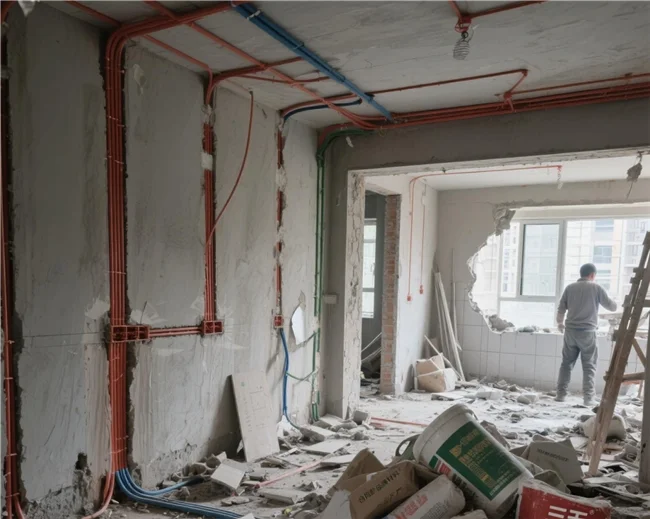
The third month after I bought the house, I signed renovation contract. The other party vowed: "straight management throughout the process, worry-free", and also took out a "quality commitment letter" with a red seal. Everything went well at first, with water and electricity slotting and cement entering the site. I watched the progress in the work group every day until I went to the scene one weekend, only to find that something was wrong:  

→ The kitchen sewer pipe is not the brand agreed in the contract, and the unfamiliar "three noes" logo; is printed on the package;  

→ The waterproof of the bathroom is only 1.2 meters high, and the contract clearly States that "the waterproof height of the wall is 1.8 meters"

→ What’s even more ridiculous is that the electrician directly tied the strong and weak wires together and passed through the pipe. The supervisor later told me that this would lead to signal interference and even bury the hidden danger of short circuit.  

I telephoned the project manager on the spot, but the other party was confident: "The materials are almost the same, so you can save some points. Don’t worry about it if you don’t understand." Complain to the decoration company again, and customer service will always be a delaying tactic of "we will handle it". In less than a month, the construction period was 20 days later than agreed, and the budget was 30% overspent. What they called "treatment" was just to send workers to repair the wall casually and stick loose tiles with glue.  

Looking at the messy construction site, I feel helpless: ordinary people buy houses for decoration, relying on their life savings, can they really only be slaughtered? 

On the recommendation of a friend, I contacted the ox horn supervisor. I remember that Chen Gong, the supervisor, came to the construction site with a bulging tool kit, which contained tools such as an empty drum hammer, a range finder and a phase detector. He squatted on the ground, knocked on the tiles, levelled on the ground, checked the pipeline direction against the hydropower map, and worked hard for two hours. Finally, he handed me a handwritten hydropower acceptance report:  

-The thickness of waterproof coating in toilet is insufficient, and no water closing test has been done;  

-The distance between strong and weak current is less than 15cm, which violates the national standard.  

"These problems will not be changed now, and water leakage and tripping will be troublesome in the future." Chen Gong’s words frightened me. From that day on, he went to the construction site twice a week, taking dozens of photos each time to record the whole process of material entry, process acceptance and problem rectification. Later, a decoration company secretly changed a cheaper gypsum board, and he caught it on the spot: "Look, the anti-counterfeiting code of genuine gypsum board is sprayed on the side, and the code of this batch of goods is printed on the front, which is obviously a counterfeit."  

At that time, I thought that the supervisor’s role was just to "stare at the workers". It was not until later that I realized that every photo they took and every set of data they recorded were quietly weaving an "evidence network".  

The attitude of the decoration company also changed completely after I asked for rework. They even said that I was "unreasonable and in arrears with the project payment" and sent a lawyer’s letter urging the project payment. Angry, I decided to sue. Unexpectedly, the supervisor of Niujiao Prison became my most powerful "support group".  

During the court session, I submitted the records of the supervisor’s inspection at the construction site every time, more than 200 photos and 15 videos, each of which accurately corresponds to the contract terms: the video of tile hollowing detection shot by the supervisor with his mobile phone can clearly hear the hollow sound when the hollowing hammer hits; The acceptance chart taken by the material entry supervisor directly proves that the decoration company changed the brand without authorization, which is inconsistent with renovation contract. The judge later wrote in the judgment: "The video materials of the construction process provided by the plaintiff form a complete chain of evidence, which is enough to prove the defendant’s breach of contract."  

In the end, the court ruled that the other party would refund the overcharged fees, bear all the rework losses, and compensate me for the lost time and mental losses.  

After winning the lawsuit, a friend asked me, "How much did the supervision fee cost? Value? " I calculated the account: the supervision fee was less than 5% of the total renovation fee, but it helped me avoid the loss of at least 50,000 yuan (including rework fee, delay compensation and potential hidden trouble repair). More importantly, it gives ordinary people a "weapon" against the professional team-we may not know how to decorate, but the supervisor uses specialties and records to make every problem traceable and have laws to follow, and help me turn "unfounded words" into "irrefutable evidence". "  

And this lawsuit also taught me that decoration is not luck, but a "battle" that needs professional escort. I am also grateful to the "iron triangle of evidence" of Niujiao Prison, which made me stand firm in the quagmire and convinced me that the rights and interests of ordinary people should never be swallowed up by the "hidden rules of the industry"-as long as someone helps you make every step clear and clear.

In the past, you asked me if I needed a third party to supervise the renovation, and I might not be able to answer. But if you want to ask me which decoration supervision company is reliable now, I will decisively recommend Horn Supervisor!

Intangible cultural heritage knowledge popularization

June 13th is the "Cultural and Natural Heritage Day" in 2020. The theme of this year’s heritage day is "Non-genetic inheritance of healthy life", and the slogan is "Non-genetic inheritance of healthy life for thousands of families", "Non-legacy transmission of health is always accompanied" and "inheriting cultural treasures to protect the natural home". So how much do you know about intangible cultural heritage? Let’s get to know each other ~

1. What is intangible cultural heritage?

.

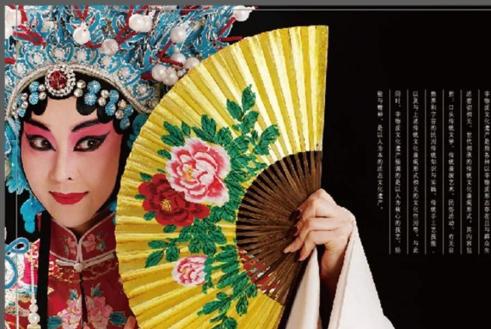
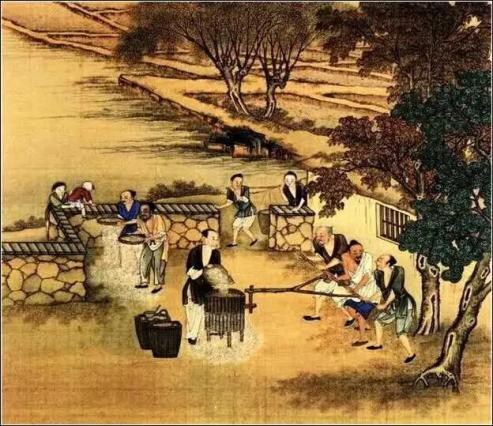
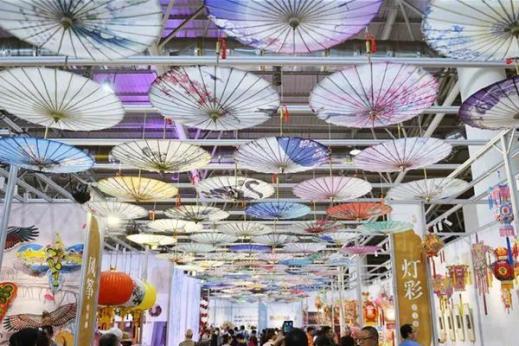
Intangible cultural heritage refers to all kinds of traditional cultural expressions (such as folk activities, performing arts, traditional knowledge and skills, and related appliances, objects, handicrafts, etc.) and cultural spaces that are closely related to people’s lives. Intangible cultural heritage refers to the folk cultural and artistic heritage with national historical accumulation and wide representation, which is mainly oral.

2. What is the scope of intangible cultural heritage?

A. Oral traditions and expressions and language as a cultural carrier;

B. Traditional performing arts (including opera, music, dance, folk art, acrobatics, etc.);

C. social customs, etiquette and festivals;

D. knowledge and practice about nature and the universe;

E. traditional handicraft skills.

F. Cultural space related to the above expressions.

Intangible cultural heritage is passed down by human beings orally or by actions, which has national historical accumulation and extensive and outstanding representative folk cultural heritage. It was once known as the "living fossil" of history and culture and the "back of national memory".

3. What are the characteristics of intangible cultural heritage?

The biggest feature of intangible cultural heritage is that it is not divorced from the special way of life and production of the nation, and it is a vivid manifestation of national personality and aesthetic habits. It exists on the basis of human beings, with sound, image and skills as the means of expression, and is continued by word of mouth as a cultural chain, which is the most fragile part of "living" culture and its tradition. Therefore, for the process of intangible cultural heritage inheritance, human inheritance is particularly important.

4, the intangible cultural heritage classification and code:

It can be divided into ten categories: folk literature (I), traditional music (II), traditional dance (III), traditional drama (IV), folk art (V), traditional sports, entertainment and acrobatics (VI), traditional art (VII), traditional skills (VIII) and traditional medicine (VII).

5. Guidelines and principles of intangible cultural heritage protection:

To protect intangible cultural heritage, we should pay attention to its authenticity, integrity and inheritance, implement the policy of "protection first, rescue first, rational utilization, inheritance and development", and follow the principle of "government-led, social participation, long-term planning and steady implementation".

6. Standard requirements for applying for intangible cultural heritage projects:

1. Real existence, with outstanding historical, literary, artistic and scientific value. 2. Show the cultural creativity of the Chinese nation and reflect the excellent traditional culture of the Chinese nation. 3. It has a long historical tradition and a clear inheritance vein, and it has the characteristics of being passed down from generation to generation and living in a certain group (generally, it is required to be passed down and developed continuously in the local area for more than 100 years). 4. It has distinct regional characteristics and has great influence in the local area. 5. It is typical and representative of Weishui culture. 6. The state of survival is endangered and it is urgent to protect it. 7. There are qualified project protection units. 8. Meet other reporting requirements of the cultural department.

7. Materials to be provided for applying for intangible cultural heritage projects:

1. Project declaration: including project introduction, basic information, historical origin, characteristic value, inheritance pedigree, project management, protection unit, protection plan, etc. (There are standard forms).

2. Auxiliary materials: including audio and video materials, certification materials, power of attorney, commitment letter and other relevant materials.

8. What is cultural heritage?

Cultural heritage includes material and non-material categories. Materials include: immovable cultural relics such as ancient sites, ancient tombs, ancient buildings, cave temples, stone carvings, murals, and important historical objects, works of art, documents, manuscripts, and other movable cultural relics; And famous historical and cultural cities, blocks and villages. Intangible categories include: oral traditions, folk activities and ceremonial festivals, traditional handicrafts, and related cultural spaces.

The second Saturday of June every year is designated as "Cultural Heritage Day".

9. Conditions for application of intangible cultural heritage

There are three basic conditions for declaration, one is artistic value, the other is in an endangered state, and the other is a complete protection plan.

10. Significance of intangible cultural heritage

According to the definition in the Convention for the Protection of Intangible Cultural Heritage adopted by UNESCO, "intangible cultural heritage" refers to various practices, performances, forms of expression, knowledge systems and skills and related tools, objects, handicrafts and cultural sites that are regarded by various groups, groups and sometimes individuals as their cultural heritage. With the changes of their environment, the relationship with nature and historical conditions, various groups and groups constantly innovate this intangible cultural heritage handed down from generation to generation, and at the same time give them a sense of identity and history, thus promoting cultural diversity and stimulating human creativity.

The number of world cultural heritages can reflect the diversity and profundity of the history and culture of a certain region or country. If the material and intangible cultural heritages are rated as world cultural heritages, they will not only attract the world’s attention, but also be better protected and passed down.

UNESCO believes that intangible cultural heritage is an important factor in determining cultural identity, stimulating creativity and protecting cultural diversity, and plays a vital role in mutual tolerance and coordination among different cultures. Therefore, in 1998, UNESCO adopted a resolution to establish intangible cultural heritage selection.

Protect cultural heritage

Guarding spiritual home

Poyang county Rong media center

PYRMTZX

Beauty is in Poyang

Official WeChat Platform of Propaganda Department of Poyang County Committee of CPC

Editor: Jiang Yue Editor: Cai Ying Review: Cao Haipeng

For more wonderful recommendations, please pay attention to us.

authority

·

tall

product

·

Zhenmei

Original title: "Intangible Cultural Heritage Knowledge Science"

Read the original text

In 1968, the golden jade clothes were first unearthed from the tomb of Zhongshan in Han Dynasty.

Zheng Shaozong/Wen

   The excavation of Hanzhong Mountain Mausoleum in Mancheng, Hebei Province was many years ago, when I was only 30 years old and was the only archaeological institution in Hebei Province — — The provincial cultural relics team works in Baoding, which is only 20 kilometers away from the city. Looking back on the excavation scene of that year, I can remember it vividly and vividly.

 In 154 BC, Emperor Liu Qi of the Han Dynasty named Liu Sheng, the illegitimate son, as the King of Zhongshan, where he ruled Lunu County (now Dingzhou, Hebei Province). The picture shows the schematic diagram of the Han Dynasty vassal states.

Discover an ancient tomb

   In the summer of 1968, it was the third year of the "Cultural Revolution", when Baoding’s warfare was famous throughout the country. There are nearly 40 people in the cultural relics team in Hebei Province, and they are also caught in a serious factional struggle. The leading group is paralyzed, and most people are too busy fighting between the two factions to carry out their normal work.

   One day, the Provincial Revolutionary Committee informed me and Comrade Sun Dehai to go to Shijiazhuang, the provincial capital, immediately to have important work. The next day, Zhang Tianfu and Du Rongquan, the political department of the Provincial Revolutionary Committee, met with us and said that the garrison in the city had found a huge ancient tomb in Nanling Mountain and asked us to go to the city as soon as possible to do a good job in the investigation and protection of the ancient tomb.

   On May 28th, Du Rongquan and Zhang Zuliu, director of the Political Department of the Sixty Armed Forces, rushed to the city with us. The struggle between the two factions in Baoding area is very sharp, and there are strongholds of the two factions everywhere. Because the two garrison troops each support one faction, the brand on the military vehicle has become a sign to identify the factions. We are sitting in the 212 Jeep, and the young driver is a very smart soldier. We have to change the license plate every time we walk, because the rebels only recognize the license plate but not the person, and they belong to their own faction, otherwise they will hijack the car and copy people. Almost every walk, people come out to stop and check, and almost every village has fortifications of warfare. It is very difficult to walk 200 kilometers from Shijiazhuang to Mancheng. After crossing Anguo, the car and people were detained. Several cadres in the village found that the license plate was a military license plate, but only Zhang Zuliu was wearing a military uniform. They were very vigilant and said that the group even took the car for one night. The driver quietly said to Zhang Zuliu, "We can’t let them detain the car, otherwise the consequences will be unimaginable." Zhang Zuliu also broke out in a cold sweat. "We went to the city to perform an urgent task, so please cooperate." After several twists and turns and repeated explanations, it was finally released. The group didn’t even attend to lunch, and it was near dusk when they arrived in Baoding.

Panoramic view of the mausoleum of Han Dynasty in Mancheng

   On May 29th, we arrived at the 4749 troops station in Mancheng. Take a break, that is, go straight to the site of Lingshan ancient tomb in the southwest of the county seat. The streets of the city are very depressed, and there are few pedestrians on the road because of the fighting. It’s a warm day. Looking at Lingshan from the field, it’s like a huge and majestic plush chair surrounding the main peak, and the main peak and the North and South Lingshan are like a dignified and quiet arhat, which is very solemn. We climbed the mountain path to the north of the east side of the main peak to the south of the main peak of Lingshan Mountain, and arrived at the entrance of the tunnel under construction. There were soldiers guarding the entrance day and night, and there was a military dog next to it. The project of sheltering the cave entrance at the front of Taihang Mountain has been stopped due to the discovery of tombs. We were eager to know the situation of the tomb, so we called a small warrior forum to know the whole story of the discovery of the tomb.

A major archaeological discovery that shocked the world

   It was already very hot in the city at that time, but it was still cold in the morning and evening. The garrison was still under intense construction. There was a happy track at the southern end of the main peak, which was paved when the tomb was repaired more than 2,000 years ago. This happy track twists and turns to the south to reach the foot of Nanling Mountain. The mountain is covered with thorns, chrysanthemums, cloves, Chinese Pulsatilla and low shrubs. A tunnel is dug from east to west on an exposed cliff face south of the main peak, that is, on the west side of Happy Valley Road, to build a shelter room at the front of the mountain. The company commander Kou Junlin and platoon leader Hu Chonglin are responsible for the project.

The Han Tomb in Mancheng was found behind this door.

   The soldier said that at 11: 00 midnight on May 23, 1968, he was dug to a place 2.5 meters high and 24 meters deep. After the cannon sounded, he found that a hole with a diameter of about 1.5 meters collapsed under the north of the end of the tunnel, and the collapsed rock fell into the hole along the hole. The soldiers immediately reported the news to the company. The company commander Kou Junlin rushed to the construction site from the station several kilometers away overnight, and went into the cave to investigate with the platoon leader Hu Chonglin and the soldier Cao Dianji. They tied a long rope around their waist, and the other end of the rope was led by the soldiers who stayed in the tunnel to avoid being lost in the deep hole and unable to turn around. Entering the entrance of the cave, firstly, it is a circular arch-shaped cylindrical hole, the ground is covered with big tiles, and a large number of utensils, horse skulls and dog bones are pressed under it. Further inside, it is a large-scale hole with a diameter of more than 20 meters and a height of about 7 meters, which can accommodate more than 1,000 people, just like an underground palace. When the soldiers returned to the tunnel entrance by the original road, the company commander immediately stopped the construction, assigned special personnel to guard the scene, and they were not allowed to re-enter. At the same time, they reported to their superiors by telephone.

   After listening to the introduction, we look extremely nervous and excited. What we are nervous about is the heavy workload, heavy tasks, too few people and urgent projects. I am excited that it is the first time for me to come to such a large tomb. I also feel that the cultural relics and burial are unknown and somewhat mysterious. The gold-plated bronze wok and several gold-plated vehicles with the inscription "Zhongshan Neifu" and "Thirty-nine Years" taken out by the soldiers from the tomb attracted our great attention. In 1966, I excavated the tomb of Zhongshan Wang family in the Western Han Dynasty in Sanxian Mountain in Dingxian County, and also unearthed the bronze bell and the wrong gold and silver chariots and horses in the Inner House of Zhongshan. So when I saw these artifacts, I realized that it might be a high-level noble tomb of Zhongshan State in the Western Han Dynasty. The bronze ware was cast by the inner government, which manages the daily life of King Zhongshan, and has a time, which gives us a preliminary idea.

A bronze tablet engraved with the words "Zhongshan Neifu" unearthed from Han tombs in Mancheng.

   Under the guidance of Kou Junlin and others, our party went west along the 24-meter-long tunnel, which was more than one person high. It was very damp and cold in the cave, and white steam rose along the hole. First, a soldier went down, and we also went down from the hole one after another, and landed at 1.5 meters, which is the southernmost point of the south ear chamber of Liu Sheng’s tomb, King Jing of Zhongshan.

   The huge cave is dark, and the visibility is only about 2 meters with large flashlights. Several flashlights can be gathered together to see the ground situation in the cave. We walked north along the long hole, and from time to time there was a "tick-tock" and "tick-tock" dripping sound in the dark, which was very frightening. We were afraid and nervous inside, as if we had entered another world, and we could hear nothing but the dripping sound. The underwater sound flows down from the cracks in the mountain gap at the top of the cave and drops on the cliff surface and the big tile. The most worrying thing is the sudden collapse of the cave roof or the fear that there will be a big snake in the cave to hurt people. But nothing ventured, nothing gained, no matter how dangerous it is.

The north ear room of Liu Sheng’s tomb is a storehouse for food.

   We advance cautiously from south to north, lest we step on the cultural relics under our feet. The first thing I saw was a large number of slab tiles and tube tiles, which were stacked layer by layer, which seemed to be symmetrical in the north and south. The tiles were covered with rope patterns and chord patterns. This large tile was 55 cm long and 35-mdash wide. 40 cm, arranged in an orderly way, it seems that a huge roof has just collapsed. Although it is a little messy, it can be seen that the original arrangement law is mainly symmetrical between north and south, and the middle seems to be the roof. We walked along the two sides of the cave. When we gently uncovered a small part of the tiles, dazzling golden vehicles were exposed below, including gold-plated car frames, bow caps, car covers and so on. Followed by the orderly arrangement of the horse’s head bones, these horses are buried in order, the muscles have long rotted, and now only the bones are left, but the horse’s winding head and gold-plated bodyguard are placed in front of the horse’s head, which should be conscious killing and martyrdom. About 15 meters north, all you can see are real chariots and horses, and about 5 meters north, which is equivalent to the position of the front room (aisle). In addition to the gold-plated silver ornaments of luxury cars, a large number of dog skeletons have been found, which are also covered by collapsed tiles and slabs.

   Continuing northward from the tunnel, we entered a large north-south cave room, about 15 meters long and 4 meters high. This is a huge kitchen. The cave has a slightly higher terrain. A horse head and a water stone mill were found at the entrance, and there was a huge copper funnel-shaped grinding disc under the mill. On both sides of the cave, there are iron furnaces, pottery pots, retort, and rows of huge wine jars, on which the grade of wine is written in red ink. On the lid of the jar, there is a stalactite column about 5 cm high formed by dripping water from the top of the cave, which shows that it has been formed for a long time. On the north side, there are layers of big tiles, and on the lower side, there are mountains of pottery.

Liu Sheng’s tomb room

   From then on, I returned to the cross-shaped front room and tunnel, turned to the west, passed a seepage well, and the terrain was even lower, entering a large cave with a dome top of more than 200 square meters — — Middle room. The middle room is about 6 meters high, and it is a bare frame supported by a huge wooden structure. Because the wooden frame is decayed, the big tiles on the roof fall to the inner surface of the cave, and the layers are stacked naturally and orderly. It can be seen that the house vouchers are north-south, and some precious gold, silver or gold-plated bronzes, jade articles and lacquerware are buried in the tiles in disorder. The central room is surrounded by a drainage ditch, with a square groove on the wall for installing the frame. The ground is divided into three areas: the central area, the southern area and the northern area. The west wall is exposed with a glittering snowflake stone masonry stone gate, which should be the "inner bedroom" for burying the owner of the tomb. There is also an arched cloister-shaped semi-circular cave on both sides of the stone gate, in which no important cultural relics are found, only a few pieces of pottery are found. There are many relics in the middle room. The gold-plated bronze cup (wok) taken out from the middle room is engraved with an inscription on the mouth: "The bronze wok of Zhongshan Neifu, with a capacity of ten buckets, weighs a catty, and was made in September of 39." This bronze wok became an important basis for preliminarily judging the owner of the tomb and its age.

   It took us more than two hours to make a tour of the underground palace. With the light of the flashlight, we found the original road along the west side of the stone wall of the cave, stepped on the tiles, climbed up the round hole collapsed in the south ear chamber and returned to the ground.

   Du Rongquan and Zhang Zuliu agreed on the next work arrangement and returned to Shijiazhuang in the afternoon to report. Archaeologists also began the scientific cleaning, recording and mapping work with protection as the main task that afternoon.

Schematic diagram of Liu Sheng tomb

   This tomb includes the entrance of the tomb, the tunnel, the south ear room, the north ear room, the middle room, the main room and the cloister. According to the post-survey data, the total length of the cavern is 51.7 meters, the widest point is 37.5 meters, the highest point is 6.8 meters, and the volume of the cavern is 2700 cubic meters. The whole cave floor is paved with a layer of loess bed, and the side of the bed is paved with stone strips. The official entrance of the tomb is in the east, and it forms a central axis with the tunnel, middle room and main room in the west. The structure of the tomb spreads from north to south. Because the initial excavation was from the cave in the south ear room, the tomb door was cleaned up at the end. There is a pyramid-shaped mound in front of the tomb door, which is dug under the cliff face south of the main peak of Lingshan Mountain. The tomb is 1 north by east. The entrance of the pyramid-shaped mound is circular, and the two side walls are arc-shaped. From the vault to the ground, two layers of adobe are built, with a gap left in the middle, and then poured with molten iron to form a solid iron gate, which cannot be opened to form an iron wall; The iron gate is filled with large pebbles, stones and loess, which makes it impossible for future generations to dig and enter the tomb.

   Investigators will write a special report on the results of preliminary investigation and cleaning, especially the bronze wares found in the tomb, and submit it to the provincial government. After that, it was transferred to the CPC Central Committee and Premier Zhou, and finally to Guo Moruo, president of China Academy of Sciences. According to Premier Zhou’s instructions, Guo Moruo sent Hu Shouyong from China Academy of Sciences, Wang Zhongshu from the Institute of Archaeology and Lu Zhaoyin and his party of 13 people to Mancheng and Hebei Provincial Cultural Relics Team to form an excavation team on June 26th to clean up the tomb.

Guo Moruo visited the excavation site.

Guo Moruo (first from the left in the front row) is at the archaeological site of the Han Tomb in Mancheng.

   During the excavation of Liu Sheng’s tomb, Guo Moruo received a report from Hebei provincial government to the State Council. According to a large number of bronzes with the inscription "Zhongshan Neifu" unearthed in the tomb and the contents of "34 years" and "39 years" in the inscription, he first pointed out that this is the tomb of Zhongshan State in the Western Han Dynasty, and that only Liu Sheng, the first generation of Zhongshan King, was the king of Zhongshan State for more than 39 years, and then determined that this tomb was the tomb of Liu Sheng, the king of Zhongshan Jing in the Western Han Dynasty. While making a scientific conclusion on such a crucial academic issue, Guo Lao also gave instructions on relevant details. Shortly after Liu Sheng’s tomb was opened, according to Premier Zhou’s instructions, he went to the city to inspect and guide himself, regardless of his age and long journey, especially the danger of the warfare during the "Cultural Revolution" at that time.

   On July 21, the day before Guo Lao visited the city, the resident troops and archaeological teams received a notice: "Guo Lao is coming!" The excavation site and barracks apartment are boiling, and everyone is immersed in a very happy atmosphere like a holiday. According to the order given by Premier Zhou to the local garrison two days before Guo Lao came: "Guo Lao will visit the archaeological excavation site in the city, and the garrison will be responsible for the security work along the way." A sentry post was set 50 meters on both sides of the road along the way and escorted to the city.

   At 6 o’clock on the morning of July 22nd, Guo Lao and his party set off from Beijing, made a short stop in Baoding at 9 o’clock, and then went all the way to the army barracks in Mancheng. After a short rest, they drove straight to Lingshan cemetery.

   Guo Lao changed to a jeep at the foot of Nanling Mountain, and along the rugged mountain road, the car drove all the way to the level of Happy Valley Road in front of Liu Sheng’s tomb at the top of the mountain. Our archaeologists and the soldiers who participated in the excavation lined up in two rows to wait for Guo Lao. Guo Lao walked slowly out of the car accompanied by the head of the army, said hello to everyone, shook hands with the comrades one by one and asked everyone. Comrade Lu Zhaoyin, the head of the army, introduced Guo Lao.

   Guo Lao first visited the geographical features of Lingshan, and then entered the tomb under the guidance of archaeologists. At that time, the main entrance of Liu Sheng’s tomb had not been dug, and it was necessary to enter and exit through the south ear chamber through the collapsed tunnel entrance. For the sake of safety, a wooden ladder was set at the entrance of the tunnel before Guo Lao arrived, so that the escalator could go up and down. With the help of the staff, Guo Laoshun entered the tomb by wooden ladder. From the carriage house into the aisle, through the food storage room, through the middle room, and then into the main room and cloister, Guo Lao watched us and explained. The temperature inside the cave is very low, and Guo Lao and our staff are all wearing cotton coats. Guo Lao read it very carefully, and put forward academic opinions every time he finished reading it, especially the bronze wares with inscriptions unearthed in the tomb, and put forward the interpretation methods and meanings one by one. When visiting the main room where Liu Sheng was buried, he was very careful. He pointed out: "Liu Sheng is a vassal, and the burial system is the most noble. Liu Sheng, dressed in gold and jade clothes, confirmed the authenticity of the gold and jade clothes recorded in Historical Records, the Book of the Later Han Dynasty and other records for the first time, which has very important scientific value. " Guo Lao gave detailed instructions on the recording, mapping and photography of the archaeological site, and also put forward suggestions on using infrared film to shoot the stone wall of the main room.

   Guo Lao watched the North and South Lingshan Mountain, the main peak of Lingshan Mountain and the ancient road of Lingshan Mountain with great interest. While watching it, he also reminded everyone that "after the death of princes and nobles in the Han Dynasty, there was a system of repairing temples and trees", and quoted the examples of Taishique in Dengfeng, Henan Province and Gaoyique in Ya’ an, Sichuan Province. "There should be temples on this Lingshan Mountain. Have you found any remains?" Everyone replied that the architectural relics of the Western Han Dynasty have been discovered and are currently being studied. Guo Lao added: "There are a large number of artificial stone tablets in the north of the main peak and the junction with Liu Sheng’s tomb. If you want to check, there should be a queen’s tomb. Historical Records records that Liu Sheng had a son ‘ One hundred and twenty people ’ , "Hanshu" said he had ‘ One hundred people belong to Zizhi ’ , he ‘ Good wine and good meat ’ , and the ordinary brother of Emperor Wu, with extremely prominent position and great power, not to mention the rich Zhongshan, which is pyramid-shaped on the mountain ‘ Prince’s grave ’ It should be related to the historical records that he has many children. "It should be all his descendants."

   After visiting for about two hours, Guo Lao went down the mountain by car and left for Beijing at 4: 30 pm.

   Guo Lao’s inspection has brought great encouragement to the archaeologists. After more than 10 days of continuous work, people worked hard to clean up Liu Sheng’s tomb on August 2, and after detailed statistics, 5,509 cultural relics were unearthed.

Excavation of Queen Dou Wan’s Tomb

Changxin Palace Lantern Unearthed from Dou Wan’s Tomb

   On July 22, 1968, after Guo Lao returned to Beijing, he reported to Premier Zhou the discovery of Han tombs in Mancheng, and Premier Zhou gave instructions. Soon, the Hebei provincial government and the garrison troops received a notice from the State Council, demanding that the cave remains of Tomb No.1 be preserved in situ and the cultural relics be transported to Beijing for study, and decided that the original team would continue to excavate another tomb north of Liu Sheng’s tomb, namely Dou Wan’s tomb. On August 6th, the provincial government sent Comrade Zhang Tianfu to Beijing to study the next work, and at the same time sent a small number of people to conduct on-the-spot investigation to determine the specific location of Tomb 2. After 10 days’ rest, the excavation personnel gathered in the city on August 12. The China Academy of Sciences and the Hebei Provincial Government attached great importance to it and sent leading comrades to come. After conveying the relevant instructions of the central authorities, the excavation work was officially launched on August 13th.

   First, it starts from the north third of Tomb No.1.. There are no layered natural rocks on the slope, only rocks turned from the middle. Below the rubble is loess, and below it are the large and small stones that fill the tomb. After the layers were cleared, the top of the pyramid-shaped mound was exposed on the afternoon of August 14th. Judging from the accumulation of stones, the volume of the tomb is not too small. The arch coupons dug manually along the tomb door are cleaned downwards, and the brick and iron walls that seal the door are opened to enter the tomb. The structure in the tomb is basically the same as that in the No.1 tomb, including the tomb entrance, the tunnel, the south and north ear rooms, the middle room and the main room. Liu Sheng’s pyramid-shaped mound gate and Dou Wan’s pyramid-shaped mound gate are almost on the same level.

   The excavation of Dou Wan’s tomb began at 8: 30am on August 13th, 1968 and ended on September 19th, with 5,124 cultural relics unearthed.

   From the discovery of Tomb No.1 on May 23rd to the end of the excavation of Tomb No.2 on September 19th, the excavation of Liu Sheng and Douwan tombs lasted for 111 days. During the period from August 3rd to 12th, there were 10 days of rest and 101 days of actual field work.

Uncover the mystery of golden thread and jade clothes

Unearthed site of Liu Sheng’s tomb.

   The cultural relics buried in the Han tombs in Mancheng are extremely rich, with more than 10,000 precious cultural relics unearthed from the tombs of Zhongshan Wang Liusheng and his queen Dou Wan.

   Liu Sheng and Dou Wan were both dressed in gold and jade clothes after their death. Liu Sheng was a man and Dou Wan was a woman. It’s all gold thread. Here we mainly introduce Liu Sheng’s gold thread and jade clothes.

   The main room is the most abundant burial place in Liu Sheng’s tomb, and a large number of precious cultural relics are found in the main room. Liu Sheng is wearing a golden jade garment which was discovered for the first time in China. It comes out of the coffin of the main room. As far as the whole tomb is concerned, the main room is in the center of the whole tomb and belongs to the hidden coffin.

   On July 12th, the stone gate of the main room was opened. When archaeologists first saw such a strange burial suit woven with gold wire and shiny jade pieces, everyone gave a sigh unconsciously. Wow! I almost jumped for joy. For a group of archaeologists, some of us have been engaged in archaeological work for decades and have never seen such luxurious burial clothes. Everyone only knows from Records of the Historian, Hanshu and other relevant records that the emperors and princes of the Han Dynasty wore gold and silver jade boxes or jade boxes for burial after their deaths, but never saw the real thing. According to the cultural relics reports, before liberation, archaeologists unearthed jade pieces in the Western Han Tomb in Wang Lang Village, Handan. At that time, it was called "Zhu Li Shi" in "Mozi Festival Funeral". Everyone said in unison, "This important discovery is bound to cause shock at home and abroad."

   As a personal form, jade clothes are complete, including head, trunk, limbs, hands and feet, etc. The deceased was lying on his back in jade clothes, and his head was covered with a rectangular gold-plated jade-inlaid copper pillow. Put your hands on your lower abdomen, hold Yuhuan in your left hand and Yugui in your right hand. Cover the genitals with a round jade jar. There is a jade plug in the anus. There is a long-handled iron ring knife on the left side of the jade garment, and there is a gold belt on the side of the knife. There are two handles of jade tools and iron swords on the right side of the jade clothes. A large number of jade articles and weapons were buried between the coffins on the right side of the jade clothes. These are all things that the deceased carried with him before his death.

   Liu Sheng’s jade clothes, when cleaning the back room, were covered with a layer of rotten wood and patent leather due to the collapse of the slate at the top of the room and the collapse of the coffin. After gently removing the paint skin and rotten wood board ash with a bamboo stick and a brush, I found this golden jade garment made up of gold wire and jade pieces. The corpse of the owner of the tomb has been decayed for a long time, which has turned the jade garment into a 1.88-meter-long flat body composed of jade pieces. The head, coat, trousers, gloves and shoes have been deformed. Some gold wires with jade pieces have also been broken. Clean up and reinforce at the same time. Clean up the numbering, drawing, photographing and recording one by one at that time. If it has been found that the position is wrong, it should be restored to its original position, and the gold wire and jade piece should be reinforced one by one. So that all the parts of it are no longer loose and disorderly. Draw a large map on the spot. Mark the numbers on the drawing one by one, and take photos and records with the cleaning. But it is more detailed about the front. However, the back of the jade garment is still under pressure and technical work cannot be carried out. So do it indoors after taking it off.

The staff is at the archaeological site of the Han Tomb in Mancheng

   The method of taking it is to adopt the method of self-made metal wire mesh and dish out. According to the size of the jade garment, a rectangular frame is made of iron wire with a thickness of 6 mm, which is set around the jade garment. Use thin wire to pass back and forth from under the jade clothes in vertical and horizontal straight lines, and tighten and straighten the thin wire, so as not to be careless. Then, the two ends of the fine iron wire are twisted on the outer frame of the thick iron wire, so that the fine iron wire forms a square mesh under the jade clothes, and the jade clothes can be lifted more smoothly. In order to prevent the surface of the jade garment from being disordered during extraction, several layers of hemp paper were laid on the jade garment, and a layer of 2-mdash was poured on the hemp paper. 3 cm of plaster. After such treatment, the jade clothes become a whole, and the jade clothes can be extracted smoothly and steadily, put on the prepared mat, and spread two layers of hemp paper on the cotton with a thickness of about 5 cm, and put in a rectangular wooden box. Cover it with two layers of hemp paper, and then spread it with cotton and transport it indoors. When finishing, gently remove the hemp paper, cotton, gypsum and hemp paper in turn. Disassemble the screen, and repair the jade clothes according to the original big picture measured.

Golden wisp jade clothes unearthed from Dou Wan’s tomb (after restoration)

Golden wisp jade clothes unearthed from Liu Sheng’s tomb (after restoration)

   The shape of jade clothes is the same as that of human body, which is basically designed according to various parts of human body. Jade pieces with different shapes are used, including square, rectangle, quadrangle, polygon, trapezoid, triangle, ring wall and so on. Face, head and hand jade pieces are 1.5— 3 cm, width 1— 2 centimeters. Jackets, trousers and shoes are large, generally 4.5 cm long, 3.5 cm wide and 0.2&mdash thick; 0.35 cm.

   After each piece of Pian Yu is polished, the edges and corners are ground with hypotenuse, and holes are punched out at the four corners or around each piece, which are braided with gold wire. Jade garment is composed of 2498 Pian Yu pieces, and the weight of shared gold thread is about 1100g.

   Jade clothing is also called jade box or jade bang. According to the Records of Etiquette in the History of the Later Han Dynasty, the emperor’s jade clothes were made of gold thread, the princes and princes began to seal them, the nobles and princesses used silver thread, and the dignitaries and princess royal used copper thread. Jade clothes have been customized in the later Han Dynasty. According to the records, Liu Sheng can only use silver and jade clothes, but what actually appears is gold and jade clothes. There are only "jade clothes" and "jade sticks" in the records of Hanshu, but there is no distinction between gold, silver and copper strands. This is because it was not customized at that time.

   When it was discovered, the golden thread jade garment was flattened because of the collapse of the roof. There were no formed bones, and some comrades doubted whether there were any bones at that time. That is, whether there is a body in the original jade clothes. This problem has not been solved in the excavation site. After entering the room, it was discovered that the bones in the jade clothes had already turned into grayish brown powder due to the dissolution of groundwater and limestone, and the enamel shells of some teeth were also found inside the head. To be sure, the bones have decayed in the jade clothes, leaving only traces.

   This article is selected from the 163rd Collection of Literature and History Materials sponsored by Chinese People’s Political Consultative Conference Culture, Literature, History and Learning Committee and compiled by the Literature and History Museum of the Chinese People’s Political Consultative Conference. The article title, some subheadings and pictures are added by the editor. Zheng Shaozong, once the archaeological leader of Jehol Provincial Museum and the director of Hebei Provincial Institute of Cultural Relics.

How much is the annual salary when Lei Jiayin asks you to work in your company? Dong Yuhui’s humorous answer made people laugh.

"Walking with Hui" was officially launched a few days ago. Not only was the live broadcast room very lively, but also its popularity exploded. At the peak, the number of online users was as high as 1.7 million, the number of fans increased by more than 3 million, and the sales revenue exceeded 100 million.

The characteristic of Dong Yuhui’s goods is not just to say "link", but to tell knowledge and stories in the live broadcast room. Dong Yuhui has connotation, full of ink, which makes him numerous (collectively: mother-in-law).

Recently, when Lei Jiayin attended an activity, he teased himself that he was depressed at first, but he was defeated by his nonsense when he first arrived at the live broadcast room of "Walking with Hui". Of course, when you watch the live broadcast, you can buy what you want. This is what you love and live. Look at the way he holds a big head. Does he not believe in his mother-in-law’s "spending power"?

Interestingly, Lei Jiayin said a very sensitive topic that everyone wanted to know. He said: Last time I wrote privately to Dong Yuhui, what was the annual salary for working in their company? Lei Jiayin’s simple sentence really caught everyone’s gossip. Dong Yuhui answered him humorously: coming to the interview is a bonus. As for the annual salary, you can talk to your boss. Of course, I believe that our boss will tighten his belt, and he will immediately nod his head and agree to join you when he eats 1: 1 rice every meal.

From the conversation between Lei Jiayin and Dong Yuhui, it can be seen that their EQ is very high, and joking is a joke, so stop at the moment. Most importantly, they know how to grasp their emotions and make the whole chat atmosphere relaxed and happy. Being able to achieve such an effect shows that their relationship is unusual.

Last year, Lei Jiayin went to Dong Yuhui’s live broadcast room, one dressed in purple and the other in red, which was called "Big Red and Big Purple" by netizens. I feel very cordial from the chat between the two people. Lei Jiayin’s thinking is clear and meaningful, but he doesn’t forget to promote his movie "Exchange Life". The two people didn’t mention the sale of movie tickets in the chat, but in the end they sold 130,000 copies.

In 2024, Lei Jiayin and Jia Ling starred in the film YOLO, which was officially released on the first day of the year. From the trailer, Jia Ling plays Du Leying and Lei Jiayin plays Hao Kun, a boxing coach. Du Leying is a very obese person and needs to lose weight. Hao Kun’s training with her as a coach was very hard, but the scene made people laugh. All in all, from the exposed pictures, the two people contributed a lot of jokes.

Jia Ling revealed: YOLO is not a simple boxing slimming inspirational film, but also stories about friendship, family and love. Jia Ling is a comedian, and when the film is released, it will definitely bring a lot of joy to the audience.

A few days ago, Jia Ling posted on the social platform that she had successfully lost 100 pounds. After this amazing news came out, she quickly boarded the hot search list and won high attention. As it happens, the film she starred in was ready to be released, which earned a wave of attention.

Speaking of this year’s Spring Festival, there are two films released in Lei Jiayin, and the other one is "Article 20" directed by Zhang Yimou. In recent years, the Spring Festival in Lei Jiayin has been staged one after another. In 2022, it starred in the TV series "In the World", in 2023, it starred in "Man Jiang Hong" and "Exchange Life". This shows that Lei Jiayin is very lucky and rich in resources. Either starring in the works directed by the great director or starring in the explosive drama series, the audience has a good relationship and can win awards.

It is obvious to the naked eye that the development of Lei Jiayin’s performing arts industry has hardly stagnated in recent years, and it is rich in resources and contacts.

In September last year, a gossip reporter broke the news that Lei Jiayin had evaded taxes. When the news came out, it immediately caused an uproar. Later, this reporter deleted this message. It seems that the news of Lei Jiayin’s tax evasion is not true. It has long been known that stars have a strong ability to attract gold. As long as they have enough self-discipline and do what they should do, they are not worried about intentional attacks and slanders from outside.

Guangzhou people’s sense of ceremony for the New Year begins with "off-year"

Guangzhou people’s sense of ceremony for the New Year begins with "off-year", such as thanking the stove, boiling oil in wok, steaming cakes, washing sloppy clothes, and sticking out the spring to bid farewell to the old year and welcome the new year. Every day, there are different arrangements. Lunar New Year is a very important folk festival in China, also known as the Festival of Sacrificing Kitchen, the Festival of Kitchen King and the Day of Cleaning Dust. Interestingly, the dates of such an important folk festival vary from region to region. The northern part of the country celebrates the Lunar New Year on the 23rd of the twelfth lunar month, while the southern part celebrates the Lunar New Year on the 24th of the twelfth lunar month, and the customs and habits of the northern and southern parts of the country are different. Guangfu people also attach great importance to the nodes of the 23rd and 24th of the twelfth lunar month-recently, in an interview with reporters, Rao Yuansheng, a special researcher of Guangzhou Development Research Institute of Guangzhou University and director of Guangzhou Folk Culture Research Institute, said that from the traditional customs, Guangfu people have to thank and send stoves these two days. "The relevant customs of thanking stoves have always existed, and the completion of this ceremony means officially entering the rhythm of resigning the old and welcoming the new." After the off-year, the north and the south are very different. They worship the kitchen god in the off-year and look forward to the Spring Festival. As a prelude to the Spring Festival, "offering sacrifices to the stove to enter the new year", which is called "off-year" in the north, is usually regarded as the beginning of a busy year. In the pre-Qin period, the sacrificial stove was always in summer, and it was a celebration for Zhu Rong, the god of fire. It is a custom only in the Jin Dynasty to move the day of offering sacrifices to stoves to the twelfth lunar month. "Qing Jia Lu" quoted the local customs in the Jin and Zhou Dynasties as saying: "The 24th day of the twelfth lunar month is dedicated to the kitchen …" According to records, from the Song Dynasty to the middle of the Ming Dynasty, the 24th day of the twelfth lunar month was regarded as a small year in both north and south. Taking the 23rd day of the twelfth lunar month as a small year, it appeared in the late Ming Dynasty and was first popular in some northern areas. By the Qing Dynasty,The custom of celebrating the 23rd of the twelfth lunar month is popular among the people in the north. With the passage of time, the 23rd of the twelfth lunar month is gradually regarded as a small year in the northern region, while the 24th of the twelfth lunar month is mostly regarded as a small year in the southern region. Due to different local customs, the time of off-year is not absolutely unified. Moreover, different regions and customs are different. Sacrificing stoves in the off-year is a common custom in the south and the north. "Explanation of Names" says: "Cooking stoves creates food." In myths and legends, the duty of the kitchen god is to take charge of the kitchen fire and manage the diet. Sacrificial stoves are endowed with a beautiful meaning of praying for the safety of the whole family and happiness in the coming year. We have to sweep the dust on the day of the sacrifice. Northerners call it "sweeping the house" and southerners call it "dusting". According to the folk saying, "dust" is homophonic with "Chen", so sweeping dust is also called "sweeping Chen", sweeping away old things, which means not only cleaning up the old dirt in the courtyard, but also cleaning up the unhappiness encountered in the old year. In terms of customs, the difference is that the north eats jiaozi and stick grilles, while the south eats stove candy. "Seeing jiaozi off on the windward side" is a common saying in the north. jiaozi almost never misses every festival in the north, and off-year is no exception. Jiaozi takes the meaning of "alternating the old with the new, making friends at a younger age". During the Spring Festival, jiaozi is an indispensable food on the table of every household. In northern China, people are used to eating jiaozi at night. Cutting window grilles is also one of the most important folk activities in northern China, mostly to prepare for the New Year. The window grilles contain all kinds of animals, plants and other anecdotes. Under everyone’s skillful hands, the magpie climbed the branches of Chimonanthus praecox and the swallow jumped onto the peach branches.The lion is busy rolling hydrangeas … These window grilles with auspicious and beautiful meanings are pasted on doors and windows to pray for happiness in the coming year. In the south, we eat stove candy on off-year days. Cooking sugar often takes corn, millet, rice and barley malt as raw materials, and after several processes such as boiling sugar, kneading sugar and pulling sugar, it is finished by covering its surface with sesame seeds. Legend has it that everyone hopes that inviting Kitchen God to eat sweets can make him put in a good word. In addition, there are many different off-year customs all over China. Popcorn candy is a special food in Jingan, Jiangxi Province. On this day of off-year, the local people will make popcorn candy with maltose and popcorn, which means a great fortune and a happy life in the new year. In Fuzhou, sugar cane is an essential food for offering sacrifices to stoves. Taking its meaning of "increasing day by day", we will get a good start for the new year. Whether it is the 23rd or 24th of the twelfth lunar month, it is a custom to bid farewell to the old and welcome the new, and it is also a good hope for the coming year. Although the days are different and the customs are different, regardless of the north and the south, everyone hopes that the new year will be healthy and safe. People in Guangzhou don’t celebrate off-year holidays? In fact, the custom of "Xie Zao" has been circulating! Some people in Guangzhou said that "Winter is the New Year", and the family had a grand time on the winter solstice, but "Laba" and "Xiao Nian" did not seem to be impressed. Is it true that people in Guangzhou don’t celebrate off-year holidays? In this regard, as a well-known scholar of Guangfu culture, Rao Yuansheng believes that Guangzhou people may not pay special attention to the concept of "off-year", but it does not mean that everyone does not pay attention to the twenty-third and twenty-fourth days of the twelfth lunar month. "From the traditional customs, Guangfu people have to thank and send stoves these two days.Therefore, this node is also very important for Guangzhou people-after completing the ceremony of thanking the stove, it will enter the rhythm of resigning the old and welcoming the new. " Rao Yuansheng told reporters that regarding the custom of thanking and sending stoves, "in fact, it has been circulated all the time." Food is the most important thing for the people, and eating is regarded as a big thing. In ancient times, it was said that the kitchen god was responsible for managing the kitchen fires of various families. Before the Chinese New Year, the kitchen god had to report to heaven on his work, so it became an important ceremony to thank and send the kitchen. "On this day, everyone should prepare some tributes, including a bowl of rice, two pieces of sugar, a letter of profit, a bowl of clear water, a piece of roast pork, some sugarcane, oranges, paper money, etc., and do enough courtesy. In addition, there is some maltose-folklore hopes that the kitchen god will say more sweet words and good deeds after eating dessert to ensure the peace of the kitchen in the coming year. " "Guangfu people’s’ Xie Zao’ is a must, at least a good meal, eating chicken, eating roast meat, etc." Rao Yuansheng believes that there have been different opinions on whether to hold the ceremony to thank the kitchen stove on the 23rd or 24th of the twelfth lunar month. "There is a folk saying that’ officials, three people and four people are responsible for the kitchen stove’, which means that in ancient times, the official family began to thank the kitchen stove on the 23rd of the twelfth lunar month, the people were responsible for the 24th of the twelfth lunar month, and it was the turn of the kitchen stove family (water residents) on the 25th of the twelfth lunar month". As for why the ceremony of "thanking the stove" seems to be gradually forgotten by everyone, Rao Yuansheng said that it may be related to social development. "In the past, every household had a stove, but now everyone uses a gas stove and an induction cooker. In this environment, the scene is missing, and this ceremony is slowly omitted." Beautiful traditional customs,Like the gentle breeze and drizzle affecting every generation, Rao Yuansheng introduced that after "thanking the stove", every day has different arrangements: at the age of 23, the clothes are washed; At the age of 24, clean the side of the house; At the age of 25, sweep the house and dust; At the age of 26, clean the poultry house; At the age of 27, the inside and outside are washed into one; At the age of twenty-eight, wipe the furniture; At the age of 29, all the sundries were moved away. On the 23rd and 24th of the twelfth lunar month, we have to thank the stove, wash bask in the quilt and clothes, and the family begins to prepare for the New Year. We also have to have a toothache and have a good meal. After Xie Zao, in addition to continuing to clean, we have to "blow up". "Boil the wok!" Many people in Guangzhou follow the tradition of making "oilers", that is, frying oil horns, frying piles, scattered eggs, smiling dates, sugar rings, salty water horns, red bean paste horns and other cakes, which are crispy and delicious, with beautiful meanings. "I remember that when I was a child, we not only helped my family to make oil angle, make scattered eggs and cut cow ear cakes, but also went to my classmates’ homes to help. I was very happy." Rao Yuansheng said, "Fried piles are full of gold and silver" and "Fried piles in the evening, people have me", and fried piles are essential. "Open oil wok" fried oil angle Qing Dynasty "Yuedong Notes" recorded that there was a kind of food fried in Guangzhou during the Qianlong period. "The custom of Guangzhou was that the glutinous rice valley was fierce and hot at the end of the year, and it was called Paogu, which thought that fried piles were trapped in the heart; For those who fry piles, glutinous rice flour is used as the size circle to add oil effect, so as to give sacrifices to relatives and friends first, and then glutinous rice is used to make pig flowers into oil frying, which is called ten flowers; Stir-fried with powdered white sugar sand in pig oil, named Shayong. " But because eating these "oilers" will "get angry",In addition, it is very convenient to buy seasonal food now, so there are fewer and fewer neighborhoods that "boil oil" at home. In the twelfth lunar month, every household is busy steaming cakes. Besides steamed rice cakes, people in Guangzhou also like to make radish cakes, water chestnut cake cakes and nine-layer cakes. The word "cake" and "high" are homonyms, which means "step by step in the Spring Festival". Roll up your sleeves and clean up, bid farewell to the old year and welcome the new year. There is a common saying in Guangzhou that "cleaning the house on 26th and washing it on 27th", and there is also a tradition of "washing untidiness on 28th", that is, carrying out general cleaning around 28th of the twelfth lunar month. It is said that the origin of this custom can be traced back to the Shang and Zhou Dynasties. The Book of Building a House in Secret Austria records that "the ditches are clear, the houses are clean, there is no foul gas and no plague". The Qing Dynasty’s Qing Jia Lu even suggested that "La will be disabled, so it is advisable to choose a constitutional book (referring to the almanac) to sweep away the house and go to the court for dust and filth, or on the 23rd, 24th and 27th, it is vulgar to beat Ai Chen." In addition to cleaning the house, this custom has another meaning, which means to "sweep" all bad luck and mildew out of the house, pinning people’s desire to break new ground and create new things, and praying for a new atmosphere in the new year. On the 29th of the twelfth lunar month, after cleaning the house, the industrious Guangzhou people are busy, posting Spring Festival couplets at home, representing going to the old and welcoming the new year. People in Guangzhou call Spring Festival couplets "waving spring". There are many styles of waving spring, besides the word "Fu" which means "Happiness is at the door", there are all kinds of Chinese characters waving spring for good luck in the New Year, such as "heavenly god blesses the people", "Happy New Year", "Everything wins", "Go in and out safely" and "Congratulations on making a fortune".Auspicious words such as "the mountains, the sun and the moon are long". On New Year’s Eve, have a reunion dinner together. Lunar New Year’s Eve is also called New Year’s Eve, and Guangzhou is commonly known as "New Year’s Eve". People in Guangzhou will have a neat family dinner, which means reunion. Cantonese-style reunion dinner must be served in even numbers, and the dishes are also very knowledgeable. There must be several ingredients on the dinner table that symbolize good omen for the reunion dinner: chicken (Guangzhou people often say "no feast without chicken"), fish (more than every year), pig’s hand (making a fortune), lettuce (making a fortune), roasted meat (being strong and healthy), Nostoc flagelliforme and oyster sauce (making a fortune), vermicelli (continuous) and yuba (rich and sweet) "Selling laziness" means selling children’s laziness and being smarter and more clever in the new year. Rao Yuansheng said that after listening to the old people, they had to do one thing when they were young, that is, call friends and friends to "sell laziness". Each child took a lantern and a red egg, lit a wick of incense, and went to the streets and lanes to sing: "Sell laziness, sell it at the end of the year, people are lazy and I am not lazy!" The children sang and walked to the land temple in groups and sold "lazy" to the land temple. However, many children don’t know the annual custom of "selling laziness" now. "Washing sloppy clothes, steaming rice cakes, pasting spring flowers, buying new shirts, and buying New Year flowers … When I was a child, I prepared for the New Year with my family. Now I take my children to say goodbye to the old year and welcome the new year. The’ taste of the year’ in Guangzhou has always warmed me." On social media, many neighborhoods feel that traditional customs are "interesting" and "unforgettable". Rao Yuansheng said: "Many beautiful traditional customs affect every generation like a gentle breeze and drizzle.We hope that good customs can be passed down, and everyone will have a better Spring Festival and be closer to life in Chinese. ". These folk customs "sense of ceremony" are indispensable. "The whole person is super happy at the thought of going to the flower street this year!" As a young "Guangzhou boy", the netizen "A Le" said that he had been shopping with his family since he was a child. "The flavor of Guangzhou may be in that pot of flowers." There are also "new Guangzhou people" who say that the biggest impression of Guangfu’s annual taste is "Italian head". "Isn’t this the homophonic stalk of Guangzhou?" Very interesting. " In Guangzhou, the traditional Chinese New Year folk custom, which is full of "sense of ceremony", has promoted the rise of fireworks in the city. Sticking the word "Fu" is particular. Besides waving spring, on New Year’s Eve, everyone likes to stick a word "Fu" at the door. Many people like to paste the word "Fu" upside down, but Rao Yuansheng reminds everyone that there is another saying, "The word" Fu "at the gate cannot be pasted upside down, but should be pasted right now. If you want to paste the blessing on the trash can and water tank, you can paste it backwards, because the trash can and water tank are to be’ inverted’. " Writing about the Spring Festival couplets’ Flower Street Universiade "Spring Festival Evening, Flower Street, Spring Blossoms Full of Rows, Thousands of Flowers Blooming …" This well-known Guangzhou folk song describes the scene of a family, old and young, walking in the flower street. "Not going to the flower market is not a New Year". For Guangzhou people, it is only a complete trip to the flower market before the Spring Festival, which means "going to the Universiade" in the New Year. When walking in the flower street, Guangzhou people like to buy flowers and windmills. Among them, the windmill symbolizes the wind and water in the New Year, and the annual flowers mainly refer to the flowers that should be celebrated.There are traditional peonies, daffodils, chrysanthemums, cockscomb flowers, silver willows, etc., and there are also Phalaenopsis, lilies, peonies, roses, Belgian rhododendrons, roses, etc. that have emerged in recent years. Peach blossom and New Year’s orange are even more indispensable-Cantonese "red peach" and "grand plan" are homonyms, so buy peach blossom and hope to "make great achievements"; The New Year’s Orange symbolizes good luck. Ornaments and red envelopes are hung on the New Year’s Orange to create a beautiful holiday atmosphere. Rao Yuansheng revealed that the flower market is downstairs. "Don’t look at the sea of flowers and crowds on New Year’s Eve. When I woke up at the beginning of the year, the whole city miraculously returned to the tranquility of life, and the flowers were transferred to thousands of households. This is the time to witness the miracle, and it is also a very hard time for sanitation workers. For the common sense of ceremony, many people are silently contributing. " The meaning of "meaning head" in Cantonese is similar to the meaning of "color head" in Mandarin, and everything should be auspicious. Rao Yuansheng introduced that Guangzhou people should buy sugar cane with a head and a tail during the Chinese New Year, and buy lettuce with roots, all of which are part of the "talking about meaning". "I remember when I was a child, I had to put two fried shad in the rice jar, covered with two pieces of red paper and put two oranges, which meant that there was more than one year." Rao Yuansheng said that in the old days, people in Guangfu still had the tradition of "celebrating the year". In addition to shad, they also had to buy a whole cane, and lettuce, celery, red onion and garlic with roots were put in a rice jar full of rice, which respectively represented "having a head and a tail" and "weighing the cane" (Cantonese, meaning that things were going very smoothly.Some of these behaviors are exquisite. When we were young, our parents always told us to "don’t talk nonsense" during the Spring Festival, and some behaviors were also exquisite during the Spring Festival. Avoid unlucky words. In terms of speech, unlucky words should be avoided as much as possible during the Chinese New Year. In addition, the New Year’s atmosphere is jubilant, and people will think that children’s crying is inconsistent with the atmosphere, so when the New Year comes, parents usually don’t severely reprimand their children and try not to affect the jubilant atmosphere. Sweeping in does not sweep out the cleaning before the Spring Festival. According to the custom, when cleaning, you should sweep the door first, preferably in the order from outside to inside, from roof to underground, from hall to kitchen. Remember not to sweep from the inside out, especially don’t sweep the garbage directly out of the hall. Moreover, on New Year’s Day, we also pay attention to not sweeping the floor, so as not to sweep away all the "wealth" of the new year. At the end of the twelfth lunar month, it is a happy day for the whole family. Everyone hopes to be safe, healthy and healthy. The traditional concept is that it is best not to travel far at this time, and the family is round and round.