It snows in Chengdu today! Netizen: Scalp snow, it is also snow.

just now
Downtown Chengdu, get off! Snow! Yes!
Chengdu Meteorological Observatory
Publish a snowfall forecast
At present, there is light snow or sleet in most areas of Chengdu
It is expected that from today’s day to tomorrow night.
There is intermittent light snow in Chengdu
The most obvious period of snowfall occurred this evening.
The temperature is-2 ~ 5℃
Wuhou, Chenghua and Qingyang
Wenjiang, Pidu, Longquan and Xindu
Netizens in other places
Sent a "good news"!

Come on!
Let’s feel the snowflakes in Chengdu first.
a pet phrase
Although the scalp is snowy, it is also snow.
The snowflake floating on the clothes
It’s really not that everyone is dazzled.
If the downtown area is dominated by a sense of snowy atmosphere,
The snow in these places is really visible to the naked eye.
Southwest jiaotong university photographed by netizens
Dujiangyan in the early morning

And Pengzhou.
The snowflakes are distinct
Not enough?
21 to 22
Sandaoyan and Longquan Mountain Urban Forest Park
Lujiatan, Huanglongxi and Tiantai Mountain Scenic Area
Danjingtai Scenic Area, Dujiangyan
Jiezi Ancient Town, Jiulonggou
Xiling Snow Mountain, Pujiang, etc.
Are showing in the snow.
The main force of cold air has passed
There are weak cold air supplements in the follow-up.
Affected by strong cold air
20 -22 January
Strong cooling, rain, snow and windy weather occurred in Chengdu.
According to the monitoring data of the National Meteorological Observatory
The average temperature in Chengdu on the 21st is 6.0℃.
It is 4.4℃ lower than that on 19th.
The biggest drop is Jianyang.
From 11.4℃ to 5.7℃
The highest temperature in various places on the 22nd.
Has dropped to 4 ~ 9℃
The lowest temperature in various places in the early morning of the 22nd.
Has dropped to 0 ~ 2℃
Most parts of Chengdu
There has been the most obvious rainfall this year
Among them, the western mountain area
Longquanshan City Forest Park
And parts of Tianfu New District in Sichuan.
There was sleet or light snow.
According to the statistics of monitoring data of ground meteorological observation stations
maximum precipitation
Appeared in Tianfu New District, Sichuan
instantaneous wind speed
Appear in Qingbaijiang
According to the latest meteorological data monitoring and analysis
At present, the main force of this cold air affecting our city has passed.
Chengdu Meteorological Observatory at 16: 00 on the 22nd
Lift the blue warning of strong cooling
But there are weak cold air supplements in the follow-up.
At present, the influence of strong winds is over.
The cooling continues.
Late heating is slow.
Somatosensory still cold and biting.
Frozen hands and feet
Minimum -4℃! It’s still cold these days.
According to @ Chengdu Meteorological News
At 7 o’clock this morning, the city’s temperature
0.0℃ (Dujiangyan) ~ 2.7℃ (Shuangliu)
It is estimated that the daytime in our city will be mainly cloudy with cloudy days.
There is scattered light rain or sleet in the west and Longquan mountains around evening.
There is still light snow in the mountains
The highest temperature is about 5℃
It is estimated that in the next three days
The sky in Rongcheng is mainly cloudy or cloudy on cloudy days.
Some places have a short-lived sun.
Multi-scattered light rain or sleet
There is still light snow falling in some mountainous areas.
The highest temperature is about 5 ~ 8℃
The lowest temperature can reach -4℃
The specific weather forecast for the next few days is as follows
On the 23rd, it was cloudy on cloudy days, with scattered light rain or sleet in the west and Longquan mountains, and light snow in the mountains, with the temperature of-2 ~ 5℃.
From the evening of 23rd to 24th, there was scattered sleet on cloudy days and light snow in mountainous areas, and the temperature was-2 ~ 5℃.
From the evening of 24th to 25th, it is cloudy during the day, with scattered light rain in the west and light snow in the mountains at night, and the temperature is-4 ~ 8℃.
From the evening of 25th to 26th, it turns cloudy during the day, with scattered sleet or light snow in the mountains, and the temperature is-3 ~ 9℃.
From the evening of 26th to 27th, it was cloudy and sunny during the day, and the temperature was-2 ~ 11℃.
From the evening of 27th to 28th, it was cloudy and sunny during the day, and the temperature was-3 ~ 12℃.
It was cloudy during the day from the evening of 28th to 29th, and the temperature was 0 ~ 12℃.
The chill is very strong and the temperature continues to drop.
Today, from day to night, it is cloudy in Bazhong, Dazhou and Guang ‘an, with sleet or light rain on cloudy days in other cities in the basin and light snow in the mountainous areas around the basin. The northwest of Ganzi Prefecture and the south of Aba Prefecture are cloudy with snow showers, with partial snow, and the rest of the western Sichuan Plateau is cloudy and cloudy; Most of Panxi area is cloudy on cloudy days, among which there are showers of snow (rain) in the northeast of Liangshan Prefecture, with partial snow. Within 24 hours, the lowest temperature in the basin:-1 ~ 2℃; Maximum temperature: 3~6℃.
The rain and snow process in central and eastern China ends today.
Southwest China has become the "main battlefield" for precipitation
Yesterday, the southern part of China ushered in the strongest snowfall day, and the snow line pressed to the northern part of South China, and there were many blizzards. According to the forecast, the current rain and snow weather process will basically enter the final stage from today’s daytime. In the next few days, the "main battlefield" of precipitation will be concentrated in the southwest region, in which freezing rain will appear in southern and western Guizhou and eastern Yunnan.
Specifically, today, some areas in central and eastern Heilongjiang, eastern Jilin, eastern Tibet, northern and southern Qinghai, Hexi in Gansu, northern and eastern Sichuan Plateau, western Guizhou, northeastern Yunnan and other places have small to medium snow or sleet, and local snow (5 ~ 8 mm). There is light rain in parts of Sichuan Basin, south-central Yunnan, southeastern Guangxi, southwestern Guangdong, Hainan Island and Taiwan Province Island.
Tomorrow, there will be light to medium snow or sleet in parts of eastern Tibet, southern Qinghai, Hexi in Gansu, western Sichuan Plateau, western Guizhou and northeastern Yunnan, with local heavy snow (5 ~ 7 mm). There are small to moderate rains in parts of Yunnan and Sichuan Basin.
The day after tomorrow, there will be small to medium snow or sleet in parts of eastern Tibet, southern Qinghai, southern Gansu, northern Sichuan Plateau, southern Sichuan, western Guizhou, northeastern and northwestern Yunnan. There are small to moderate rains in most parts of Yunnan and southwestern Guizhou.
Has the low temperature in various places ended for a long time?
Will last until around the 26th.
This morning, the Central Meteorological Observatory continued to issue a low-temperature blue warning. It is estimated that the lowest or average temperature in Guizhou, Hunan, Jiangxi, south-central Zhejiang, western Fujian, Guangdong, and central and eastern Guangxi is more than 5 C lower than that in the same period of history. Among them, some areas in central and eastern Guizhou, northwestern Hunan, south-central Jiangxi, southern Zhejiang, and northwestern Guangdong are more than 7 C lower, and the minimum temperature line of 0 C will be located in northern Guangxi and northern Guangdong.
Among the big cities, the temperatures in Changsha, Hunan Province at 7: 00 this morning were only -6℃ and Guiyang at -5.9℃, both of which were rare low temperatures in late January. In addition, many areas in the south were blessed by rain and snow this time, which made them feel damp and cold, and the somatosensory temperature may be lower. The public needs to continue to do a good job in cold protection and warmth.
It is expected that the impact of this cold wave will gradually end from tonight, but due to the slow return of temperature in most parts of the central and eastern regions, this generally low temperature will continue until around the 26th, and then the temperature will gradually return to a higher or normal state than normal.
Did it snow there?
Comprehensive: CCTV News, Sichuan Meteorology, Chengdu Meteorology, Chengdu Daily,
Source: Sichuan Traffic Radio
Reporting/feedback


Little pin, big dream, beach volleyball girl’s Olympic dream

As soon as she arrived in Tokyo, China women’s sand volleyball player Xue Chen posted a dynamic on her social media: "One of the favorite activities of the Olympic Games: collecting pin!"
A small PIN is not only Xue Chen’s own hobby, but also a testimony of her hard work in every Olympic Games.
This year’s Tokyo Olympic Games is the third Olympic Games that Xue Chen, who is 33 years old, has participated in. Before going to war, she set herself such a goal: "Beijing in 2008 and London in 2012 failed to realize their wishes, and I hope that I will not regret it in Tokyo this time."
33-year-old Xue Chen is the oldest and most experienced player in China sand volleyball, and also a star player in the world sand volleyball. She was not only selected as one of the top 100 FIVB stars in the past ten years, but also a member of the FIVB Athletes Committee.
However, these achievements still can’t stop Xue Chen from pursuing higher goals. In her view, the bronze medal in the Beijing Olympic Games and the fourth place in the London Olympic Games have some regrets, and she wanted to use the Rio Olympic Games in 2016 as the "final battle" of her career, but she failed because of injuries and surgery in 2015.
"The process of rehabilitation is to climb from the bottom of the valley. In this process, I will often fall into self-doubt. I was once ready to retire after the 2017 National Games. But I was still unwilling, so I finally chose to resume training in June 2018. Fortunately, the shoulders are still very face-saving, and my running-in with my new teammate Wang Xinxin has become more tacit because of the extra year. " Xue Chen said.
With this experience, the Tokyo Olympic Games naturally carried more dreams of Xue Chen: "This will be my last Olympic Games, I will enjoy the highest stage of competitive sports, and I will try my best to play every game with Wang Xinxin, leaving no regrets."
With this dream, Xue Chen and Wang Xinxin appeared on 25th. In the face of Eipl and alix, the top American teams ranked fifth in the world, the two girls from China dared to fight hard, but their strength was a little weaker. They lost 0-2 in the end and missed the opening of the group stage. The scores of the two games were 17-21 and 19-21.
Although we lost the first match, the close score is enough to show the good state of China’s team, and Xue Chen and Wang Xinxin still have a chance to advance. Next, at 15: 00 on July 27th, Beijing time, Xue Chen and Wang Xinxin will play against Kaiser and Mei Plinke, the Netherlands’ number one group and currently ranked 14th in the world.
Reporting/feedback
[Beautiful Hebei Red Line] Qiannanyu: Red Spirit and Green Beauty, a total of Taihang Legend

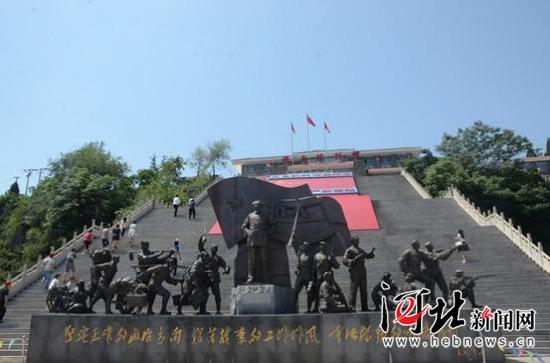
   On the morning of June 22nd, "Beautiful Hebei Red Line — — A delegation from the online media interview activities to commemorate the 95th anniversary of the founding of the Party came to Qiannanyu Village, Jiangshui Town, Xingtai County, Hebei Province. The picture shows the Kangda Exhibition Hall.

   Hebei News Network (Reporter Chang Fangyuan) This is a fertile red soil and the greenest place in Taihang Mountain. The development model of "red+green" has turned into the badlands into a green mountain and a barren mountain ditch into an economic ditch. On the morning of June 22nd, "Beautiful Hebei Red Line — — The delegation of the online media interview activities to commemorate the 95th anniversary of the founding of the Party came to Qiannanyu Village, Jiangshui Town, Xingtai County, Hebei Province. The beautiful and rich Qiannanyu made online media reporters praise it.

   Qiannanyu is the seat of China People’s Anti-Japanese Military and Political University (hereinafter referred to as "Anti-Japanese University"). On November 4, 1940, Kangda General School was stationed in Jiangshui, Xingtai County, Hebei Province. Since then, it has been running here for three years, and has trained three students, totaling 18,000. Zhu De, Peng Dehuai, Liu Bocheng, Deng Xiaoping, Luo Ruiqing, Teng Daiyuan, He Changgong and other proletarian revolutionaries of the older generation have fought and lived here.

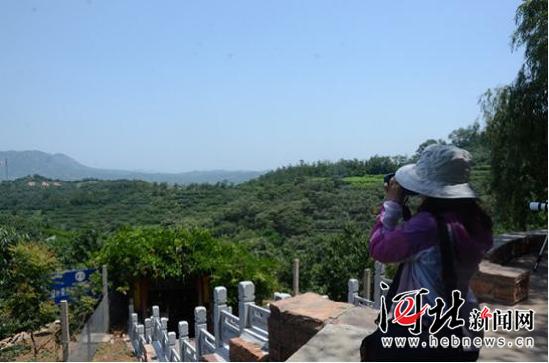
   On the morning of June 22nd, "Beautiful Hebei Red Line — — A delegation from the online media interview activities to commemorate the 95th anniversary of the founding of the Party came to Qiannanyu Village, Jiangshui Town, Xingtai County, Hebei Province. The picture shows online media reporters interviewing in Qiannanyu Eco-tourism Zone.

   Came to Qiannanyu, "Beautiful Hebei Red Line — — In commemoration of the 95th anniversary of the founding of the People’s Republic of China, the interview group first visited the Kangda Exhibition Hall. Surrounded by green hills and shaded by green trees, the Kangda Exhibition Hall is magnificent and solemn. "Looking at today’s magnificent buildings, it’s hard to imagine the hard conditions here in the past. I wanted to look for the old site of Kangda just now, but I was told by the commentator that there was no remains of the old site of Kangda, because the school building of Kangda in the war years was just a few dilapidated earth-walled grass houses. More often, teachers and students could only struggle and study on the grass and in the ravine. " After the visit, Jing Wong, a reporter from overseas network, felt that in the extremely cruel and arduous war years, groups of anti-big students took up important posts, made outstanding contributions to winning the victory of War of Resistance against Japanese Aggression and even the war of liberation, and showed the revolutionary ancestors’ spirit of hard struggle and the greatness of firm revolutionary belief.

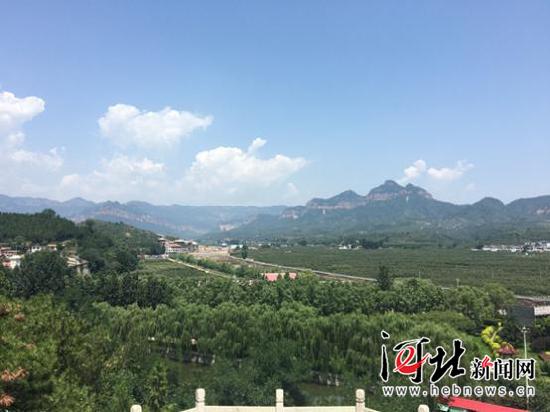
   On the morning of June 22nd, "Beautiful Hebei Red Line — — A delegation from the online media interview activities to commemorate the 95th anniversary of the founding of the Party came to Qiannanyu Village, Jiangshui Town, Xingtai County, Hebei Province. The picture shows the scenery of Qiannanyu Village.

   Starting from Kangda Exhibition Hall, take a battery car all the way up Panshan Road, and you will come to the entrance of Qiannanyu Eco-tourism Zone. What you see along the road are clean houses with red roofs and white walls, clear streams flowing down, and apple orchards full of fruits … … Entering the tourist area, the terraced fruit trees surrounded by layers of stones are lush, and an asphalt road winds up and shuttles through the intoxicating green. On the hillside, the six characters of "recreating beautiful mountains and rivers" planted by evergreen shrubs stand out against the blue sky and white clouds.

   Guo Tianlin, secretary of the Party Committee of Qiannanyu Village, said that Qiannanyu was not the scene before. Qiannanyu, which suffered nine disasters in ten years, was a well-known poor mountain village. In 1963, a catastrophic flood almost destroyed all the mountain vegetation and only a few hundred acres of life-saving fields in the village. Since then, Qiannanyu people have been managing mountains and controlling water for 20 years before they got this piece of green in Taihang Mountain. Today, Qiannanyu has formed a layered greening model of barren hills with "ecological forest wearing a hat, dried fruits wrapped around the waist and small terraces holding the foot". All 8300 mu of barren hills suitable for forest in the village have been afforested, with the forest coverage rate exceeding 90% and the vegetation coverage rate approaching 95%.

   More than a decade ago, Qiannanyu people made up their minds to close down polluting enterprises such as mineral processing plants and chemical plants that could bring them considerable economic benefits, and developed a 38-square-kilometer "red" and "green" combined eco-tourism zone by using anti-big red resources and green resources all over the mountain, which received nearly 500,000 tourists in 2015. Forest fruit planting and tourism development, before 2015, the collective income of Nanyu Village was 31.2 million yuan, and the per capita income reached 11,800 yuan.

   "Here, the spirit of hard struggle not only stayed in the war years, but is still being carried forward. The beautiful scenery here is not a gift from nature, but comes from people’s efforts. What is even more rare is that a group of scientific and technological leaders like Li Baoguo have emerged here, who can take root in places with difficult conditions and lead farmers to develop. " Dai Yu, a reporter from the People’s Daily Central Kitchen, lamented that in Qiannanyu, the red spirit collided with the green beauty, and Taihang Mountain was being written as a legend.

The cold wave is coming! It has snowed in these places!

  Come to New Year this year.

  In addition to friends and family.

  There is also a cold wave from the polar regions.

  Central Meteorological Observatory at 06: 00 on January 23

  Continue to issue a cold wave blue warning

  It is expected that it will not be until the third day

  This cold wave will continue to affect our country.

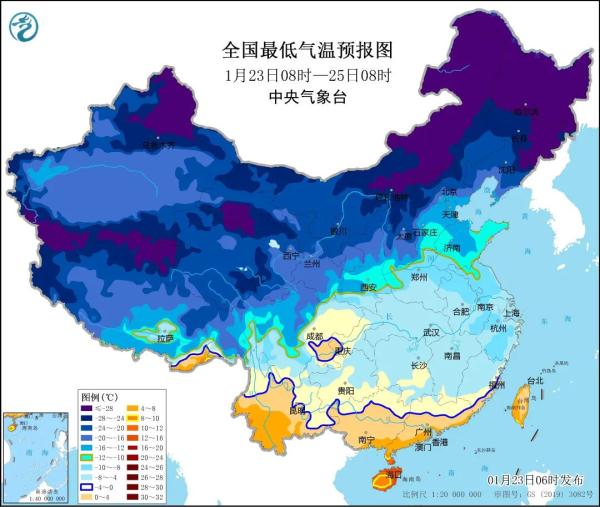
  Affected by strong cold air, it is estimated that the temperature will drop by 6 ~ 10℃ in most parts of central and eastern China, by 12~14℃ in eastern Northeast China, eastern Jiangnan and northeastern South China, and by more than 16℃ in eastern Jilin from 08: 00 on January 23rd to 08: 00 on January 25th. There are 4 ~ 6 winds in the above areas, and gusts are 7 ~ 8. Some areas in western Gansu, western Inner Mongolia, northern Qinghai and Ningxia have sand or floating dust. There are 6 ~ 8 winds and 9~10 gusts in most offshore areas of China. The lowest temperature in the process appeared on the morning of 25th, and the lowest temperature 0℃ line will be located in the east of Yunnan, south of Guizhou and north of South China.

The cold wave is coming! It has snowed in these places!

  From 23rd to 24th (the second day and the third day of New Year’s Day), the temperatures in Northeast China, North China and East China will hit new lows after winter, and the temperature will be 6-10℃ lower than normal.

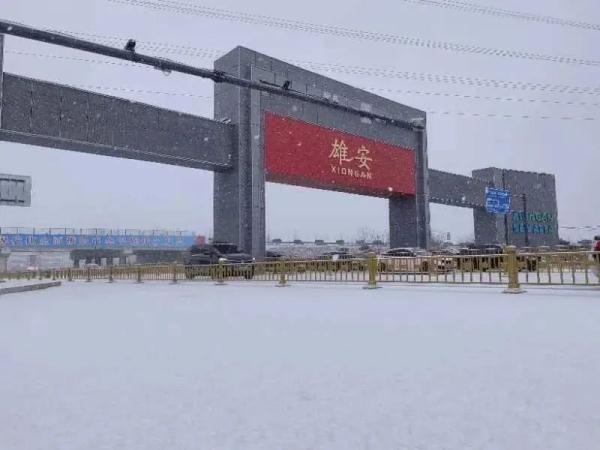
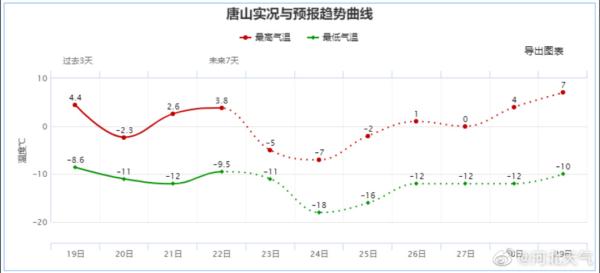
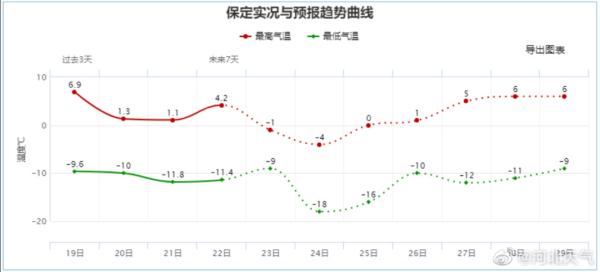
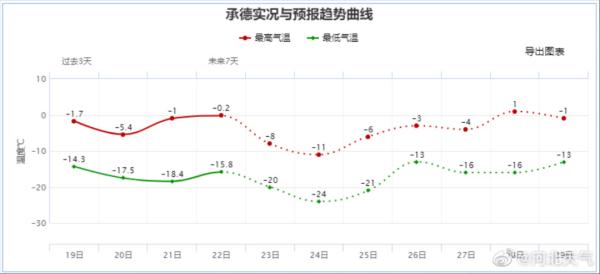
  From the early morning of January 23rd, snowflakes began to float in Zhangjiakou, Chengde, Tangshan, Qinhuangdao, Baoding and many places in Beijing.

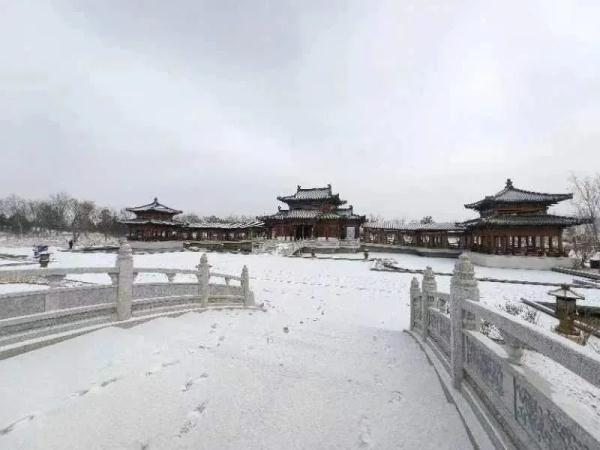
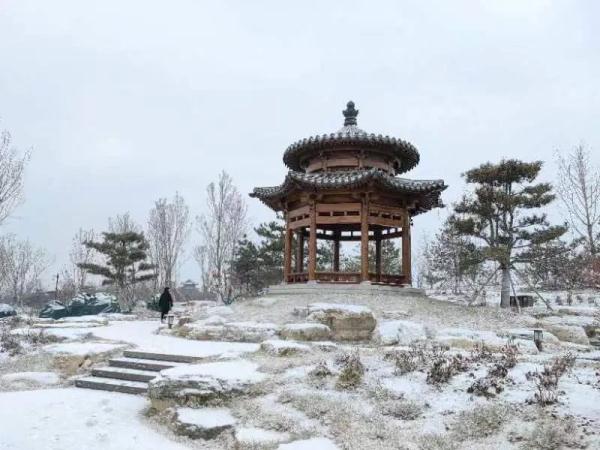
  [Snow in xiong’an new area]

The cold wave is coming! It has snowed in these places!

The cold wave is coming! It has snowed in these places!

The cold wave is coming! It has snowed in these places!

  Address: xiong’an new area Yuerong Park Source: Jishi Client

  [Snow in Tangshan]

The cold wave is coming! It has snowed in these places!

The cold wave is coming! It has snowed in these places!

  Photo from Tangshan traffic police

  Hebei specific weather forecast

  [Hebei Meteorological Observatory continued to issue the blue warning signal of cold wave at 05: 00 on January 23, 2023]

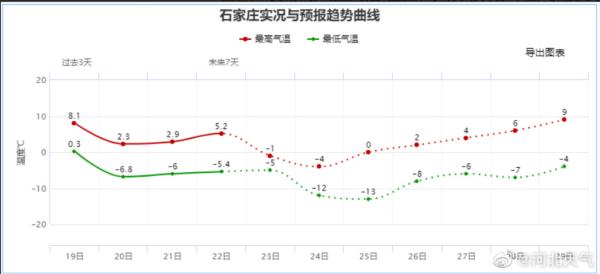
  Affected by cold air, it is expected that the lowest temperature in the whole province will continue to drop tomorrow morning, with Baoding, Langfang and the south area dropping by 6 ~ 8℃, local dropping by 8 ~ 10℃ and other areas dropping by 2 ~ 5℃. Tomorrow morning, the minimum temperature in the north of Zhangjiakou and Chengde will drop to-33 ~-26℃, in Shijiazhuang, Cangzhou and the south, to-16 ~-12℃, and in other areas to-25 ~-17℃.

  [Hebei Meteorological Observatory continued to issue gale blue warning signal at 05: 00 on January 23, 2023]

  Affected by cold air, it is expected that there will be winds of 4 to 6 from north to northeast in eastern Chengde, Qinhuangdao, eastern Tangshan, Cangzhou, Hengshui, Xingtai and Handan from day to night, with gusts of 7, which will weaken to below 6 at night; There are 4 to 6 northwest winds, 7 gusts and 8 local gusts in Zhangjiakou, the central and western Chengde, the western Baoding and the western Shijiazhuang. There are 7-8 northeast winds, 9 gusts, 6-7 northwest winds and 8-9 gusts in coastal waters and coastal areas. Please take precautions!

  [Weather forecast issued by Hebei Meteorological Observatory at 05: 00 on January 23, 2023]

  Today, from day to night, scattered light snow or light snow turned cloudy in southern Langfang, Cangzhou, eastern Hengshui, western Shijiazhuang and western Xingtai, while other areas turned cloudy and sunny. The highest temperature is-25 ~-5℃ in Zhangjiakou, Chengde, Tangshan, Qinhuangdao and northwest Baoding, and-4 ~ 2℃ in other areas. The lowest temperature is-33 ~-20℃ in Zhangjiakou, Chengde, northern Qinhuangdao and northwestern Baoding, among which-33 ~-26℃ in Bashang area and-19 ~-12℃ in other areas.

  Tomorrow, from day to night, the whole province will be sunny and cloudy.

  From day to night on the 25th, the northwest turned sunny and cloudy, while other areas were cloudy and sunny.

  Yesterday (22nd, New Year’s Day),

  The cold wave brings strong winds and cools down to "celebrate the New Year"!

  Today and tomorrow,

  On the 23rd (the second day) and 24th (the third day),

  The temperature in our province plummeted,

  Many places will be frozen.

  And the strong wind "assisted",

  The wind-cold effect is remarkable,

  Little friends, be sure to wear more clothes to protect yourself.

The cold wave is coming! It has snowed in these places!

The cold wave is coming! It has snowed in these places!

The cold wave is coming! It has snowed in these places!

The cold wave is coming! It has snowed in these places!

  To sum up

  During the Spring Festival this year

  The cold in the north lasts for a long time

  It’s short but really cold in the south.

  Everyone should pay attention to cold and warmth.

  Synthesis: Website of Central Meteorological Observatory, Hebei Weather and Meteorology Beijing

[Editor in charge:

]

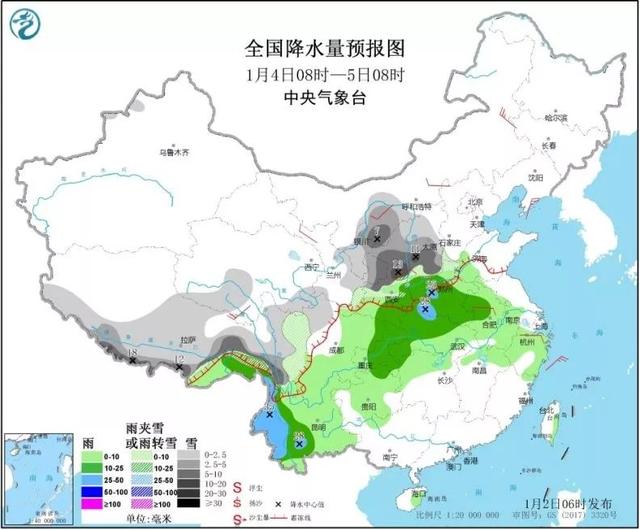
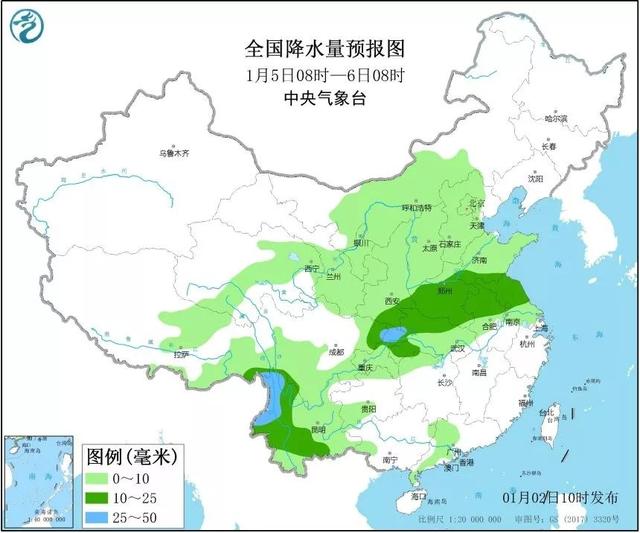
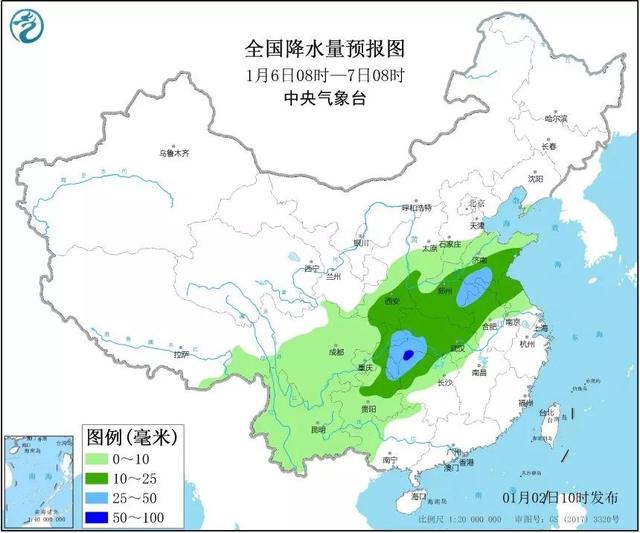
The first large-scale rain and snow countdown in 2020! It will snow in over 13 provinces, autonomous regions and municipalities

Attention! Attention! Attention!
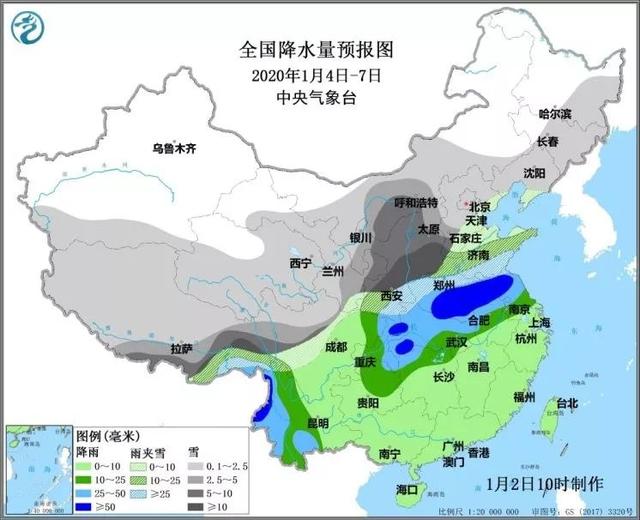
Starting from the weekend (4th)
The first large-scale rain and snow in 2020 will kick off.
This process has a wide range and a large accumulated precipitation.
Long duration.
4-5 days,North-central Shaanxi, Shanxi and HebeiEqual place
There is little to medium snow or sleet.
North-central Shaanxi, South ShanxiThere is heavy snow locally.
6-7 days,South-central Shaanxi, South Shanxi
Northern Henan and southern ShandongEqual place
There will be heavy snow or sleet.
Huanghuai, Jianghuai and Jianghan will enter rainy mode.
Rain and snow arrival schedule
Put it away! See when you get off at home.
Rain and snow arrival schedule:
4th
Main areas: East of Southwest China, East of Northwest China to Jianghan, West of Huanghuai and West of North China.Key provinces:Central Shanxi, eastern Ningxia, western Inner Mongolia, south-central ShanxiThere may be moderate to heavy snow in the area, and there may be heavy snow in some areas.
5th
Main areas: the eastern part of northwest China to North China and its southern part to the Yangtze River.Key provinces:North-central Shanxi, Shanxi, western Hebei, northwestern HenanThere may be medium snow and local heavy snow in the area.
6th
Main areas: areas along the middle and lower reaches of the Yellow River to the middle and lower reaches of the Yangtze River.Key provinces:Central and southern Shaanxi, southwestern Shanxi, western Henan, northwestern Shandong, and western HubeiThere will be snowfall in the area, and there will be heavy snow and local snowstorms in high altitude areas in southwestern Shaanxi, southwestern Shanxi and western Hubei.
7th
Main areas: southern Huanghuai, Jianghuai and northern Jiangnan.Key provinces:Eastern Henan, south-central ShandongThere may be snowfall in the area, and it is not excluded that there may be heavy snow to blizzard in some areas.
In some cities in the north
Due to the recent high temperature
This round of rain and snow is a bit "skin"
Some rain first and then turn to snow.
Some may have rain, sleet and ice particles.
Xi’an: From the afternoon of the 4th to the 7th, it turned to sleet at night on the 5th.ZhengzhouLate at night on the 4th → evening on the 7th, there may be rain, sleet and ice particles, etc. The most likely time for sleet is the daytime on the 5th and the early morning to the morning on the 7th.JinanDuring the day on the 5th → at night on the 7th, sleet will start to turn around the early morning of the 7th.Beijing: 5 th night →6 th morning, XiaoxueShijiazhuang: the morning of 5th → the night of 5th, in the snow.
It’s snowing in the north, and it’s mainly raining in the south.
Hubei, southern Henan, northern Anhui and northern Jiangsu
Eastern Chongqing and western YunnanThere is moderate to heavy rain in other places.
Due to the long time limit of forecast
The public should also pay attention to the upcoming forecast.
The rain and snow lasted for a long time this time.
Shaanxi, Shanxi, Henan and Shandong provinces.
It is necessary to guard against the influence of rain and snow on aviation and road traffic.
Reporting/feedback

Enjoy the beautiful scenery, visit the big collection and taste the culture … Xiao Ni, the anchor of the second element, invites you to spend the New Year in Shandong.

Qilu Net Lightning News February 3 rd What do you think of winter in Shandong? It is to climb the mountain to enjoy the snow and see the scenery wrapped in silver. It is to play with ice and snow and unlock the new gameplay in the winter fairy tale world; Or enjoy the folk customs in the countryside and feel the folk customs in winter … Follow Xiao Ni, the virtual anchor of Lightning News, and go to Shandong for the New Year together to get a close look at Qi Feng Lu Yun and friendly shandong.

This special reunion dinner is really delicious!

Original title: This special reunion dinner is really delicious!

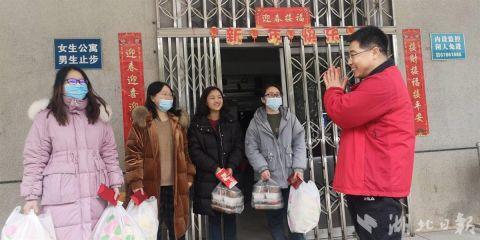
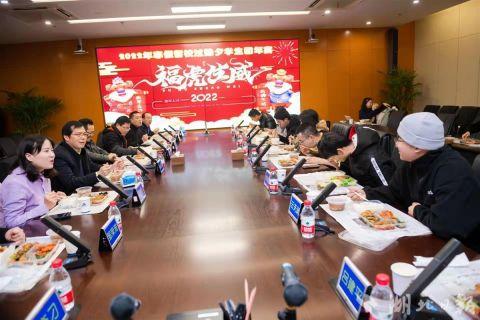
"Today’s annual meal is very fragrant and warm." On January 30, after eating a special reunion dinner at school, Wang Tongbang, a 2021 graduate student of the Department of Artificial Intelligence Education of Huazhong Normal University, said with emotion.

This year, a total of 161 students from Huazhong Normal University stayed in school for the New Year. On the day before New Year’s Eve, the school invited the students’ representatives who stayed in school during the winter vacation to have a "group annual banquet" and sent the students a New Year gift package and warm wishes. Although this special "Group Year Banquet" took the form of distributing box lunches and scattered meals, the students still lamented: "It smells good!" "I also feel at home when I stay in school for the New Year."

In a conference room in the Nanhu complex of the school, representatives of teachers and students communicate while eating lunch boxes. "I wish the students a prosperous and prosperous Year of the Tiger, and learn something!" The school leaders sent New Year greetings to the students who stayed in school for the New Year, asked about their study and life, and told everyone to pay attention to safety precautions, strengthen physical exercise, and communicate with family and friends more. If you encounter difficulties in life during your stay in school, the school will provide you with all kinds of help in time.

On the same day, Huazhong Normal University also prepared lunch boxes, Chinese New Year gift packages and Chinese New Year red envelopes for the students who did not attend the group annual banquet at the scene, which were collected by the heads of various training units and sent to the students’ dormitory. The delicious food and the warm words of the teachers moved the students deeply.

"Although I haven’t seen my family, it is also a special experience and growth opportunity for me to stay in school for the New Year." Yun Tianrun, a 2020 undergraduate from the School of Psychology in Hong Kong, said.

Li Bairong, a 2019 undergraduate from the School of Computer Science, is from Taiwan Province. He said that he was used to living in Wuhan and wanted to feel the Spring Festival in Hubei this year.

After receiving the gift package, Xing Xu, a 2018 doctoral student of China Rural Research Institute, said: "The concern and condolences of the school made me deeply feel the’ temperature of Chinese teachers’. Wuhan is very cold after the snow, but my heart is warm. Guizishan is my home in Wuhan. "

The reporter learned that in order to ensure that the students staying in school have a warm and happy New Year, in addition to ensuring normal meals during the winter vacation, Huazhong Normal University also provides free meals for the students staying in school from New Year’s Eve to the second day of the first month.

Hubei Daily All-Media Reporter Han Xiaoling Correspondent Wu Yan Party Botao

(Photo taken by correspondent Chen Xichang)

Source: Hubei Daily

Reporting/feedback

97,000 real estate enterprises’ transformation "the second half" financial model transformation to reduce debt into a starting point.

  Huang Qifan believes that the huge annual real estate transaction volume of 16 trillion to 17 trillion will surely become a historical turning point, and the future market will gradually shrink.

  About 97,000 real estate enterprises are gradually entering the deep-water period of transformation. With the implementation of measures such as deleveraging and stabilizing finance, China’s real estate sector will enter the "second half" era of stock management.

  "Overall, the era of China’s real estate in short supply is over." Huang Qifan, vice chairman of China International Economic Exchange Center, said at the World Chinese Real Estate Society held on July 13th, "The huge annual transaction volume of real estate in China is bound to become a historical turning point, and the market will gradually shrink in the future; Therefore, in the next decade, I predict that the real estate growth rate will not be higher than China’s GDP and M2 growth rate, but it will not fall too fast and will enter a stage of steady growth in an all-round way. "

  How should real estate enterprises with an average debt of more than 80% go into battle lightly? "Learning from the experience of developed countries, in fact, financial transformation is also crucial for housing enterprises." Wang He, secretary-general of the World Chinese Real Estate Society, said, "The transformation of real estate enterprises should start from the financial field, such as REITs (real estate trust and investment funds) to reduce the burden on enterprises."

  At present, nearly 100,000 real estate enterprises registered in industrial and commercial registration have become the epitome of China’s real estate development in the first half.

  According to Gao Bo, director of the Center for Urban and Real Estate Research of Nanjing University, the development of real estate has contributed to GDP, promoted the process of urbanization, promoted land finance and housing finance, and reduced financial risks. Only by taking the modernization of the housing system as a prerequisite can the real estate industry really do it.

  For example, in 2018, the added value of the real estate industry in the United States accounted for about 13.2% of GDP. In the first three quarters of the same year, the added value of real estate in China was about 4.36 trillion, accounting for 6.69% of GDP.

  There is no doubt about this step of transformation. How to turn? Many experts in the research field believe that on the one hand, it is necessary to shift from extensive expansion strategy to refined operation, on the other hand, enterprises need to fundamentally change their financial model.

  "The transformation of real estate enterprises should pay attention to ‘ Lianggao ’ That is, high quality and high technology. " Jia Shenghua, director of the Real Estate Research Center of Zhejiang University, said, "High quality means that housing enterprises should return to their final purpose of residence, not quantitative expansion; High technology means that more technical means need to be integrated into the development and management of houses. "

  "REITs are like an IPO of an office building, and the share can be transferred, traded and distributed." Hu Feng, a senior director of dtz and head of the North China District Valuation and Consulting Service Department, told the First Financial Reporter, "It is equivalent to sharing this building. If you buy a share, you can enjoy the benefits of the share. This share can be transferred and transferred, so the assets will flow."

  According to the First Financial Reporter, Ping An Real Estate, Poly Real Estate, Xuhui and Longhu have also stepped in since CITIC, the first private equity REITs in China, was launched in May 2014. According to the data of Industrial Securities, as of May 12 this year, 48 REITs have been issued in China, with a total amount of 93.42 billion yuan.

  The REITs research group of Guanghua School of Management, Peking University estimates that the market size of REITs in China is about 4 trillion to 12 trillion.

  Liu Qiao, dean of Guanghua School of Management, Peking University and professor of finance, believes that REITs will probably become one of the most important starting points for China’s financial system reform or supply-side reform in the next few years.

  Liu Qiao also wrote in CBN that REITs are not limited to real estate. At present, the problem of financing difficulty and high cost for enterprises in China, especially private enterprises, has been very prominent. The introduction of REITs is conducive to reducing systemic financial risks and promoting the development of real estate industry and upstream and downstream industries.

  "If the capital operation in previous years was to borrow money to get land, then in the second half of the stock management era, we must calm down and operate our assets well." Chen Xiaoou, independent director of Yuexiu Real Estate Trust, told the reporter, "We are providing asset management services for Chengdu Luhu Eco-city, such as business format and asset sorting, and later asset securitization."

  In the era of stock management, in addition to residential real estate, building economy will also become an important carrier to adjust industrial structure.

  According to Zhu Jianhui, head of the research department of Jones Lang LaSalle in West China, "At present, the building economy is also operating under the dual-track background of urbanization and urban renewal; We also found two characteristics: first, the demand side of building transformation mostly comes from technology-driven enterprises such as we work and incubation centers; Second, real estate buildings such as Joy City began to build amusement parks, maternal and child rooms, etc., paying more attention to the humanistic value brought to consumers. "

  The quality transformation of housing enterprises under the empowerment of many technologies has gradually landed nationwide. In other words, housing enterprises really began to bid farewell to the extensive and expansive development model in the past, focusing on social services that are people-oriented and meet domestic demand.

  How does technology drive the development of cities and real estate? According to Wang Yeqiang, director of the Land Economy and Real Estate Research Office of the Institute of Urban Development and Environment of China Academy of Social Sciences, on the one hand, smart cities should be built through technologies such as the Internet of Things, cloud computing and big data to meet the needs of residents’ production and life; On the one hand, infrastructure and industrial informatization should be highly developed.

  Some large real estate enterprises are integrating big data and Internet of Things into residential management and services.

  Wu Zhihua, CEO of Greentown Service Group, said, "Take a certain community as an example, the proportion of elderly people over 60 years old is 10.98%, and the proportion of second children in the community is higher than the national average; Through this kind of analysis, we have laid out the services of children’s education, nutrition and rehabilitation for the elderly in the community. At present, 130,000 people have established health records on our platform, and 400,000 elderly users are enjoying paid chronic disease management services.

  Small and medium-sized housing enterprises choose to cut in from low energy consumption and green ecological technology. "The core of real estate is still the residential industry, and this cannot be lost. The reason is that it can develop rapidly and standardize, and because it has a large market consumer group and belongs to popular products, it has strong anti-risk ability. " Li Biao, chairman of yueda Real Estate Group Co., Ltd. said, "In addition to paying attention to building quality, scientific research and development is also our strength."

  Previously, Jinmaofu attracted much attention in the industry because it proposed 12 black technologies (to meet residents’ comprehensive household needs such as air, temperature, humidity and noise), and the average price of its housing in Hongkou, Shanghai New Town was about 102,000/square meter.

  "We already have the 12 major scientific and technological systems of Jinmaofu, and we have a clear understanding of ourselves, that is, to be an expert in quality life operation." Li Biao told the First Financial Reporter, "In addition to residential technology research and development, looking further, we are developing projects around the Yangtze River Delta urban agglomerations (such as Suzhou, Nantong and Yancheng)."

  Some real estate big data companies have already quietly laid out. "According to more than 50 major industries involved in real estate, we divided the data into eight thematic directions, including transaction end, residential security end and residential service end." Yan Zhimin, chairman of Hangzhou Zhongfang Information Technology Co., Ltd. told the First Financial Reporter.

  "For example, in Fuyang, which is more than 20 kilometers away from Hangzhou, the price of a parking space in a certain community reached 800,000, but the house price in the community was around 10,000. At that time, the people and the media were very controversial; Therefore, we assisted the government to make a data analysis and look at the reasonable reasons according to the floor price and market environment. In the future, data-based disaster reduction, shock absorption, escape, etc. will be used to ensure residential safety. " Yan Zhimin added.

Stock (1): What do you buy when you buy stocks?

Hello, my name is Peking University Xu Yuan, and welcome to my investment class.

Today we enter the second part of the course, the investment tools part. In this part, I will explain to you the basic nature of investment tools, including stocks, bonds, funds, real estate, gold and so on. For example, these are 18 kinds of weapons in the martial arts field. After understanding the basic properties of these weapons, we can choose the weapons that we can take advantage of.

As the saying goes, "If you want to do a good job, you must sharpen your tools first." Without understanding the nature of these tools, you are like a tiger without teeth, and you will be very passive in the arena of investment.

Today is the first lecture on investment tools. We begin to talk about one of the most common and important tools, namely stocks. Regarding stocks, we focus on six issues.

First, when we buy stocks, what are we buying? In particular, some companies are not profitable at all, let alone paying dividends. Why are they still worth so much money? How exactly is this priced?

Second, how to judge the stock price? Some stocks are very cheap, can you buy them? Some stocks have high unit prices, why do they go up all the way? How to judge?

Third, there are so many stocks in the market, how to quickly grasp the market situation?

Fourth, how is the stock price determined? What are the different factors?

Fifth, do A shares earn money? If you don’t make money, why are so many people playing in it?

Sixth, what kind of stocks have high returns?

Let’s look at the first question first. What do we buy when we buy stocks? In particular, some companies on the A-share market are not profitable, and there is no dividend. Why are they still so expensive? In order to clarify this problem, I divide stocks into two categories, dividend-paying and non-dividend-paying

Dividend-paying stocks have a relatively simple principle. We buy a stock because we are optimistic about the cash flow that this stock can bring.For example, if you spend 10 yuan on a stock and pay a dividend of 1 yuan a year, after ten years, you will return to your capital (for simplicity, discount is not considered here), and all dividends in the future will be profits.

If you divide it into 50 cents a year and pay it back in 20 years, all future dividends will be profits. At this time, you spent 10 yuan to buy it, which is all future dividends.

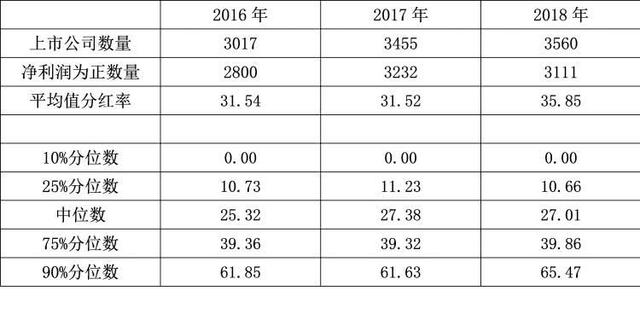
You may say, where is the company giving such a high dividend rate now? Actually, it’s not. You can have a look at Table 1. Table 1 shows the distribution of dividend rate of A-share listed companies from 2016 to 2018. As you can see, the average dividend rate of listed companies is over 30%, which is not low.

This is not the most exaggerated. The 10% companies with the most dividends have a dividend rate of over 60%. At present, there are more than 3,000 listed companies in A-shares, of which more than 300 have a dividend rate of over 60%. Therefore, the statement that A shares do not pay dividends is not consistent with the real data.

Table 1: Dividend rate of A-share listed companies (2016-2018,%)

Note: Before calculating the dividend rate, companies with negative net profit in this year are excluded, and the dividend rate is equal to the total annual dividend of the company divided by the annual net profit attributable to shareholders of the parent company.

As of the production date of this table (November 2019), the dividend data for 2019 has not been published, so the data from 2016 to 2018 are used. Source: Wind information.

In fact, what you need to pay attention to is not the companies that don’t pay dividends, but the dividend rate of some companies is too high, which is a bit abnormal. You need to see what is going on. In order to illustrate this situation, we have specially compiled Table 2 and listed the companies with the highest dividend rate in recent years.

When sorting out Table 2, we made a screening and only considered large and medium-sized companies with positive profits and large market value of more than 10 billion. The data of small and micro enterprises fluctuates greatly, so we will not consider it for the time being.

Table 2: Top 30 Dividend Rates of Companies with Market Value of Over 10 Billion (2016-2018,%)

Note: The data comes from Wind. Before calculating the dividend rate, the companies with negative net profit for the year and companies with a total market value of less than 10 billion at the end of the year were excluded.

If you look at Table 2, many companies have a high dividend rate, and some companies even have a dividend rate of more than 100%, that is, dividends exceed profits. Why is this happening? To sum up, there are probably three possible reasons.

In the first case, the company has little temporary profit, but in order to maintain the stability of dividends, it still maintains a consistent dividend level. In this case, even if there is a temporary shortage of cash, the operation is still stable, so paying more dividends is to show the market that everything is under control and there is no need to panic.

China Petroleum, for example, has done such a thing. Due to lower oil and gas prices, its net profit in 2016 dropped by nearly 80% compared with that in 2015.

However, in order to maintain a steady dividend, China Petroleum used the retained undistributed profits of previous years to pay dividends in 2016, and the dividend rate reached 137.43%. By 2018, the company’s profits have improved, the denominator has become larger, and the dividend rate has fallen.

Purchase column to unlock the remaining 70%
Reporting/feedback

Tea industry is promising (big data observation)

Core reading
Tea is a national drink, which can be compared with fine products. There are many famous teas in China, which have cultivated a long and profound tea culture and formed a super-large-scale market advantage. In recent years, while keeping the market demand basically stable, the tea industry in China has cultivated and expanded a number of new growth areas, with richer consumption scenarios, more products supplied, younger consumer groups, frequent new highlights in the industry, and steadily moving towards high-quality development.
According to the report released by China Tea Circulation Association, China’s domestic tea market remained stable in 2022, with a total domestic sales of 2,397,500 tons, up 4.15% year-on-year; Domestic sales totaled 339.527 billion yuan, up 8.82% year-on-year; The total output of spring tea this year is 1.4 million to 1.5 million tons, and the quality is basically stable.
What is the current situation of tea production and marketing in China? What are the new highlights in the industry? How to promote the tea industry to achieve high-quality development? The reporter conducted an interview.
The market demand is basically stable, and the consumer groups are getting younger and younger.
The winter is approaching, and the mountains are foggy, just like a painting. Walking into Hejiang Village, Caoba Town, Yucheng District, Ya ‘an City, Sichuan Province, a vivid picture of ecological livability came into view. Change the development ideas and seize the opportunity of e-commerce. Many villagers here have become network anchors and sold their organic green tea in their hometown to all parts of the country through the webcast platform.
"Our tea garden is a national standardized production base for green food raw materials and is currently in the pruning stage. Scarcity is the most precious thing. The tea harvested in Tomb-Sweeping Day is the best in tea, which is less disturbed by pests, with tender buds, delicate fragrance and beautiful taste. We are now preparing for the high yield of spring tea in the coming year. " Jie Chen, a 26-year-old tea farmer, started the live broadcast in the tea garden of Yuntai Mountain, which is at the highest altitude of 1,100 meters.
From mengding ganlu to Xinyang Maojian Tea, from West Lake Longjing to Huangshan Mao Feng, from Enshi Yulu to Fenghuang Danzong, there are many famous teas in China, which have cultivated a long and profound tea culture. "In recent years, relying on the advantages of domestic super-large-scale market, China tea industry has completed the adjustment and upgrading of consumption structure, and cultivated and expanded new growth areas such as herb tea and tea derivatives while maintaining basically stable market demand." Wang Qing, president of China Tea Circulation Association and chairman of the National Tea Standardization Technical Committee, said that the current consumption demand of tea and its related products has shown new changes due to the influence of modern life.
The consumption of traditional original leaf tea remained stable, and the consumption scenes were more abundant. Green tea, black tea, black tea and oolong tea are still consumers’ favorite categories. White tea, as a minor category among the six major teas, has achieved double-digit annual growth in recent years. With the popularity of the "national tide" culture, the "new Chinese teahouse" which inherits the traditional tea culture and pays attention to the scene experience and atmosphere creation has grown up, and tea tasting methods such as surrounding the stove have emerged.
Tea consumption groups are getting younger and younger. Under the influence of multiple factors, the acceptance of tea after 80s, 90s and even 00s continues to rise, and the younger generation of consumers demand personalized, diversified and healthy tea and related products. A number of new teabag enterprises and sugar-free packaged beverages have emerged. It is estimated that by 2025, the market scale of sugar-free tea in China will exceed 10 billion yuan.
Internet consumer demand has expanded. Online trading has become a powerful supplement to the domestic sales channels of tea. Last year, the total amount of online trading of tea in China exceeded 33 billion yuan, and the compound annual growth rate remained above 10% in the past three years. Driven by online consumer demand, major brand tea enterprises have started the e-commerce sector, and the annual tea trading volume and tea demand of major e-commerce platforms have also steadily increased. According to the data of Meituan, from January to June this year, the number of new tea houses in China exceeded 30,000. Driven by the digitalization and standardization services of the platform, the order volume of tea houses nationwide increased by 115% year-on-year, and Chengdu, Shanghai, Beijing, Hangzhou and Xi’ an were the top five cities in terms of order volume; Among the tea room consumers, consumers aged 35 and below account for more than half.
Wang Qing said that on the whole, there are three trends in the demand for tea products: brand, culture and emotional factors make traditional tea consumption concentrated in the middle and high end; Daily consumption tends to be more rational, and tea products with strong practicality and high cost performance are more popular with the public; The concept of health is deeply rooted in the hearts of the people and promotes the growth of tea consumption demand.
Industry continues to innovate and product supply is diversified.
"Paper cups must be familiar to everyone, but cups with tea are rare. When we hold a meeting and receive customers, it is just right to use this cup to make tea. Boiling water is poured directly into the cup and can be drunk after waiting for a while, which is convenient and fast. " Recently, in the e-commerce live broadcast room of Xiaocheng Dashi Tea Co., Ltd. in Linqing City, Shandong Province, the anchor Zhang Qiu Lezheng introduced enthusiastically. In the production workshop not far from the live broadcast room, five fully automatic numerical control processing equipments are running at high speed, which can produce about 150,000 kinds of cup tea products every day.
"After market research, we found that this kind of teacup with tea leaves has been improved in design, which can make drinking tea easier. In recent years, the company has closely followed the changes in market demand, increased innovation and research and development, and launched products that are marketable. Last year, the turnover exceeded 20 million yuan. " Yan Li, general manager of the company said.
This is a vivid footnote for China’s tea industry to increase the supply-side structural reform.
"In the face of new changes in consumer demand, China tea industry is seizing market opportunities, making continuous efforts on the supply side, constantly improving effective supply capacity and level, and enhancing product richness and added value, and has built a set of mature, autonomous, controllable, safe and efficient tea industry chain supply chain." Mei Yu, vice president of China Tea Circulation Association, said.
Improve the level of modern production and promote industrial upgrading and efficiency.
Pu ‘er tea in Menghai County, Yunnan Province is famous at home and abroad. Banzhang production area in Brown Mountain is the core production area of Pu ‘er tea raw materials, and it is also an important origin of the brand products of Xiaocan Tea. While protecting ancient trees, the small pot tea company established a modern factory in Menghai, opened up all links in the industrial chain, enhanced the added value of tea products, promoted industrial efficiency and increased the income of tea farmers.
In recent years, new technologies and new energy sources have been continuously applied to tea processing equipment. Tea processing is developing in the direction of green, energy saving, safety and cleanliness. Continuous and standardized processing production lines are moving towards preliminary digital operation. Many standardized processing production lines of tea have been widely used, and the taste and hygienic quality have been improved, which effectively guarantees the continuous research and development of new flavors and new packaging.
The integration of tea tourism has also promoted the spread of tea culture.
"This year, we received research requests from the summer social practice teams of six colleges and universities. They came to the tea garden to observe the growing environment of’ Chuan’ brand green brick tea. This way of’ research+tourism’ has achieved good results." Chen Junhai, director of the Institute of Compaction Tea of Zhao Liqiao Tea Factory, Hubei Tea Group, and a "Jingchu craftsman" in Hubei Province, said. In 2022, Zhao Liqiao’s brick tea making skills were listed in the UNESCO World Intangible Heritage List.
In recent years, it has become a new means to help tea farmers increase their income by promoting tourism with tea, promoting tea with tourism, blending tea with tourism, combining health care, prolonging the tea industry chain and increasing the added value of tea products. All localities vigorously promote the high-quality, diversified and upgraded tea culture industry, dig deep into local traditional tea culture, intangible culture and red culture, create tea tourism products, and promote transformation and development.
New tea is popular and enters the daily life of the people.
"I like this’ Tianqingyu’ milk tea product very much. It is very healthy without adding essence or non-dairy creamer." Wang Wen, a consumer who tasted new milk tea, commented at Taigulixi Tea Store in Sanlitun, Chaoyang District, Beijing. Up to now, the total number of Xicha stores in China has exceeded 2,000, and it has entered over 240 cities.
In recent years, the new Chinese tea, represented by brands such as Hi Tea, Tea Baidao and Guming Tea, has been integrated into public life in various forms of health, fashion and innovation, and has become the new favorite of the market.
Ramming foundation forging long plate, moving towards high quality development
"We continue to exert our efforts in the integration of quality control, technological innovation, cultural creativity and brand building to help Shangyou Se-enriched tea brand become bigger and stronger." Chen Maolin, general manager of Jiangxi Youjiang Hongyun Tea Co., Ltd. said.
Youjiang Hongyun brand series tea is produced in Wuzhifeng, Shangyou County, Jiangxi Province. The company drives farmers to build more than 3,000 mu of selenium tea garden and uses organic tea production mode for management. This year, the company and Jiangxi Academy of Agricultural Sciences launched Gannan Alpine White Tea, which was well received by the market. Zhong Yuancai, director of the Agriculture and Rural Bureau of Shangyou County, introduced that the tea planting area in the county is 110,000 mu, with an output of 2,786 tons, and the brand value of "Shangyou Green Tea" reaches 641 million yuan.
According to the insiders, facing the future, China tea industry should continue to keep pace with the times and deepen the supply-side reform, and enhance the adaptability between supply and demand by improving the supply structure and quality. Only by realizing industrialization, scale, marketization and internationalization can China tea industry go further and further on the road of high-quality development.
Wang Qing believes that it is necessary to comprehensively and deeply explore and protect the essence and traditional skills of China tea culture and promote innovation and inheritance; Vigorously coordinate and integrate tea science and technology resources, promote the deep integration and development of Industry-University-Research, and promote the whole chain development and value promotion of tea industry; Accelerate the pace of modernization and transformation, establish a systematic and complete industrial system, and further promote new industrialization and informationization.
Accelerate standardized production and improve the efficiency of supply chain management. In March this year, the application for the national standard formulation plan of Technical Specification for Tea Supply Chain Management was approved by the National Standardization Committee. "Standardization is of great significance for improving the quality of tea, promoting the industry to reduce costs and increase efficiency, and promoting the modernization and upgrading of the tea industry." Du Guoyu, chairman of the small pot tea company, said.
Strengthen brand building and promote iterative upgrading of consumption. Mei Yu suggested strengthening the construction of industrial brands and supporting systems, and promoting the coordinated development of regional brands and corporate brands. We should start with improving product quality, improve the industrial supporting system, and realize the sufficient and high-quality supply of high-end enterprise brands and modern service products.
Strengthen scientific and technological support to help the industry to be stable and far-reaching. Wang Yingfeng, deputy director of Science and Technology Center of Hangzhou Tea Research Institute of All-China Federation of Supply and Marketing Cooperatives, said that scientific research institutes should be supported and encouraged to take the lead in "seed research"; Actively promote the transformation of innovation achievements of research institutions such as universities, and form a virtuous circle pattern of "innovation of research institutions-enterprise transformation and feedback-re-innovation of institutions such as institutes".
Cartography: Wang Zheping
People’s Daily (November 29, 2023, 07 edition)
Reporting/feedback